Skip to Main Content

Tien Kue Inn

  • Opened along Plains Road, Tien Kue Inn became one of Burlington’s best-known dining destinations in the mid-twentieth century. Operated by partners Bill Lee, Bing Chow, and Danny Lee, the restaurant offered both Chinese cuisine and familiar Western dishes such as steak and chicken dinners.

    Restaurants like Tien Kue reflected the growing popularity of international cuisine in postwar Canada. Their welcoming interiors, decorative lanterns, and large dining rooms made them ideal places for families, travellers, and commuters to gather for meals. Promotional materials emphasized hospitality, convenient parking, and a comfortable dining atmosphere—hallmarks of the era’s expanding restaurant culture.

  • 2022.6.15

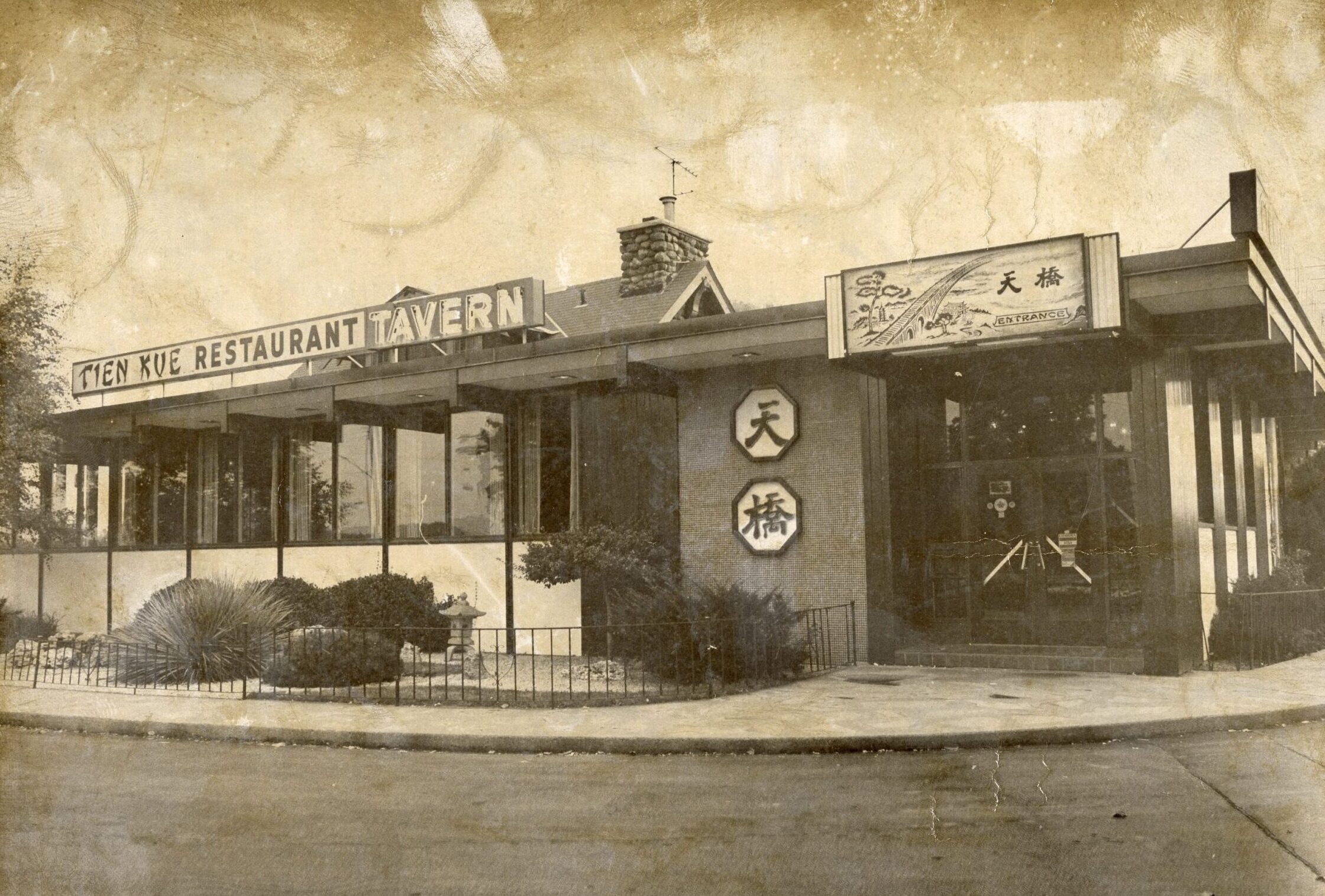
    2022.6.15 | c. 1970

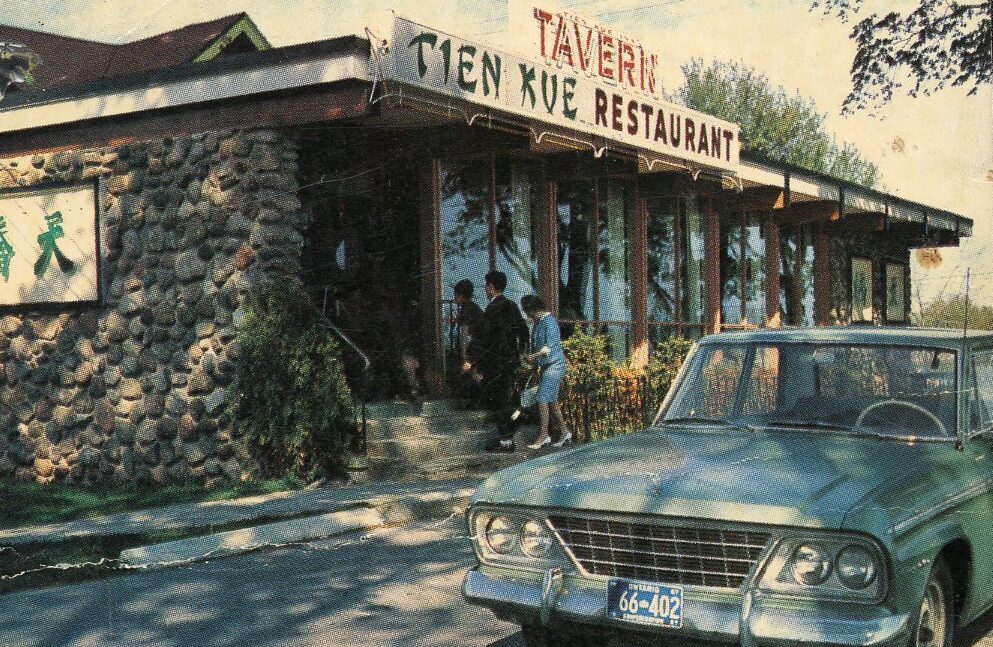
    This photograph shows the exterior entrance of the Tien Kue Inn. Chinese characters appear beside the door, while large windows and a small garden welcome visitors to the building. Open from the late 1950s through the 1980s, Tien Kue became a well-known destination for dining along Plains Road.

  • 2022.6.5_4

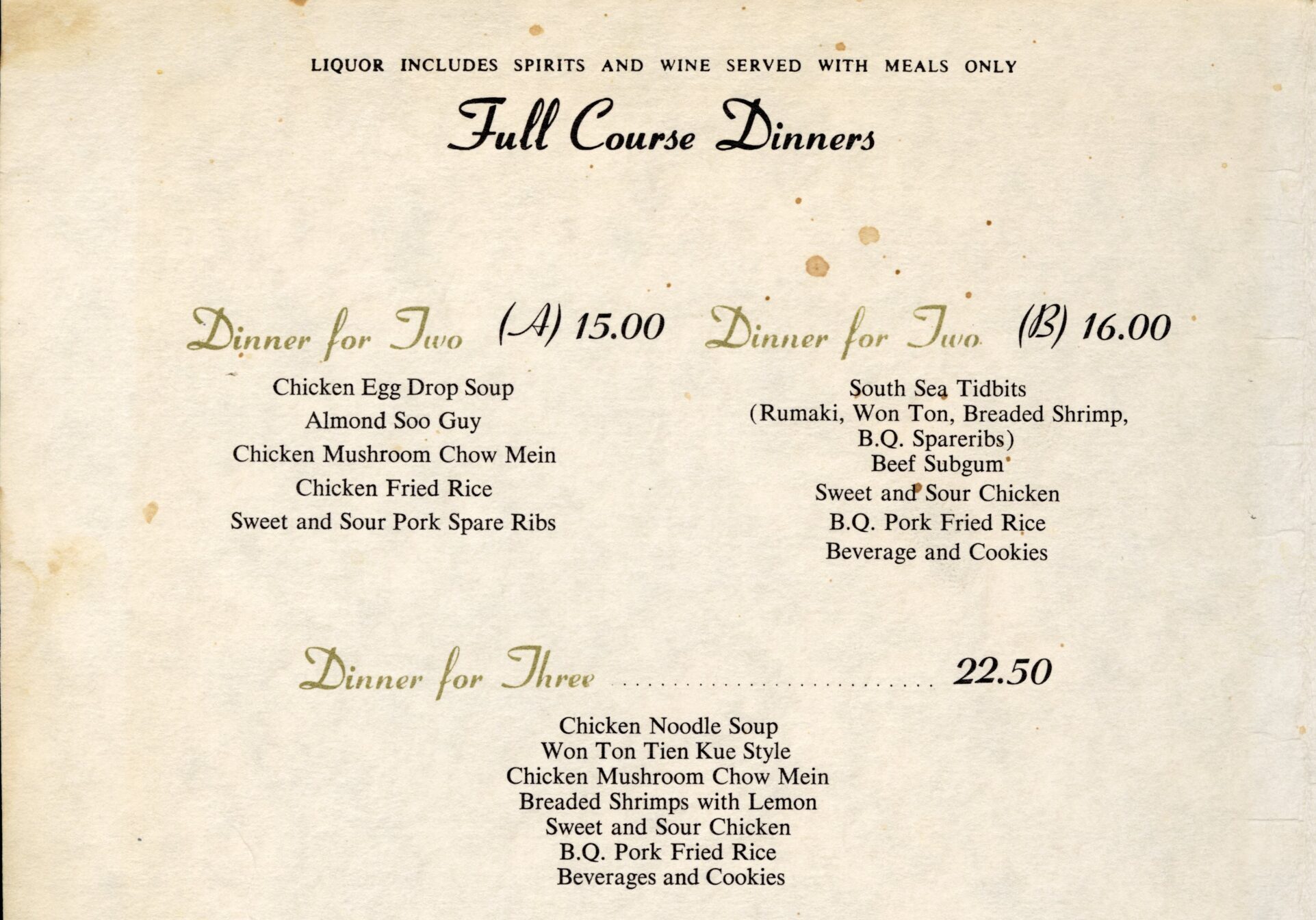
    2022.6.5a–d | c. 1970

    This menu reflects the restaurant’s blend of Chinese and Western cuisine. Diners could choose traditional dishes such as chop suey and chow mein alongside steak or full-course dinners. The cover features a stylized Chinese landscape, reinforcing the restaurant’s atmosphere of Asian hospitality that appealed to mid-century diners.

  • 2022_6_6

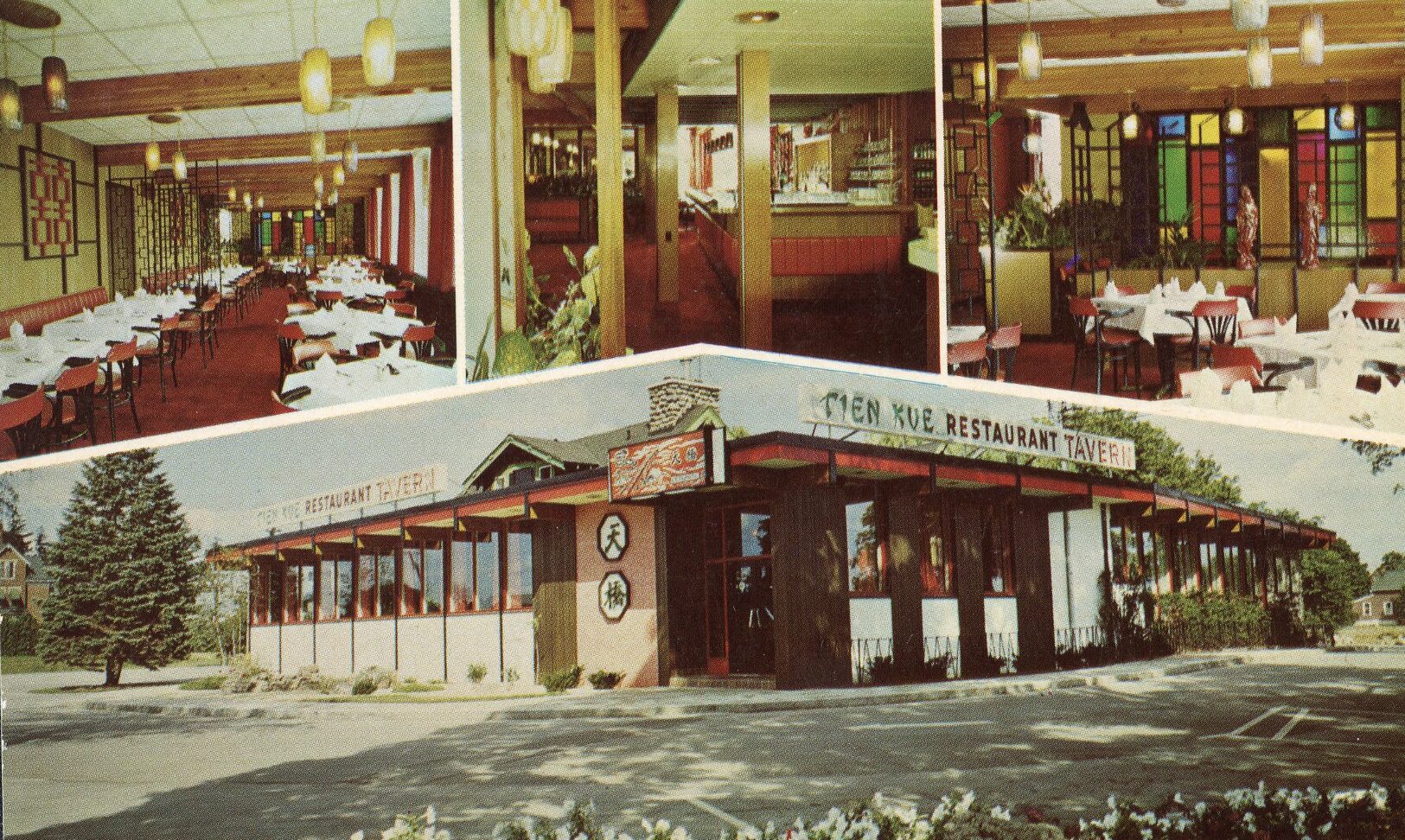
    2022.6.6 | c. 1970

    This postcard features photographs of both the interior and exterior of the restaurant. Dining rooms decorated with lantern lighting, red curtains, and round tables created an atmosphere meant to evoke Chinese design traditions. Promotional text highlighted air-conditioning, banquet rooms, and free parking—important conveniences for postwar diners.

  • 2022_6_7_outside

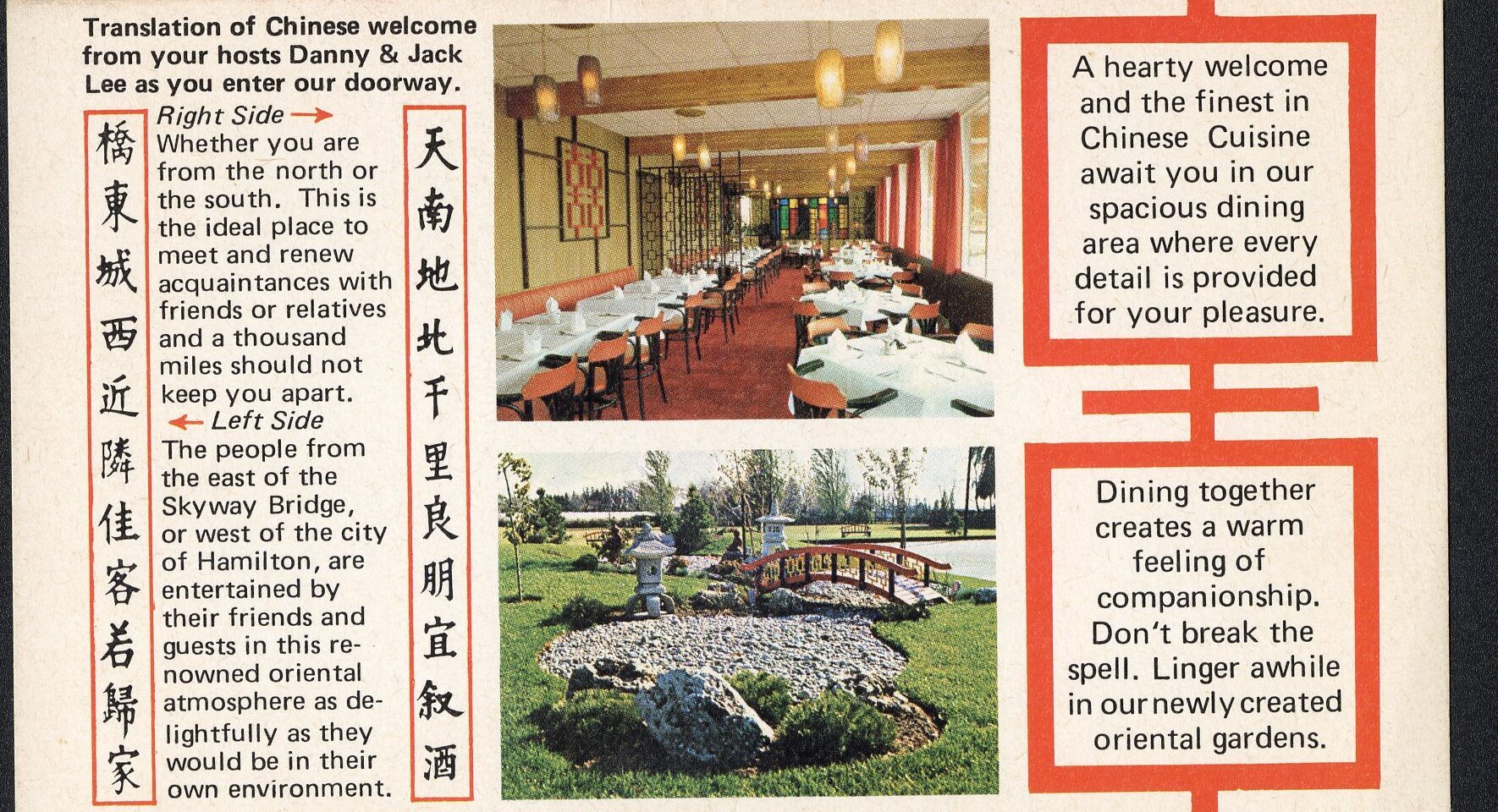
    2022.6.7 | c. 1970

    This brochure invited guests from across the region to dine at the restaurant, declaring it “Burlington’s Landmark of Chinese Hospitality.” A map on the leaflet showed how travellers could reach the restaurant, emphasizing the importance of automobile travel in bringing customers from Hamilton and surrounding communities.

  • 2022_6_8

    2022.6.8 | c. 1970

    This postcard shows visitors arriving at the restaurant. Images like these were used to promote the restaurant’s welcoming atmosphere and spacious dining areas for families and groups.

  • 2022_6_14

    2022.6.14

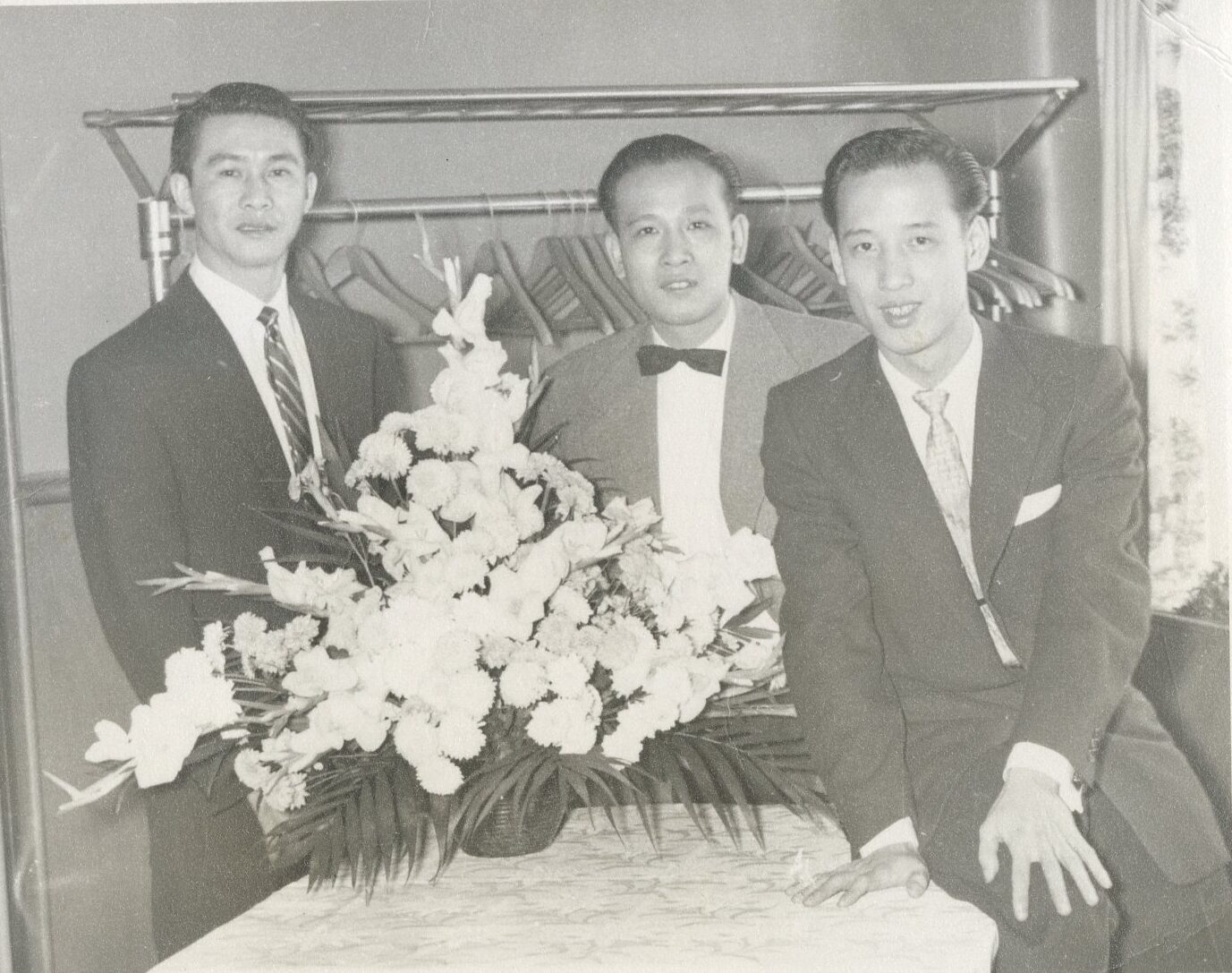
    This photograph shows the restaurant’s co-owners—Bill Lee, Bing Chow, and Danny Lee—standing together inside the restaurant. Their partnership helped establish Tien Kue as a successful dining destination in Burlington during the mid-twentieth century.
  • 2022.6.17 inside

    2022.6.17 | c. 1980

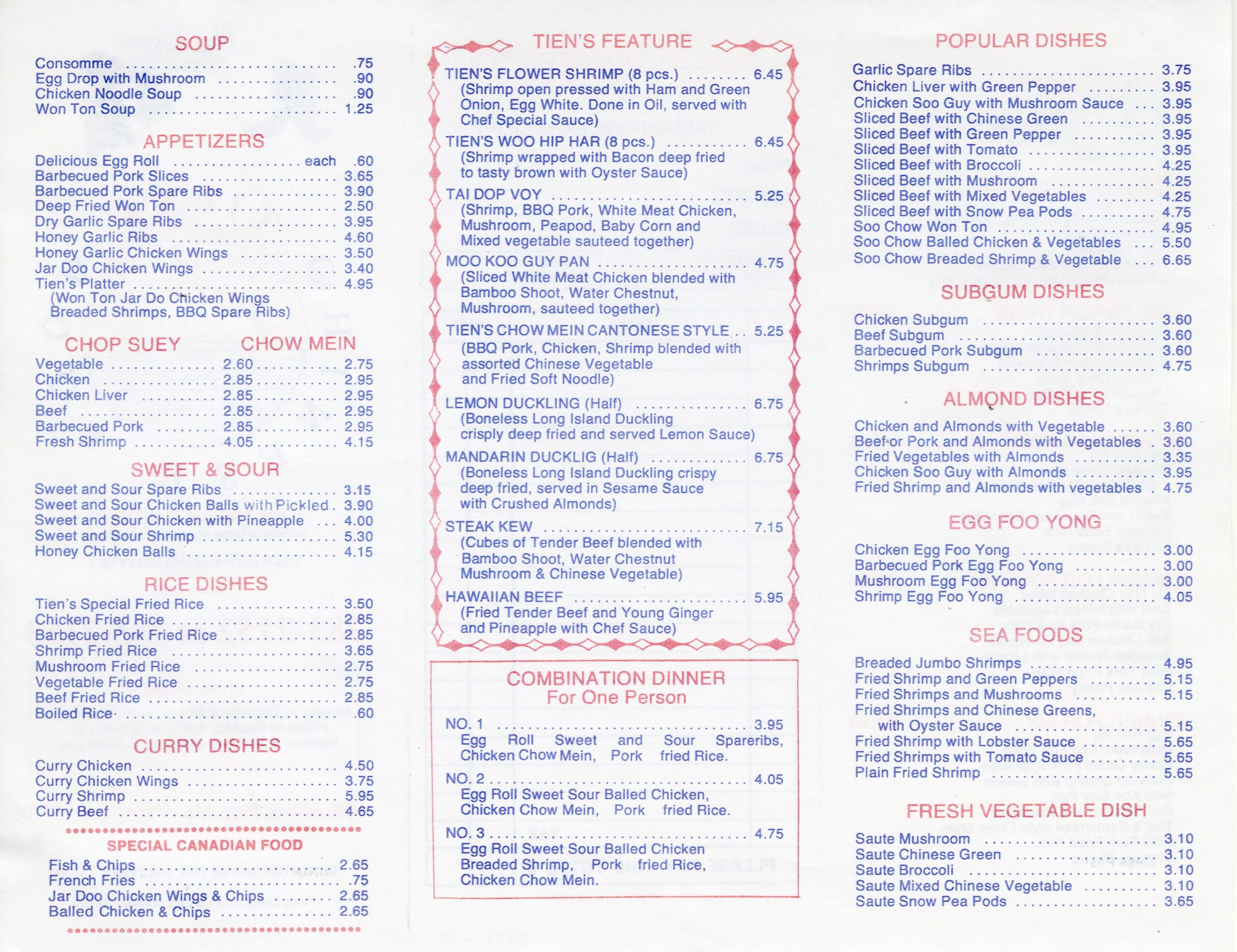
    This take-out menu reflects the growing popularity of convenient dining options. In addition to restaurant service, customers could order dishes such as chow mein, sweet-and-sour meals, and combination dinners for pickup or delivery—an increasingly common practice in the late twentieth century.

Interview with Bill Chow

  • Interview with Bill Chow, son of co-owner Bing Chow. Bill began working as a dish washer at the Tien Kue Inn at a young age. In this interview, he recalls his memories of working at the Inn.

The Estaminet

  • Located on Lakeshore Road, the Estaminet was one of Burlington’s best-known restaurants for much of the twentieth century. Established in 1919, it became a popular destination for travellers and residents seeking a more refined dining experience.

    The restaurant evolved over the decades, eventually operating under chef Brian Cooper, who also trained cooking students in the restaurant’s kitchen. Its guest books, menus, and photographs reveal the Estaminet’s long role as a gathering place for diners along Burlington’s waterfront.

  • 1985.380.683

    1985.380.683 | c. 1968

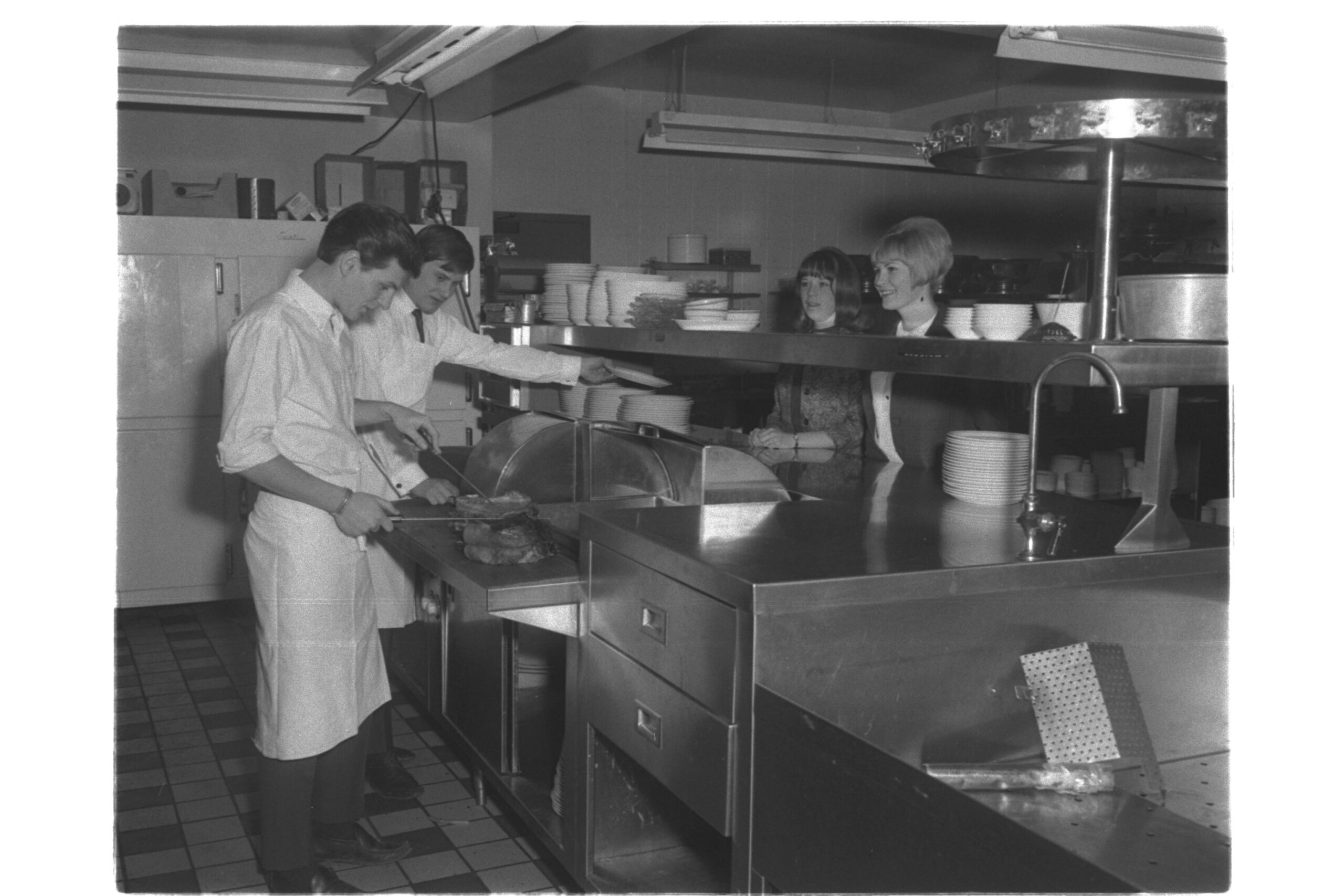
    This photograph shows chef Brian Cooper working with cooking students in the restaurant’s kitchen during the 1960s. Restaurants often served as training grounds for aspiring chefs learning professional cooking techniques.

  • 1985.380.684

    1985.380.684 | c. 1968

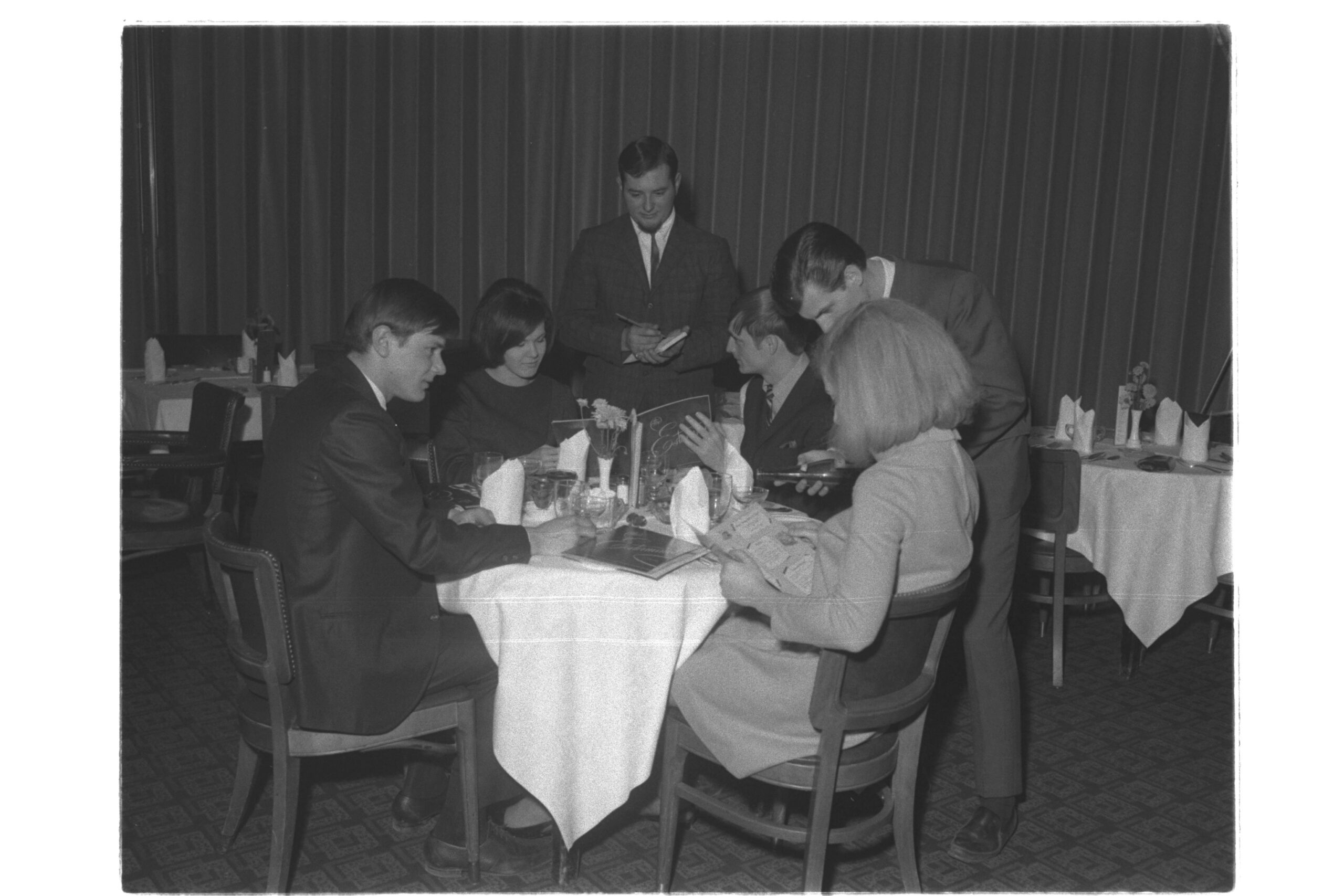
    This photograph captures a waiter taking an order from guests in the restaurant. Table service and attentive hospitality were central to the dining experience offered by establishments such as the Estaminet.

  • 1985.380

    1985.380.121 | c. 1966

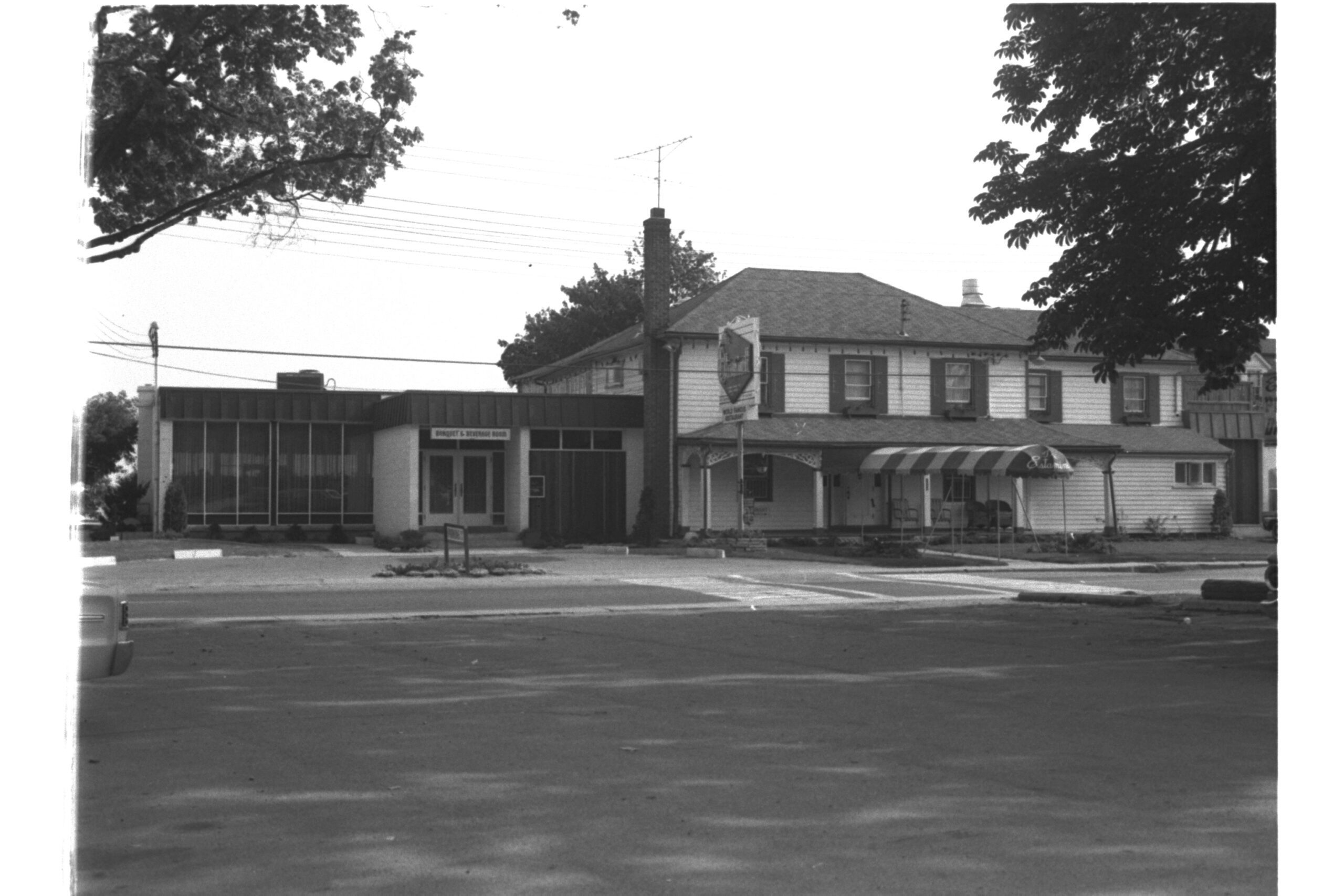
    This photograph shows the exterior of the Estaminet in the 1960s, with its striped awning and trees lining Lakeshore Road. The restaurant remained a well-known landmark along the waterfront.

  • 2012.32.911

    2012.32.911 | c. 1920

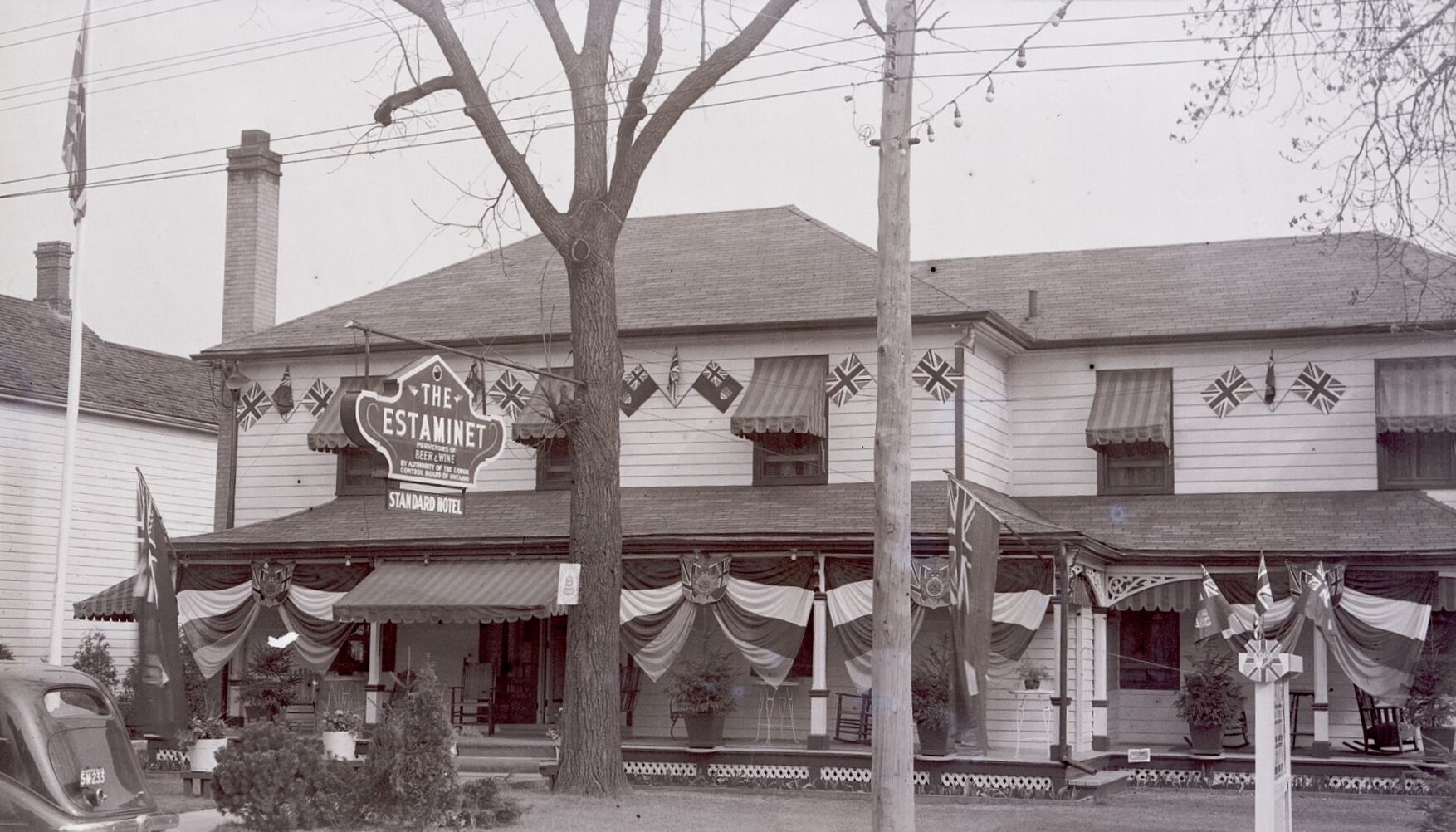
    This photograph shows the Estaminet during its early decades. Flags, verandahs, and decorative trim created an inviting atmosphere for travellers and local diners alike.

  • black-and-white photo of a restaurant

    1998.144.1 | date unknown

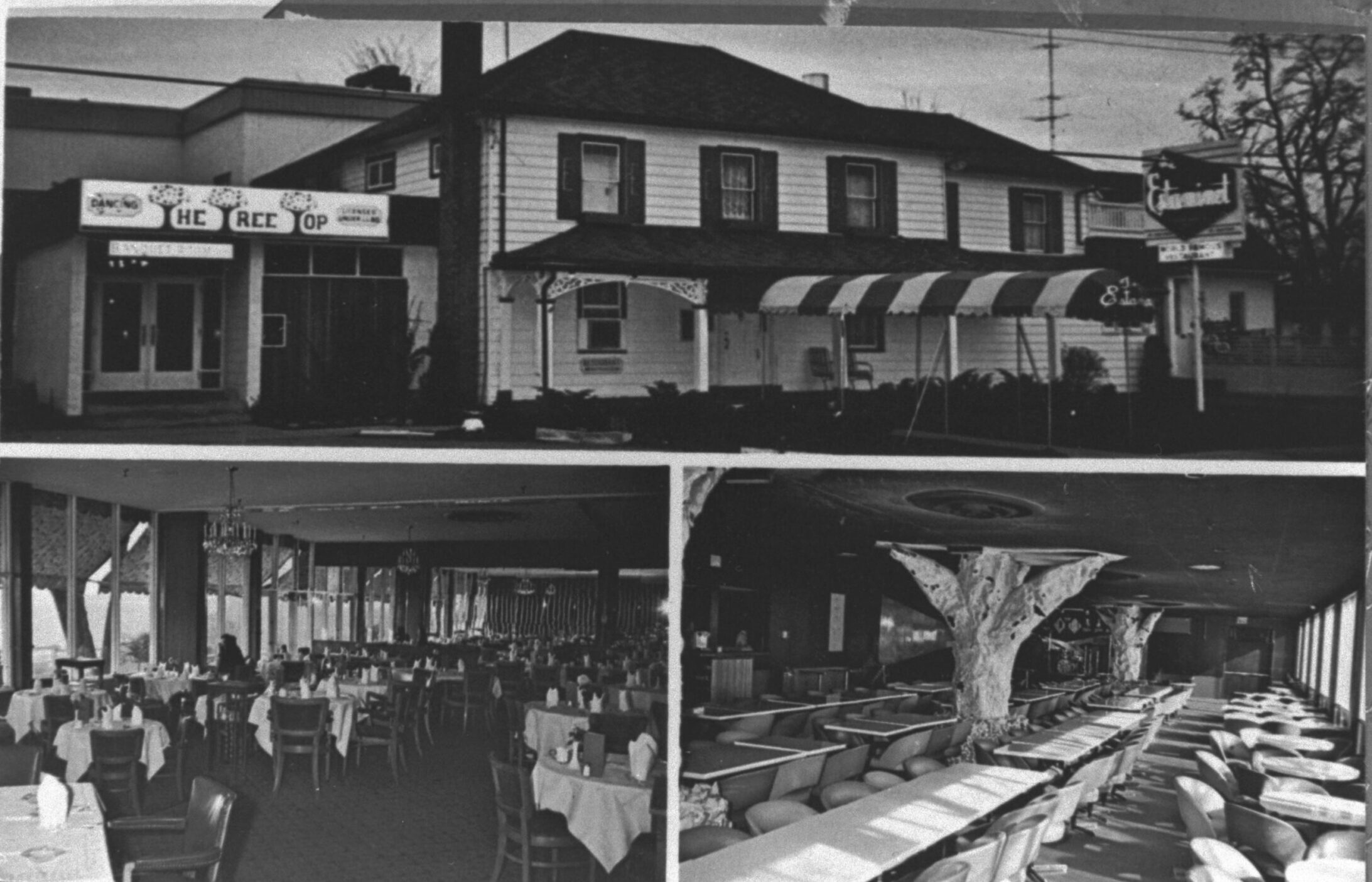
    This photograph shows a later restaurant that operated in the same location. The unusual interior design featured decorative trees that extended from the floor to the ceiling, creating a distinctive dining environment.

  • old photo of a tavern

    1985.380.449 | date unknown

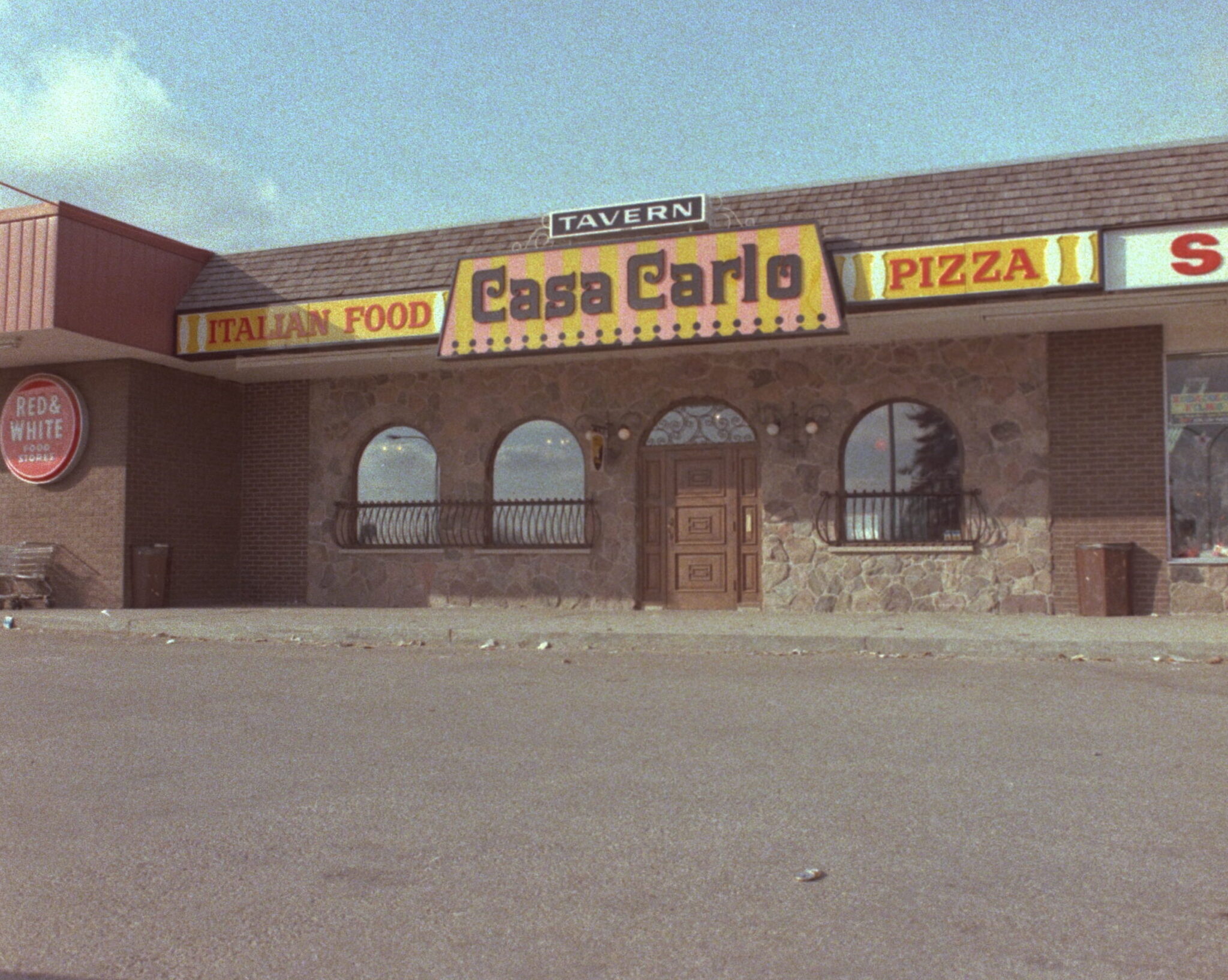
    Owned by chef Brian Cooper, Casa Carlo operated inside the Burlington Mall. Restaurants located in shopping centres reflected the growth of suburban retail spaces during the late twentieth century, offering convenient dining for shoppers and families.

The Coronation Hotel / Hotel Raymond

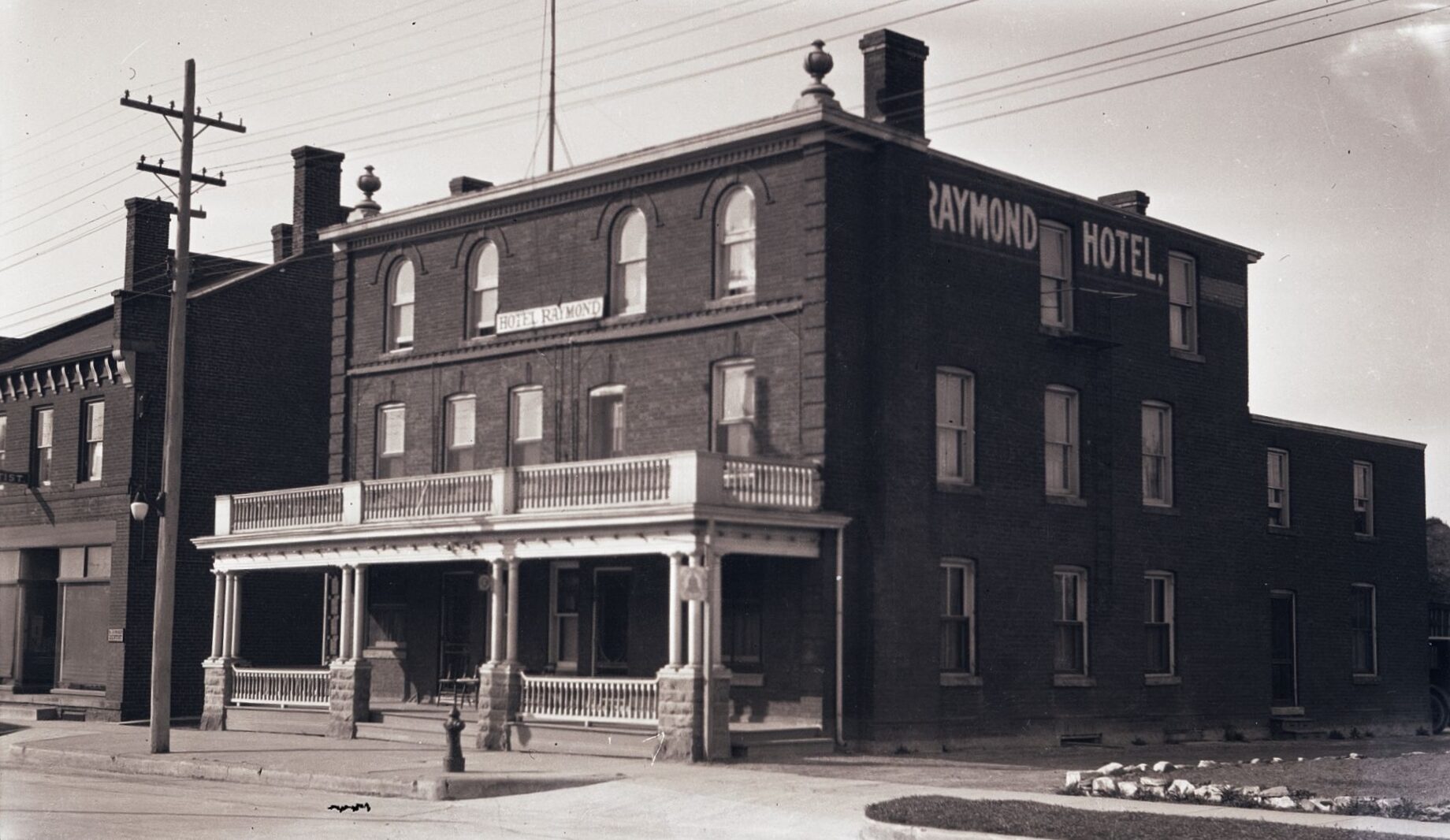
  • Long before modern chain restaurants, hotels and taverns were central places to eat and gather. The Coronation Hotel, also known earlier as the Hotel Raymond, stood on Brant Street and served travellers, workers, and local residents for decades.

    Hotels like this often included dining rooms, bars, and lodging, making them important social centres in the community.

  • black-and-white photo of a hotel

    2012.32.792 | c. 1920

    This photograph shows the hotel’s exterior, complete with balcony and signage. Located on Brant Street, the building served both travellers and local patrons.

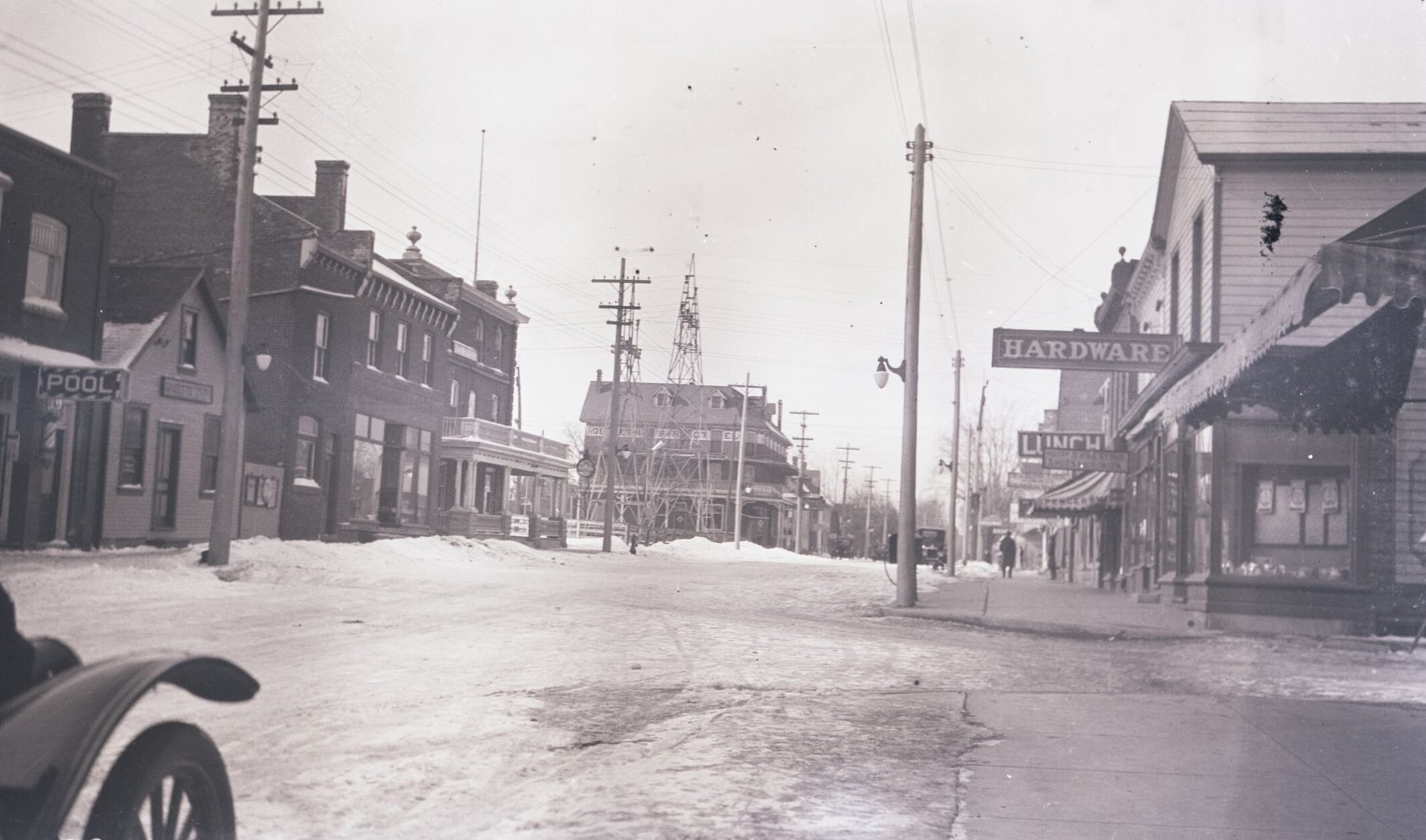
  • black-and-white photo of a street

    2012.32.1295 | c. 1920-1940

    This street photograph shows businesses lining Brant Street, including the Hotel Raymond (later the Coronation Hotel). Early automobiles and storefront signs reflect the growing commercial life of downtown Burlington.

Hale Kai Restaurant – The Brant Inn

  • The Brant Inn was one of Burlington’s most famous entertainment destinations, attracting visitors for dining, dancing, and waterfront views. Within the inn, the Hale Kai Restaurant offered a menu inspired by Asian and international cuisine.

    Restaurants like Hale Kai reflected the mid-century fascination with global flavours and themed dining experiences.

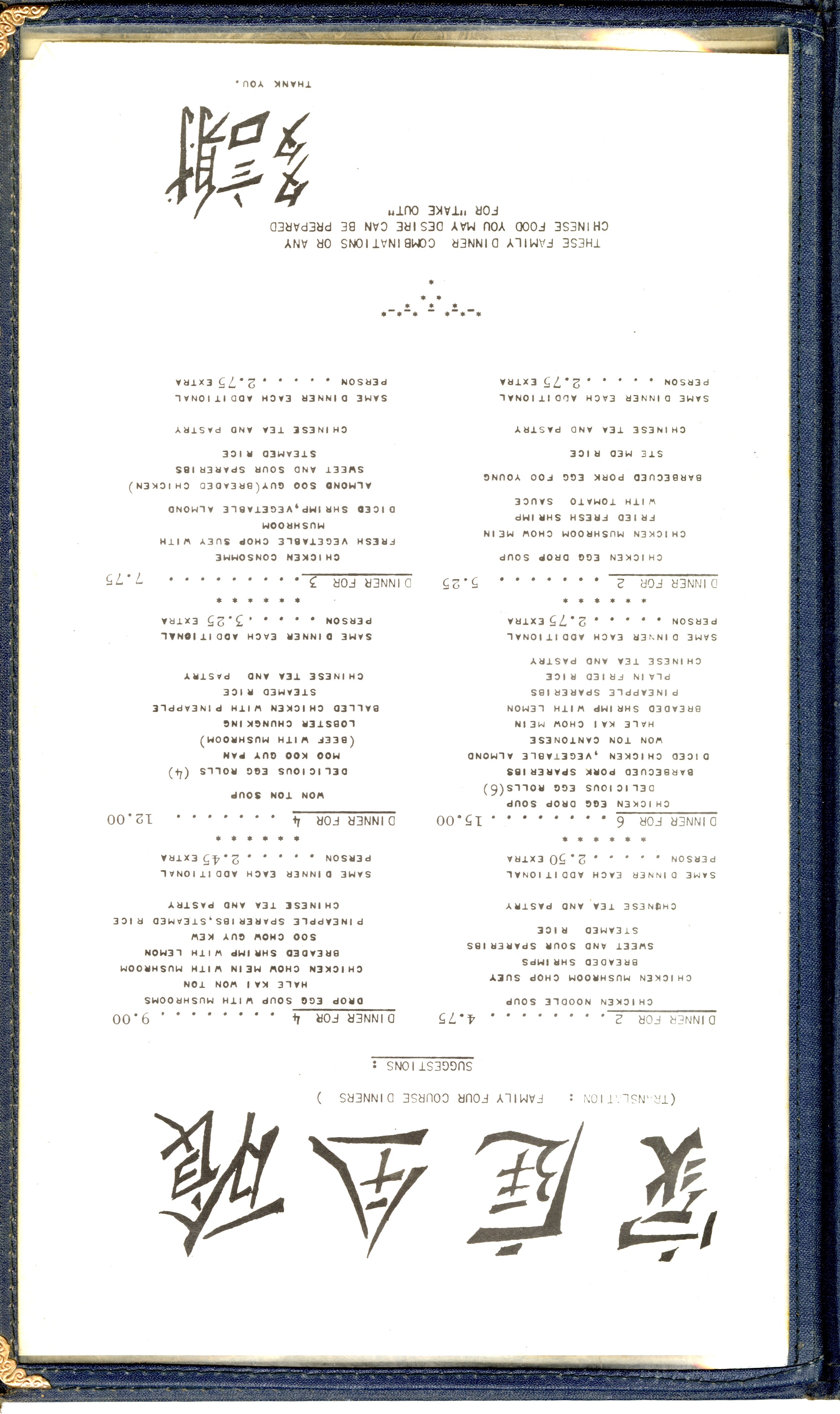
  • 2025.7.1 inside 2

    2025.7.1 | c. 1968

    This menu from the Brant Inn features drinks alongside “Family Four Course Dinners” and dishes described as coming “From the Far East.” The menu illustrates how mid-century restaurants blended international flavours with familiar Western cuisine.

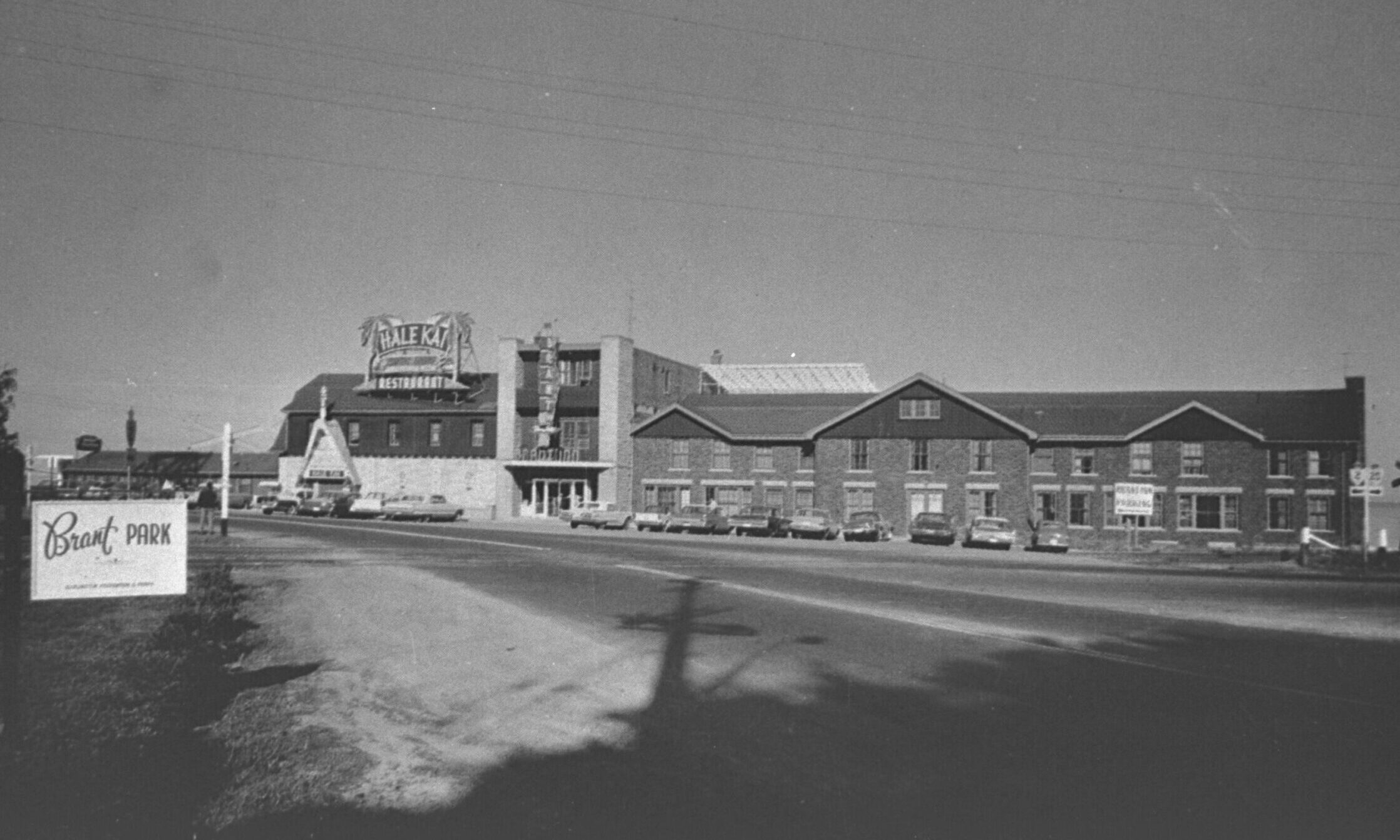
  • black-and-white photo of an inn

    X1998.131.1 | date unknown

    This photograph shows the large Brant Inn building overlooking the waterfront. A sign advertising the Hale Kai restaurant is visible, highlighting the dining options available within the entertainment complex.

Pig and Whistle Inn

  • The Pig and Whistle Inn was established in 1929 by developer and future Burlington mayor Hughes Cleaver as part of a planned chain of English Tudor-style roadside inns. Originally located at 5572 Lakeshore Road (now 100 Burloak Drive), the inn became a popular destination for dining, dancing, and tourism along the Lakeshore.

  • scan of the Pig and Whistle Inn menu

    1991.112 | c. 1950

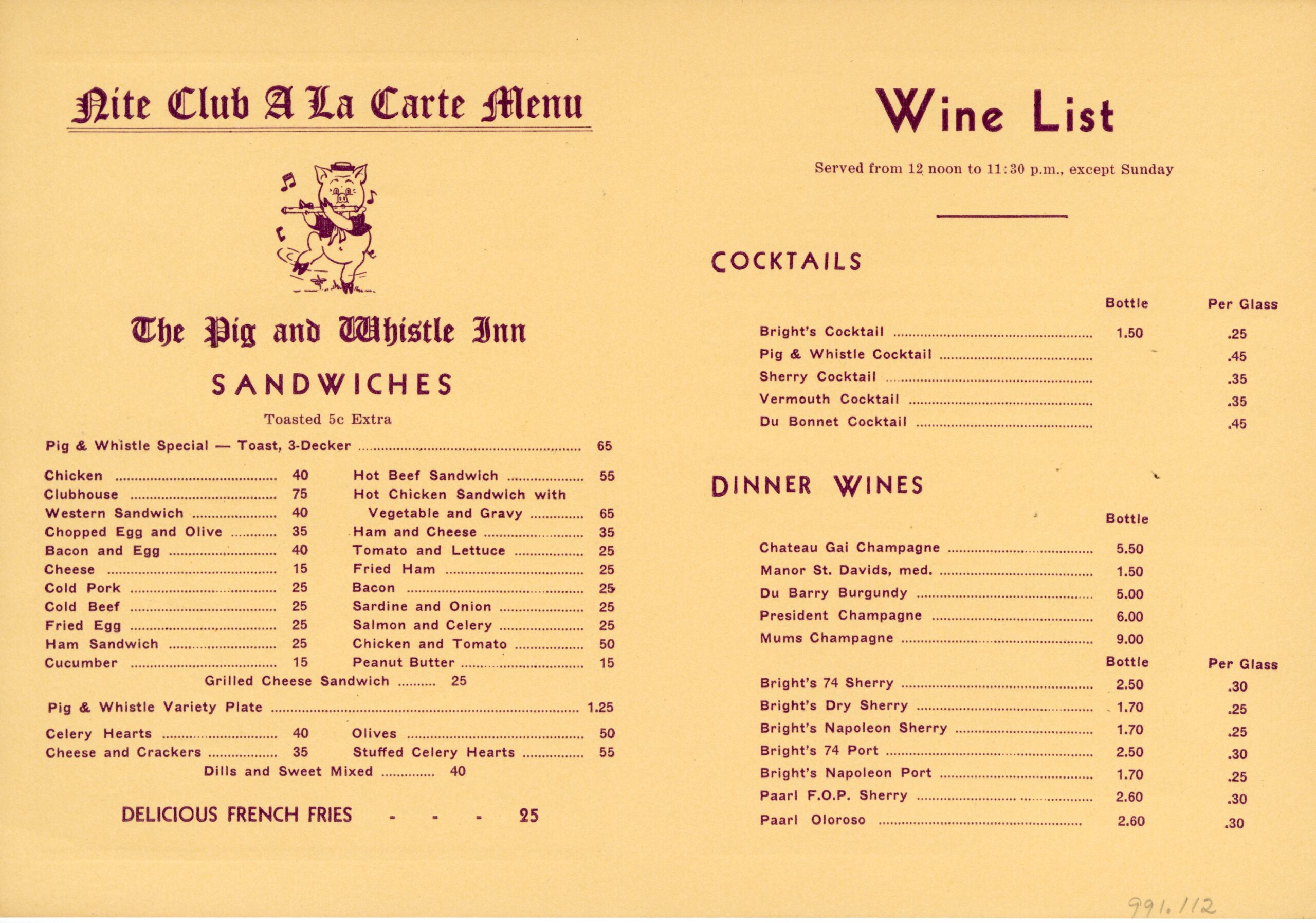
    This menu and wine list comes from the Pig and Whistle Inn, a well-known Burlington restaurant celebrated for its dining and dancing. The name references traditional English taverns where whistles were used to summon service. Establishments like the Pig and Whistle offered both meals and entertainment, reflecting the lively social atmosphere of mid-century dining culture.

  • scan of the Pig and Whistle Inn menu

    2026.6.1 | c. 1980

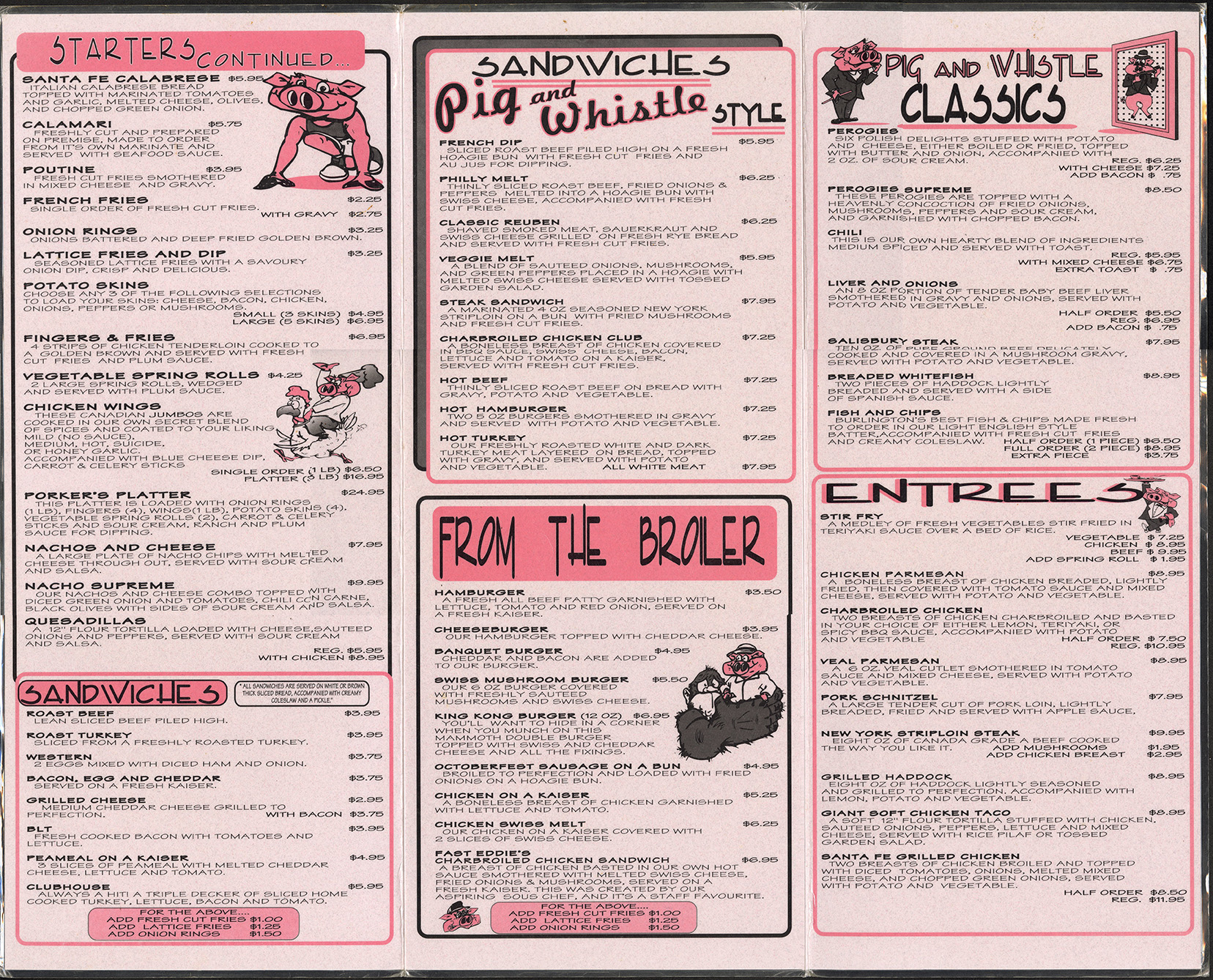
    This colourful 1980s menu reflects the inn’s lively atmosphere and long history. Designed in bright pink tones with playful illustrations by artist Kevin Wallace, the three-page laminated menu featured classic bar fare alongside European-inspired dishes such as schnitzel and perogies. Over the decades, the Pig and Whistle evolved from a roadside inn with tourist cabins into a well-known restaurant and entertainment venue that welcomed visitors from across Ontario.