Skip to Main Content

Piccadilly Café

  • For more than two decades, Piccadilly Café was a familiar gathering place on Brant Street. Owned and operated by Masoud and Sandy Vatankhah, the café served breakfast, sandwiches, and coffee to downtown workers, residents, and visitors. Like many small independent restaurants, Piccadilly Café reflected the role immigrant entrepreneurs have played in shaping Burlington’s restaurant culture. The restaurant, which was located at 491 Brant Street, Burlington, closed in August 2020 due to the COVID-19 pandemic.

    Photographs, menus, and documents from the café reveal how local restaurants contributed to the social life of downtown Burlington—serving food, hosting festival visitors, and becoming part of the community’s everyday routines.

  • 2020.6.1

    2020.6.1 | c. 2014

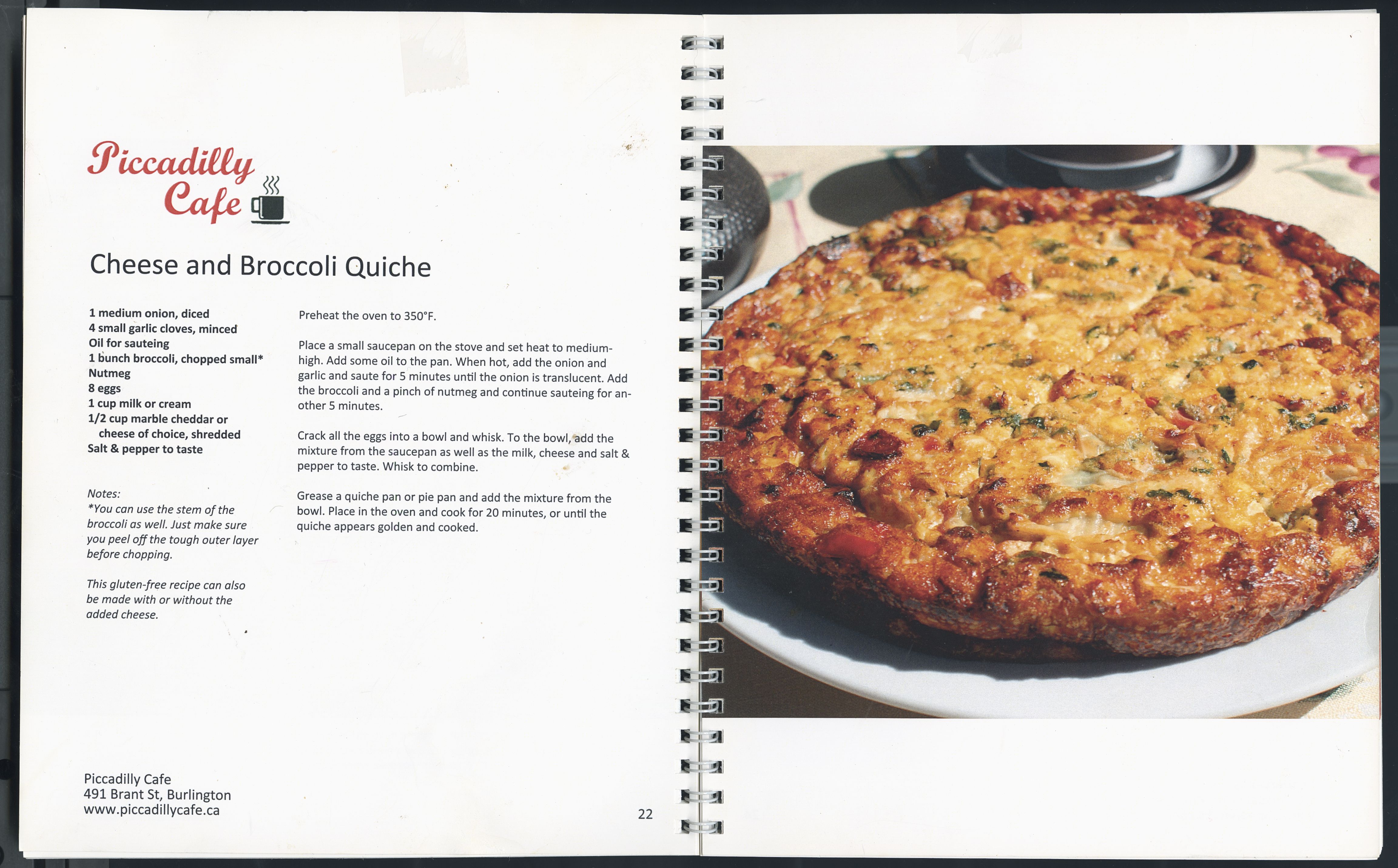
    This community cookbook contains recipes contributed by local Burlington restaurants and businesses in support of the Food4Kids charity of Hamilton and Halton. Printed in Canada by Eagle Press Printers, the spiral-bound book includes fifty pages of recipes and information about participating businesses. The cover shows a child holding a red apple with the title Filling Bellies: A “Secret Recipe” Cookbook in Support of the Food4Kids Charity.
    Participating businesses include Burnt Tongue, Detour Coffee Roasters, Earth to Table Bread Bar, Amaya Express, Democracy, Culantro, Cucci, and Piccadilly Café. The Piccadilly Café contribution appears on pages 22–23 and features a recipe for Cheese and Broccoli Quiche, highlighting the café’s role in Burlington’s local food community.

  • scan of Piccadilly Cafe menu

    2020.6.2 | c. 2020

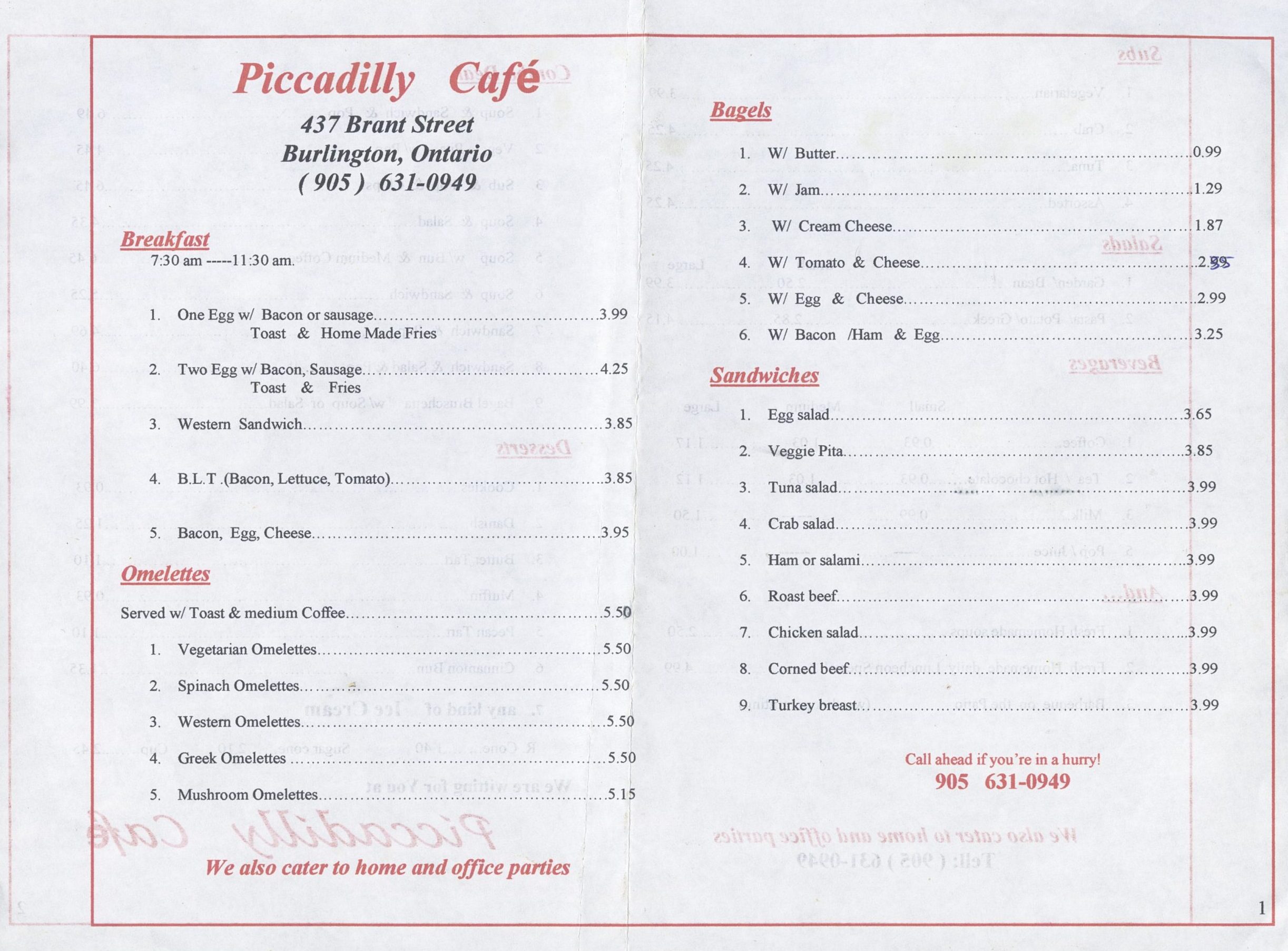
    This double-sided paper menu lists the café’s breakfast and lunch offerings. Folded into four sections, the menu includes items such as omelettes, bagels, sandwiches, salads, and desserts. The café’s address—491 Brant Street—and phone number are printed near the top.
    Handwritten price corrections on the menu show how small restaurants frequently updated their offerings over time. The menu also advertises catering services for home and office events, reflecting the café’s connection to the local community.

  • A certificate of gratitude for Masoud and Sandy of Piccadilly Cafe

    2020.6.3 | c. 2020

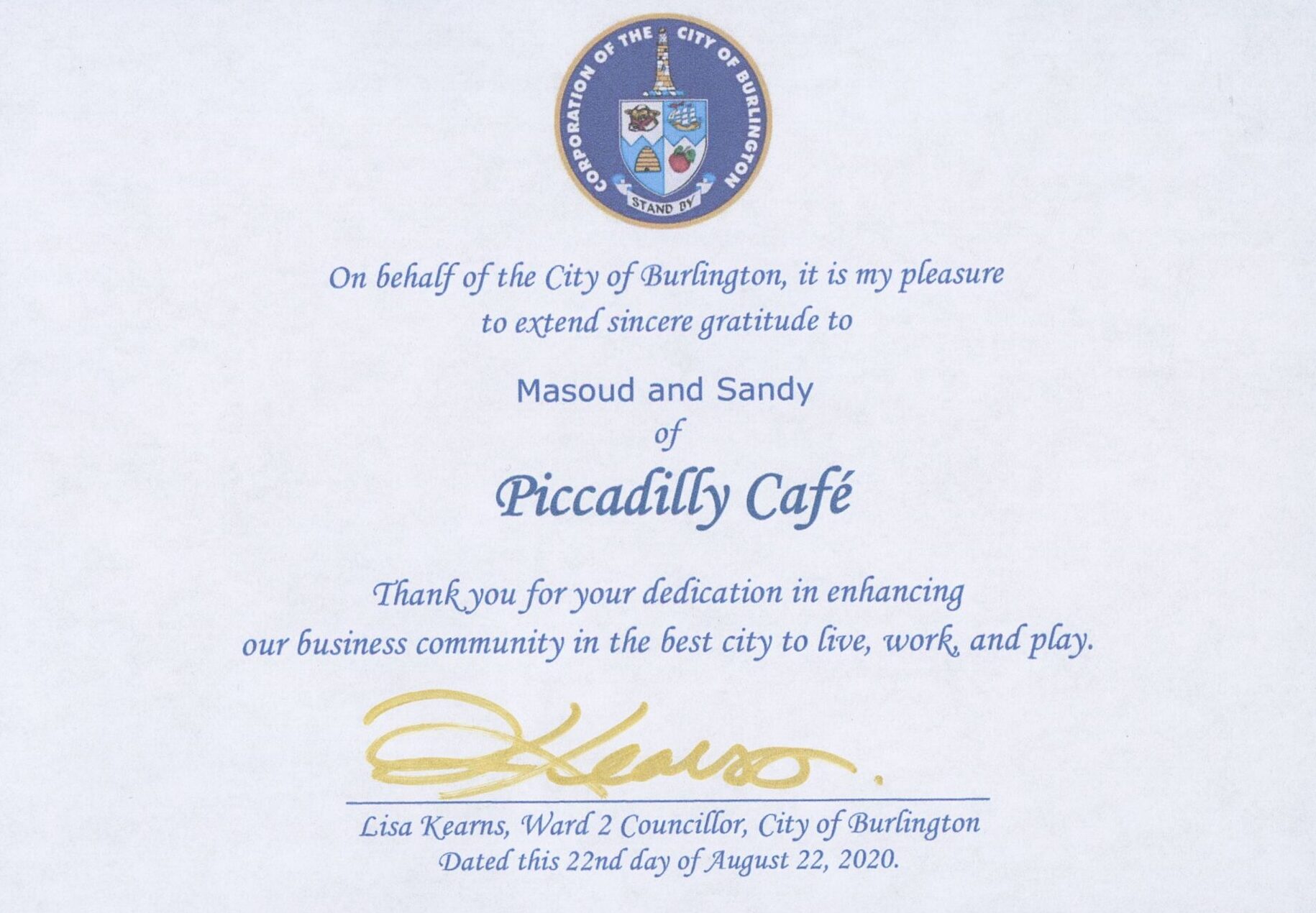
    This certificate was presented to Masoud and Sandy Vatankhah by the City of Burlington in recognition of their twenty-five years of operating Piccadilly Café from 1995 to 2020.
    The document features the City of Burlington coat of arms and a message thanking the owners for their dedication to the community. Signed by Ward 2 Councillor Lisa Kearns in August 2020, the certificate acknowledges the café’s contribution to Burlington’s local business and dining culture.

  • four people standing in front of the coffee shop menu

    2020.6.4 | c. 2019

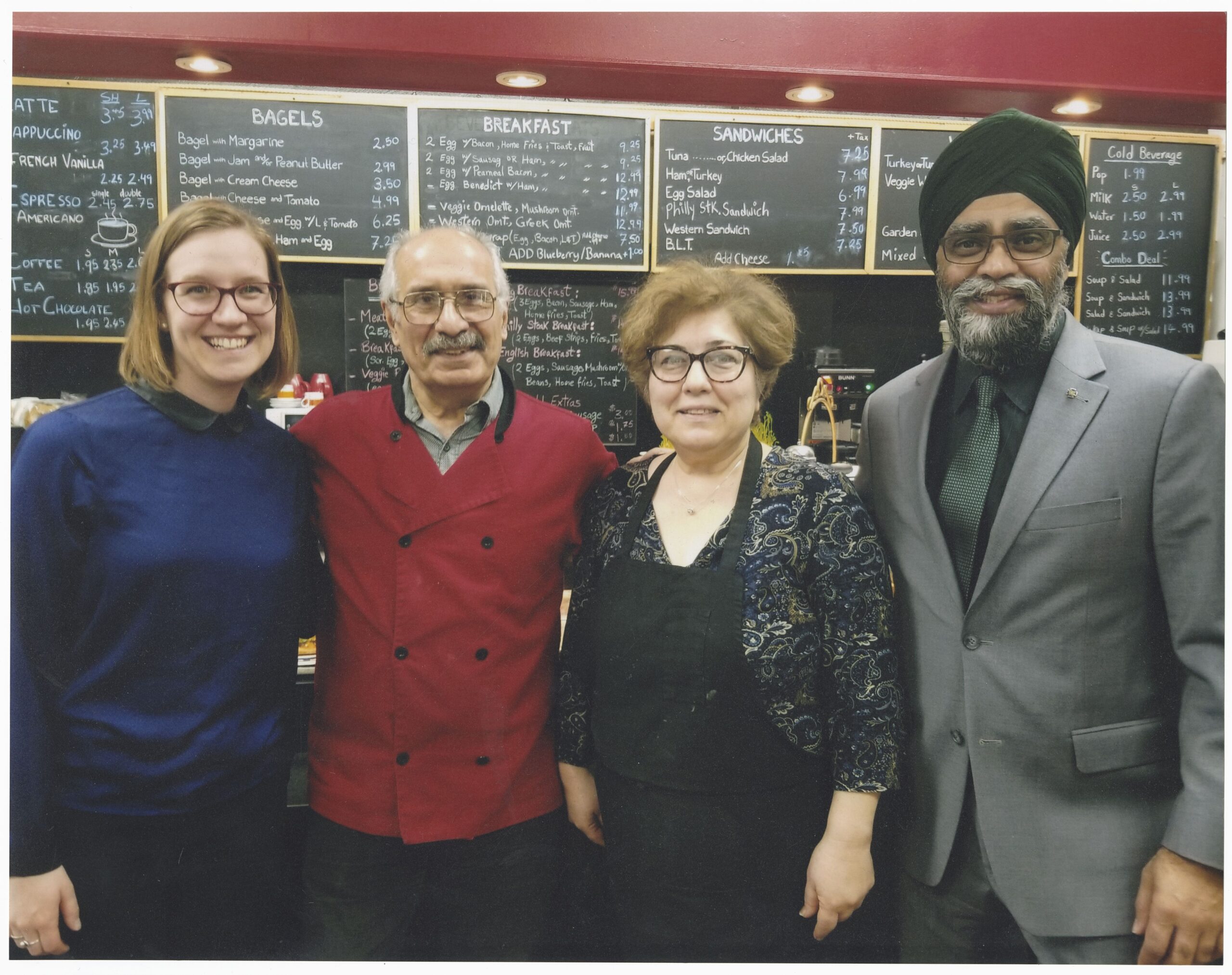
    This photograph shows café owners Masoud and Sandy Vatankhah standing inside Piccadilly Café with Members of Parliament Karina Gould and Harjit Singh Sajjan during a visit on March 14, 2019.
    The visit celebrated the café’s more than twenty years of operation in downtown Burlington and honoured Burlington resident and Juno Beach D-Day veteran Jim Warford. Chalkboard menus and the service counter are visible behind the group.

  • 2020.6.5 Obverse

    2020.6.5 | c. 2011

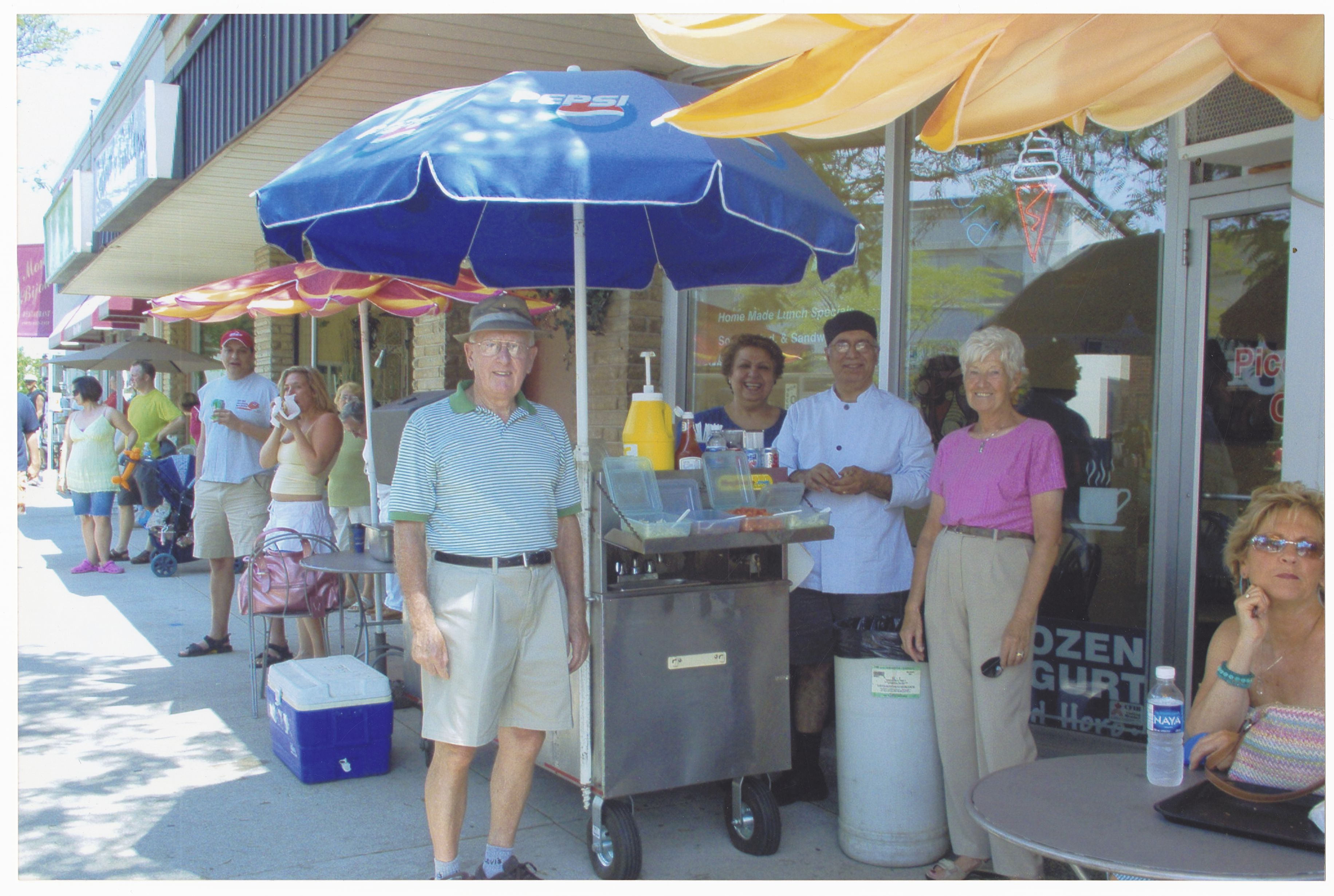
    During Burlington’s annual Sound of Music Festival, the café served food to visitors from a stand set up on the sidewalk outside the restaurant.
    This photograph shows Masoud and Sandy Vatankhah working behind the stand while festival attendees gather under colourful umbrellas along Brant Street.

  • photo of a restaurant patio in summer

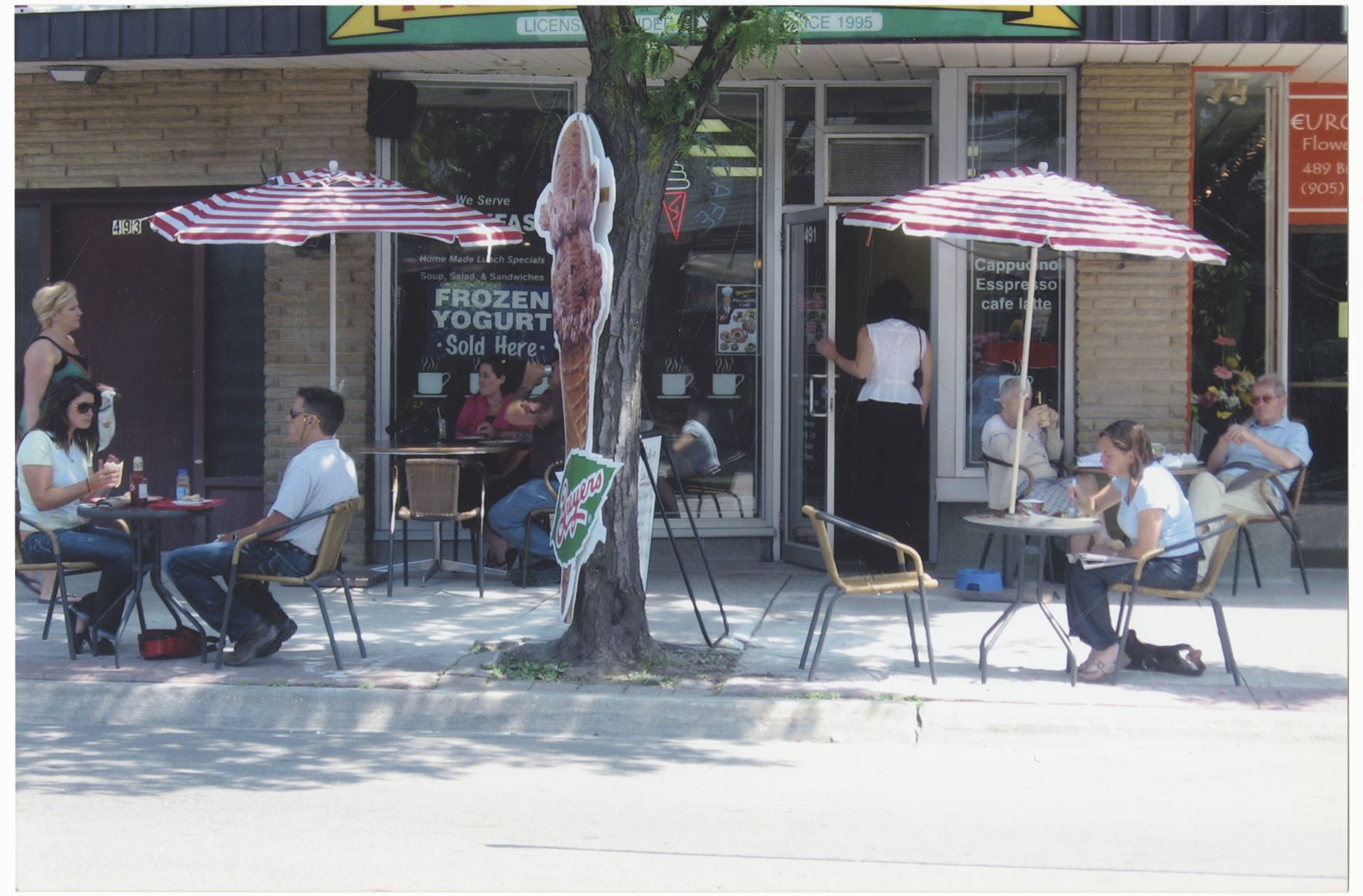
    2020.6.7 | c. 2020

    Sidewalk seating allowed guests to dine outdoors along Brant Street. Tables placed beneath striped umbrellas created a relaxed café setting where visitors could enjoy coffee, sandwiches, and ice cream while watching activity along the street.

  • photo of the restaurant owner an a customer

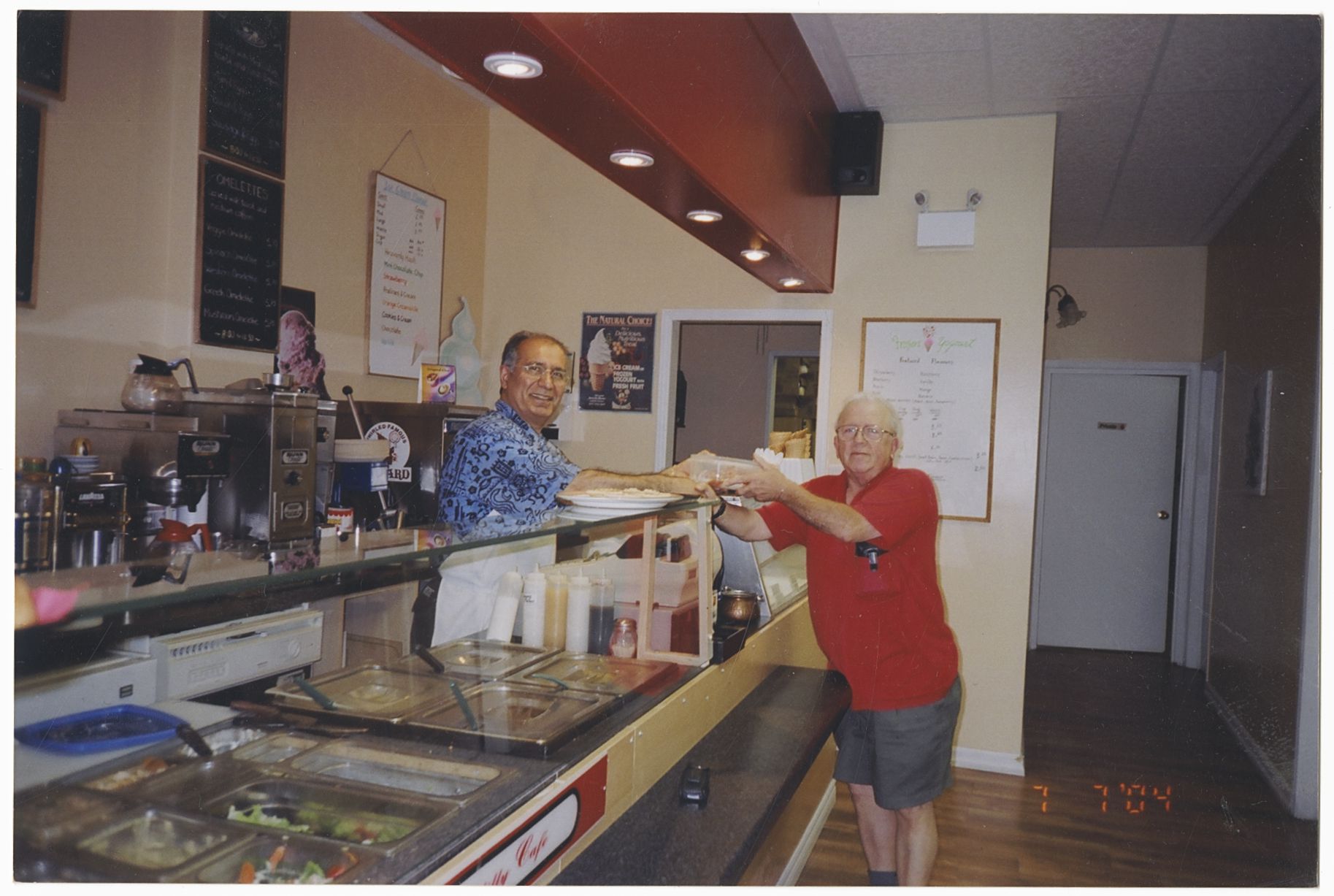
    2020.6.8 | c. 2004

    This interior photograph shows Masoud Vatankhah serving a customer at the counter. Chalkboard menu boards hang behind the counter while guests place orders in the small dining area. Images like this capture the everyday interactions that made neighbourhood cafés important social spaces.

  • an excerpt from

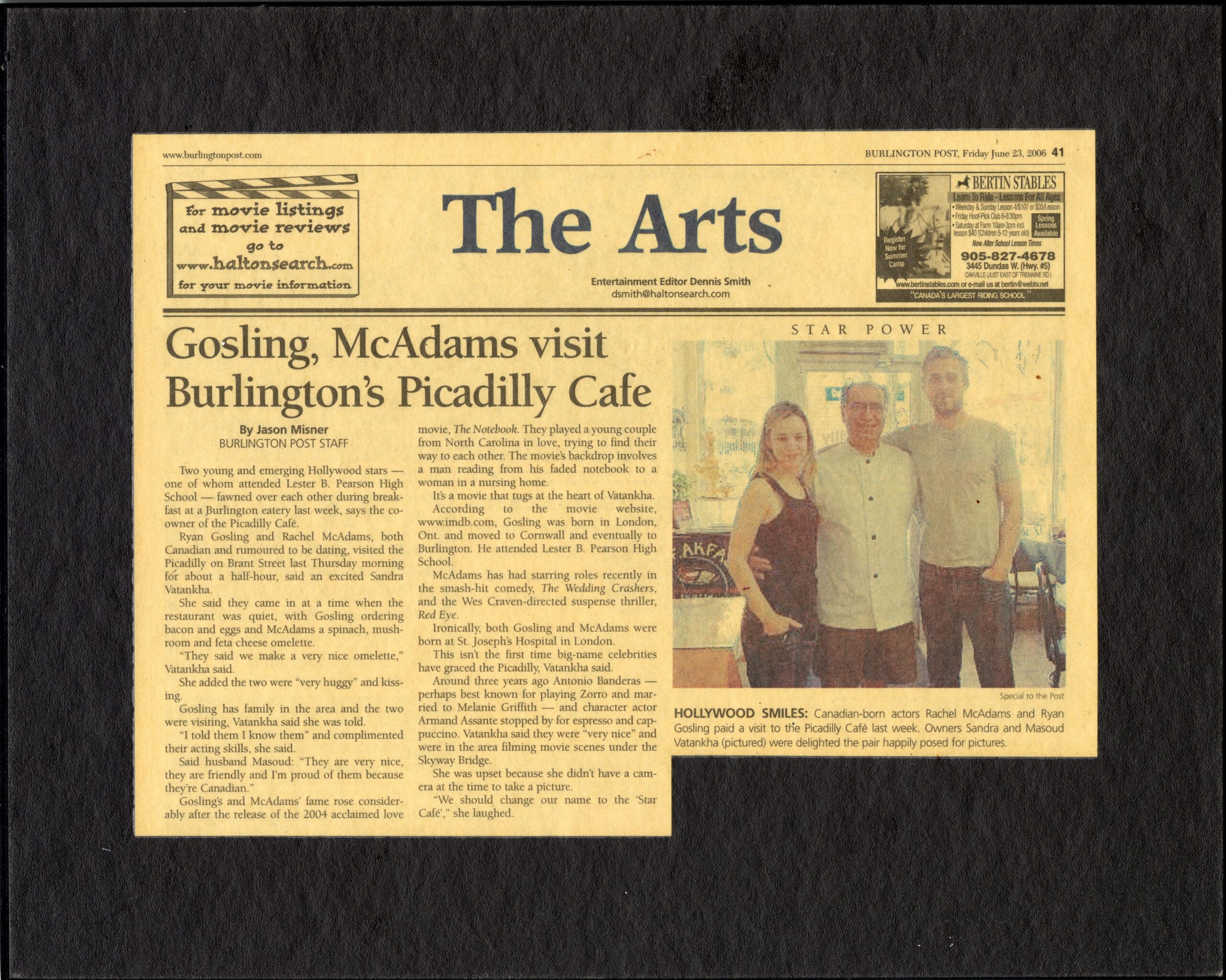
    2025.1.6 | c. 2005

    This plaque displays a Burlington Post newspaper article reporting a visit to the café by Canadian actors Ryan Gosling and Rachel McAdams during their early careers. The photograph accompanying the article shows the actors posing with Masoud Vatankhah inside the café, highlighting the restaurant’s place within the local cultural scene.

Charcoal Pit

  • For many people in Burlington, the Charcoal Pit is a place closely tied to growing up in the city. Known for classic diner favourites like burgers, hotdogs, fries, and poutine—alongside Mediterranean dishes such as souvlaki—the popular restaurant recently celebrated its 50th anniversary. Current owner Jay Yordi, who purchased the business in the late 2010s, quickly discovered the strong loyalty of its customers. Generations of diners have shared memories there, from first dates to family meals, helping make the Charcoal Pit a long-standing community fixture. Freshly prepared favourites like the cheeseburger, chicken souvlaki, gyros, and hand-cut fries continue to draw regulars and new visitors alike.

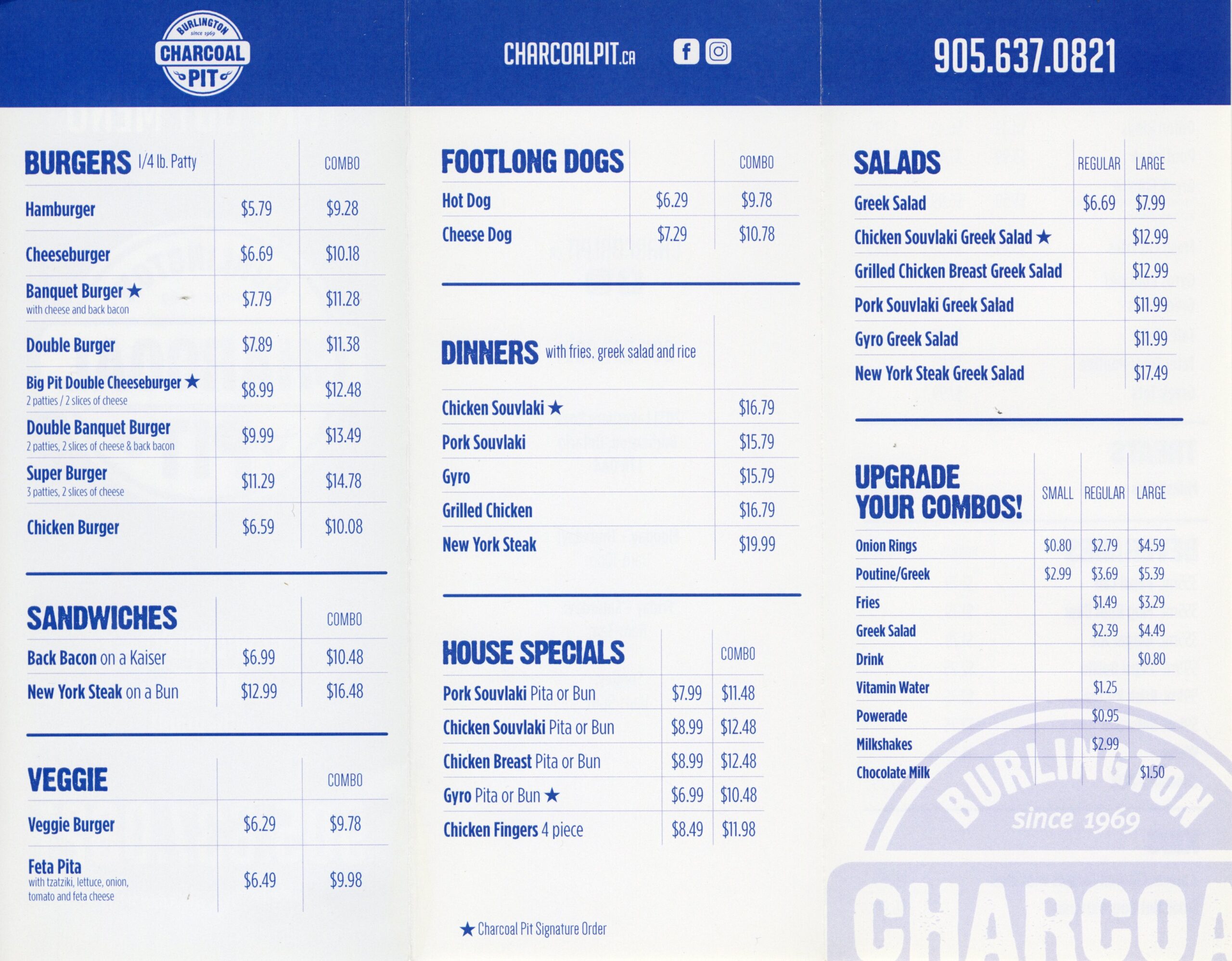
  • Charcoal Pit menu

    2026.4.1 | c. 2025

    This menu highlights the mix of classic diner foods and Mediterranean-inspired dishes that made the Charcoal Pit a Burlington favourite. Items such as burgers, souvlaki, gyros, and hand-cut fries reflect the restaurant’s long-standing approach to comfort food and casual dining.

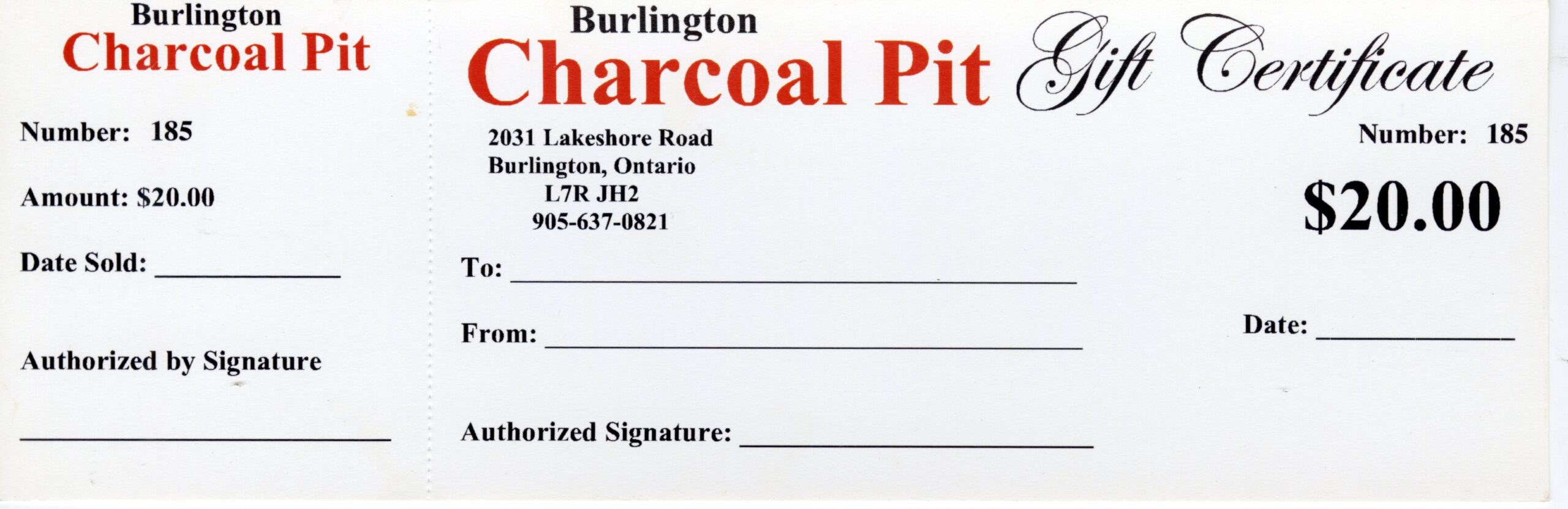
  • A scan of a gift certificate from Charcoal Pit

    2026.4.2 | c. 2020

    Gift certificates like this one encouraged customers to share the Charcoal Pit experience with friends and family. They also reflect the restaurant’s role as a familiar community gathering place for celebrations, casual meals, and local traditions.

  • Charcoal Pit logo

    2026.4.3 | c. 2025

    Promotional items such as stickers helped build the restaurant’s recognizable local identity. For many Burlington residents, the Charcoal Pit logo became a symbol of nostalgia, community, and longtime family dining traditions.

Conclusion

For generations, food has helped shape Burlington’s landscape and community life. In the late nineteenth and early twentieth centuries, farms and orchards across the region earned Burlington its reputation as part of Ontario’s “Garden of Canada,” supplying fruit and produce to nearby cities.

By the mid-twentieth century, changing lifestyles and growing automobile travel ushered in what many remember as a golden age of eating out. Restaurants, cafés, and taverns became popular gathering places where families and friends shared meals outside the home.

Today, Burlington’s food culture reflects the city’s growing diversity. Along streets such as Brant Street, restaurants serve cuisines from around the world, brought by new generations of entrepreneurs and immigrants. Together, these farms, restaurants, and community spaces tell the story of how Burlington’s local food traditions have grown into a vibrant, global dining culture.