Skip to Main Content

The Ireland Family - Oakridge Farm

  • The Ireland family farmed in Nelson Township for generations and operated Oakridge Farm, where dairy cattle and fruit production were important parts of the operation. Like many successful farms in the region, the Irelands relied on both family labour and hired workers to maintain the farm.

    Records, photographs, and tools from the farm reveal how it functioned as both a home and a business. These objects show the daily work required to manage livestock, orchards, and hired labour, as well as the pride farmers took in maintaining healthy animals and productive land.

  • IHMX2007.2.2

    IHMX2007.2.2 | c. 1930

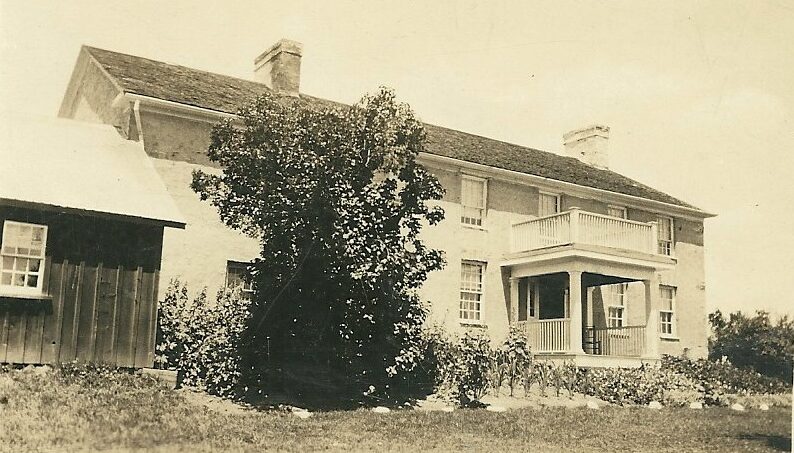
    This photograph shows the Ireland family home before later architectural additions were made. The barn visible behind the house contained a summer kitchen used during warmer months. The surrounding gardens and farm buildings illustrate how farmsteads functioned as integrated spaces where domestic life and agricultural work were closely connected.

  • IHM1992.36.55 A-C altogether

    IHM1992.36.55 A–C | c. 1935-1938

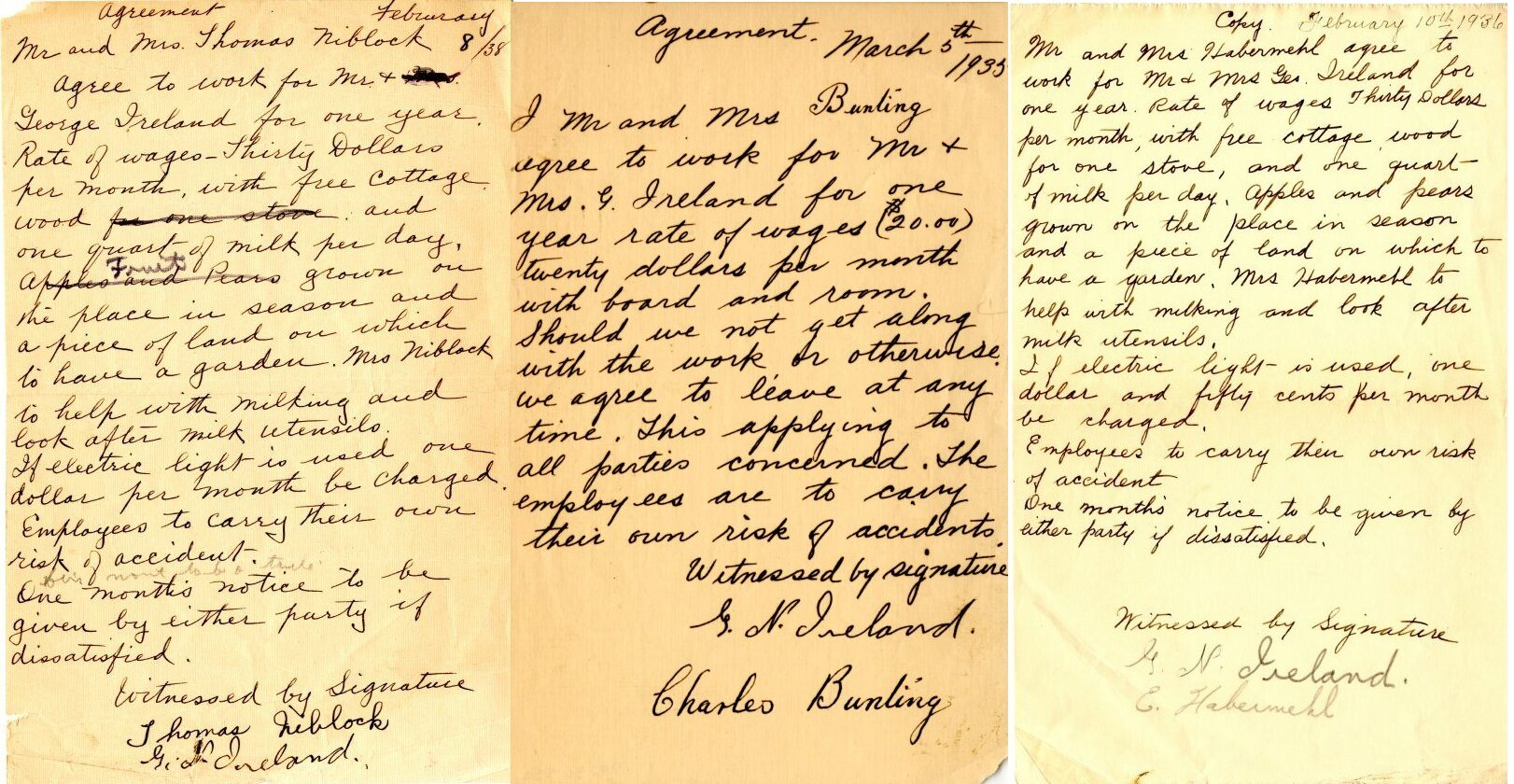
    These handwritten contracts record employment agreements between George N. Ireland and hired farm workers. Workers were paid monthly wages and often received room, board, firewood, and farm produce as part of their compensation. Agreements also required employees to accept the risk of workplace accidents. Such documents show how farms relied on hired labour and formal arrangements to manage the demanding work of agriculture.

  • IHM1989.1.5

    IHM1989.1.5 | c. 1925-1934

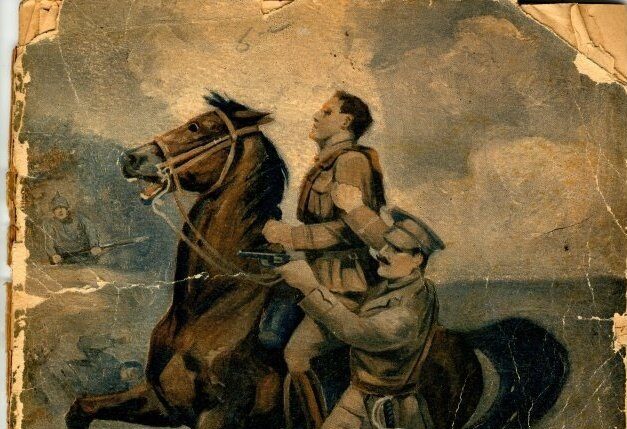
    This notebook records wages and benefits provided to hired workers on the Ireland farm. Keeping detailed records helped farmers manage labour costs and track employment arrangements. The book reflects the business side of farming, where careful accounting was essential to running a successful agricultural operation.

  • IHM1987.3.701 D

    IHM1987.3.701 D | c. 1890

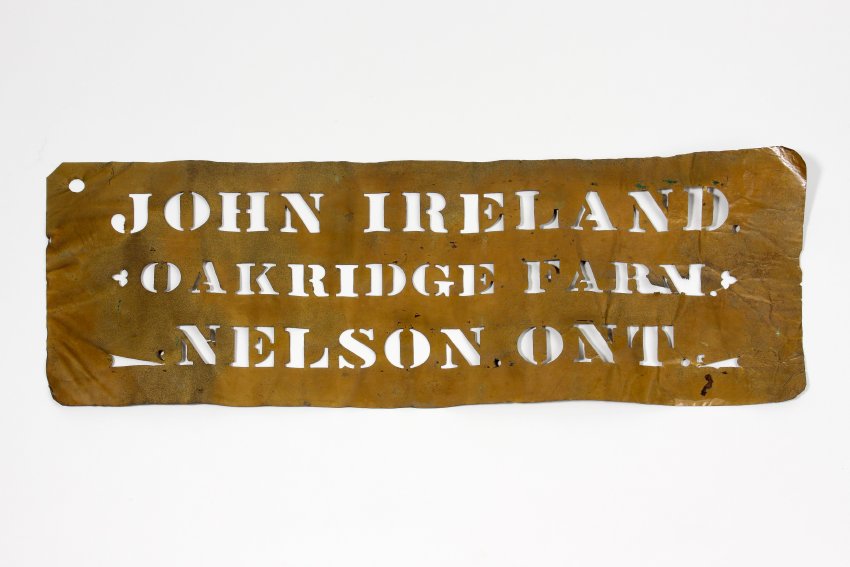
    This brass stencil was used to mark apple barrels with the name “John Ireland, Oakridge Farm, Nelson Ont.” Farmers branded their produce containers to identify products in markets and during shipping. The variety of apples would be stencilled on the barrel head using ink made from lamp black and linseed oil.

  • IHM989.1.15 e

    IHM1989.1.15 e | c. 1935

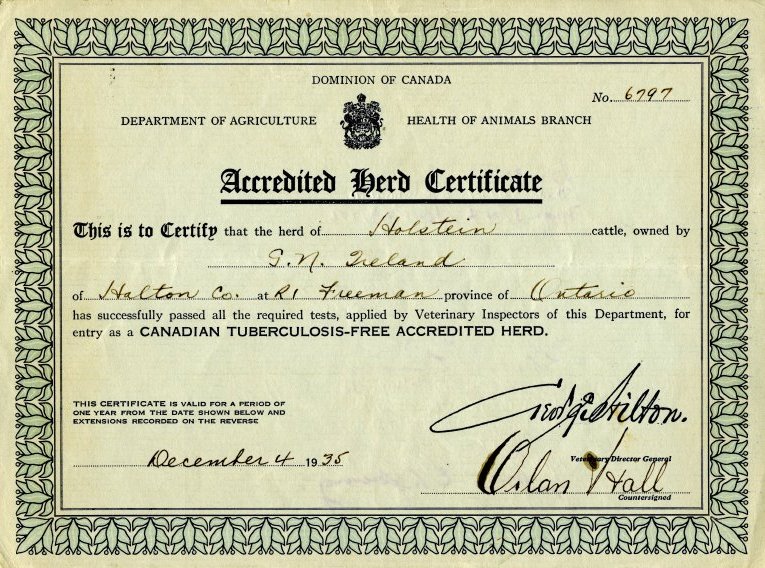
    Issued by the Federal Department of Agriculture, this certificate recognizes the Ireland farm’s Holstein herd as Canadian Tuberculosis-Free Accredited. Disease testing programs helped improve livestock health and ensure safe dairy production. Certification demonstrated the farm’s commitment to maintaining high agricultural standards.

  • IHM1989.1.15 M

    IHM1989.1.15 M | c. 1883-1962

    This register records cattle owned by the Ireland family over nearly eighty years. Stock registers allowed farmers to track breeding, ownership, and the health of livestock. Long-term records like this reveal the importance of dairy cattle to the Ireland farm and show how agricultural knowledge was maintained across generations.

  • IHM1995.3.4

    IHM1995.3.4 | c. 1950

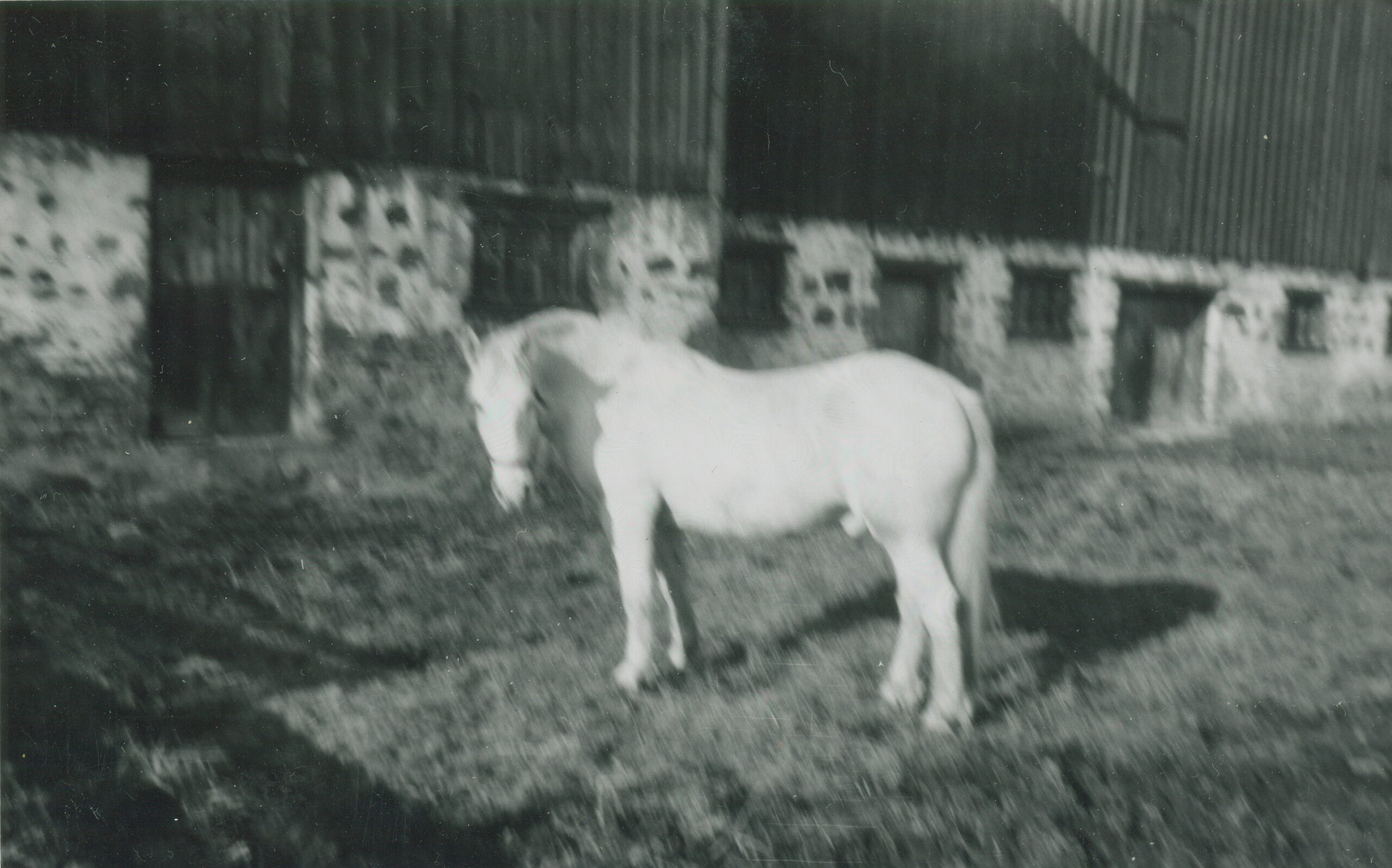
    This photograph shows Jack, the last horse used on the Ireland farm, standing beside the dairy barn. Horses were essential for farm labour before tractors became common. Jack lived to the age of 25, marking the end of an era when animal power was central to everyday farming work.

  • IHM1989.1.61

    IHM1989.1.61 | .c. 1847

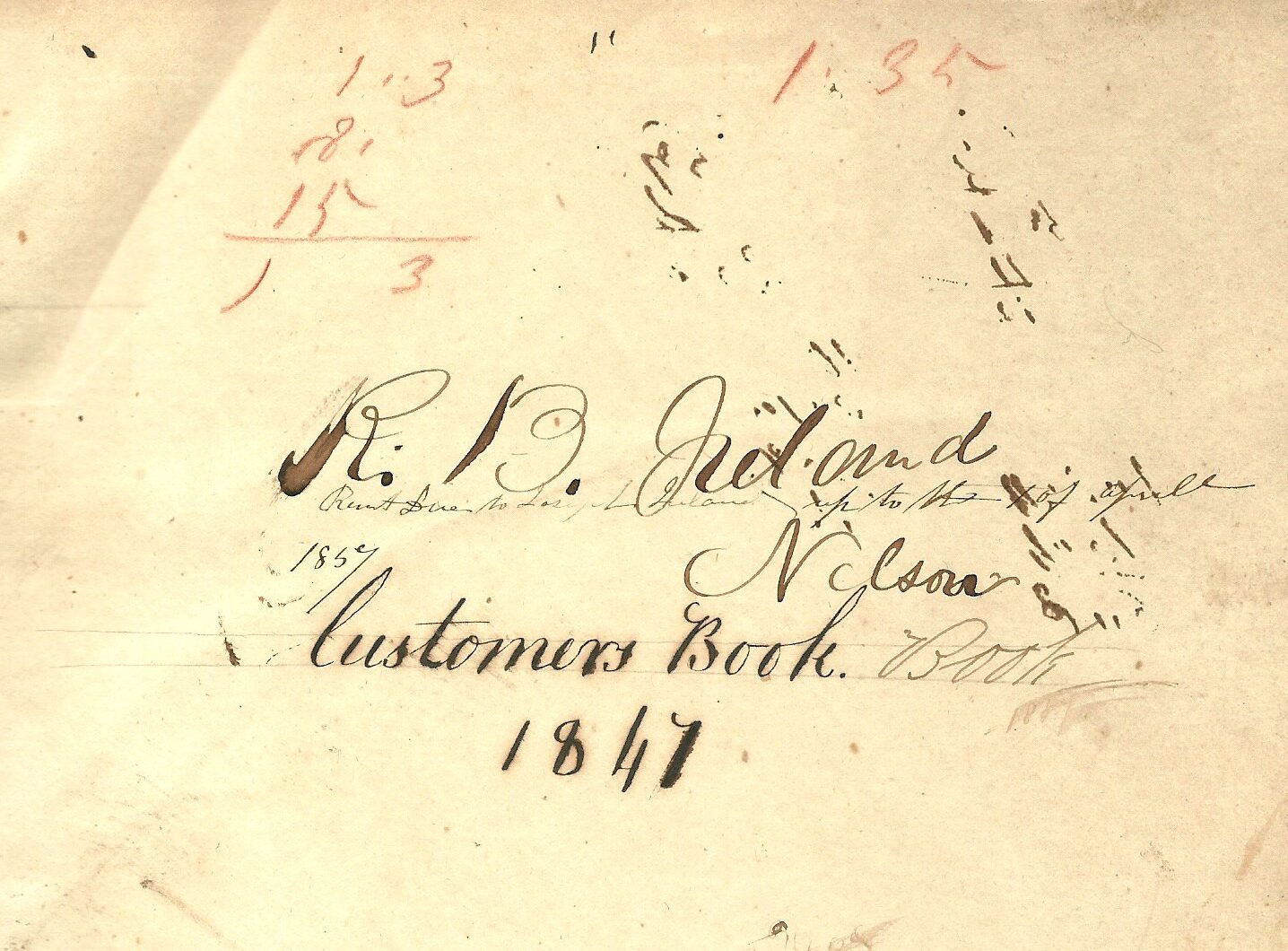
    This ledger records early business transactions made by Robert Best Ireland in Nelson Township. Entries include the sale of cattle and property within the local community. Such records demonstrate how early farm families participated in local agricultural economies and maintained networks of trade with neighbours and relatives.

The Willey Family - Market Gardeners

  • The Willey family operated a market garden in Burlington, growing vegetables—particularly celery—for local markets. Market gardening required intensive labour and careful planning, as crops were grown specifically for sale rather than household use.

    Photographs from the Willey farm show the process of planting, harvesting, and packaging produce, as well as the family members who worked the land. Their farm reflects the shift toward specialized agriculture that supplied fresh vegetables to nearby urban markets.

  • 2020.7.2

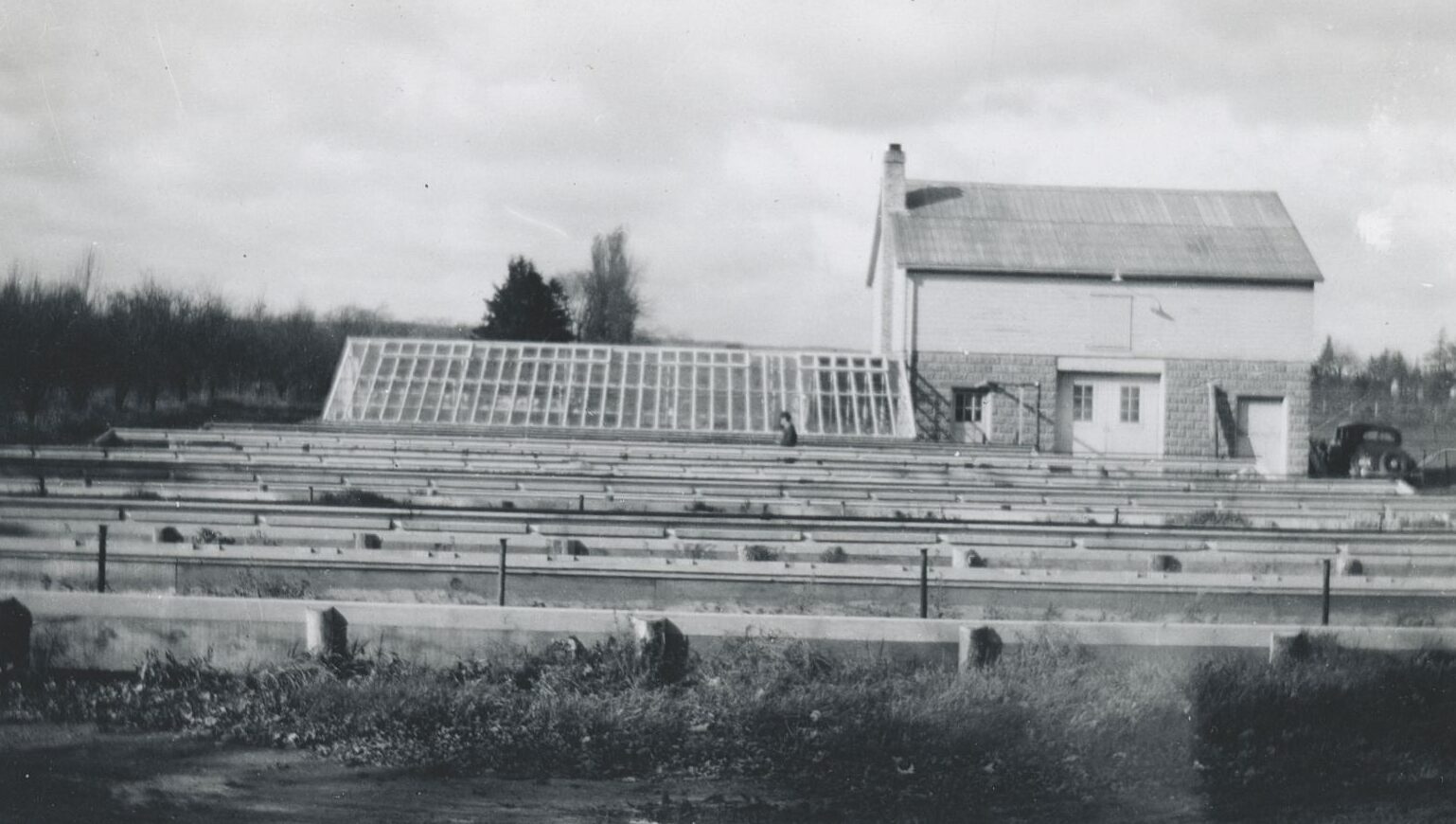
    2020.7.2 | c. 1958

    This photograph shows the Willey farmhouse and greenhouse on King Street (now Lockhart Road). Rows of crops stretch across the foreground, illustrating the intensive planting typical of market gardens. Greenhouses allowed farmers to start seedlings earlier in the season and extend the growing period, making vegetable production more reliable for market sales. The farm was established in 1914 and remained an important part of Burlington’s agricultural landscape until the late twentieth century.

  • 2020.7.3

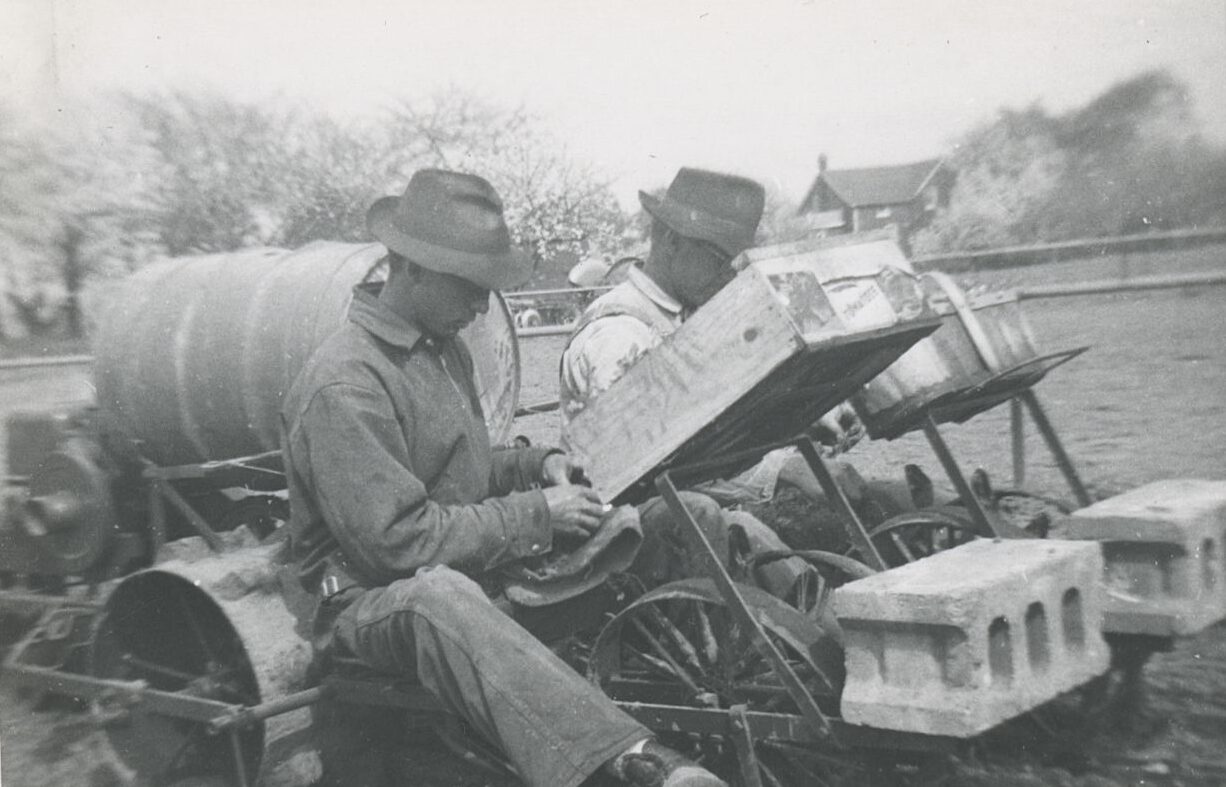
    2020.7.3 | c. 1940

    George Percival Willey and his son Gordon operate a two-row transplant machine used for planting celery. The machine required manual pedalling while seedlings were placed into the soil. Market gardens relied on specialized equipment like this to efficiently plant large numbers of vegetable crops.

  • 2020.7.4

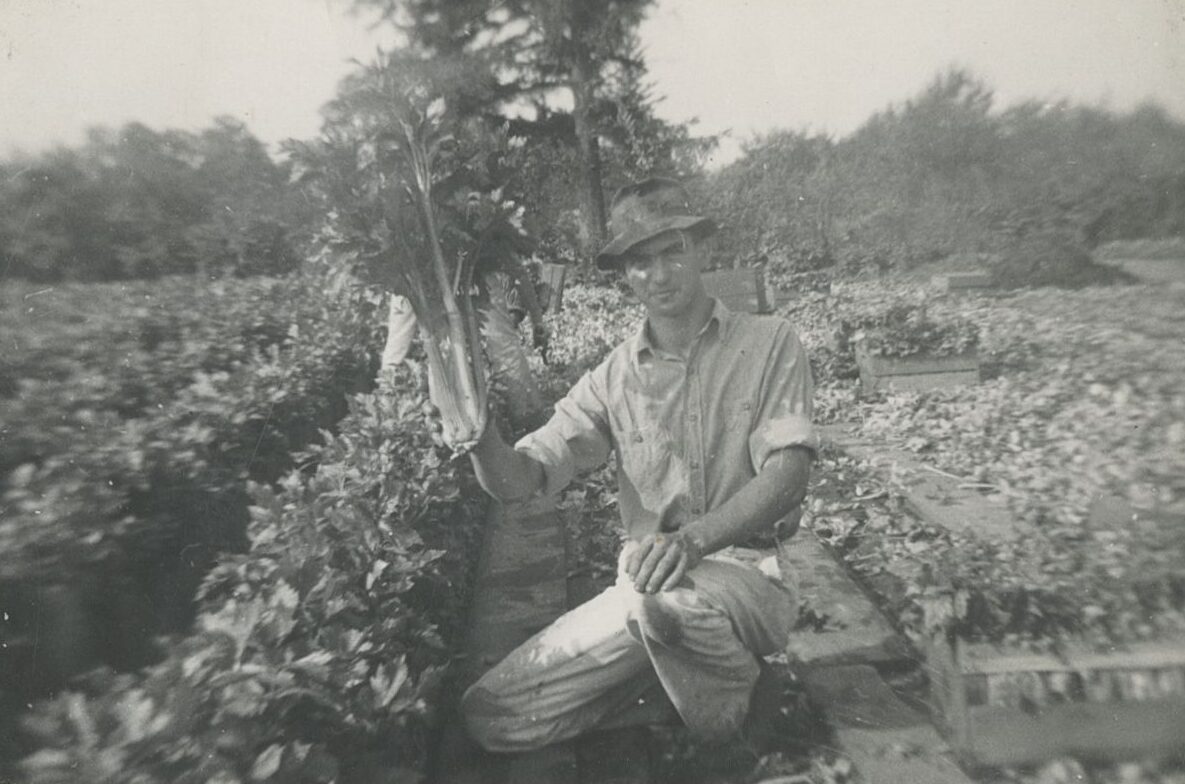
    2020.7.4 | c. 1949

    Gordon Roy Willey harvests celery by hand in a field ready for market. Harvesting vegetables required careful manual work to avoid damaging the crop. Once picked, the celery would be packed into crates and transported to markets for sale.

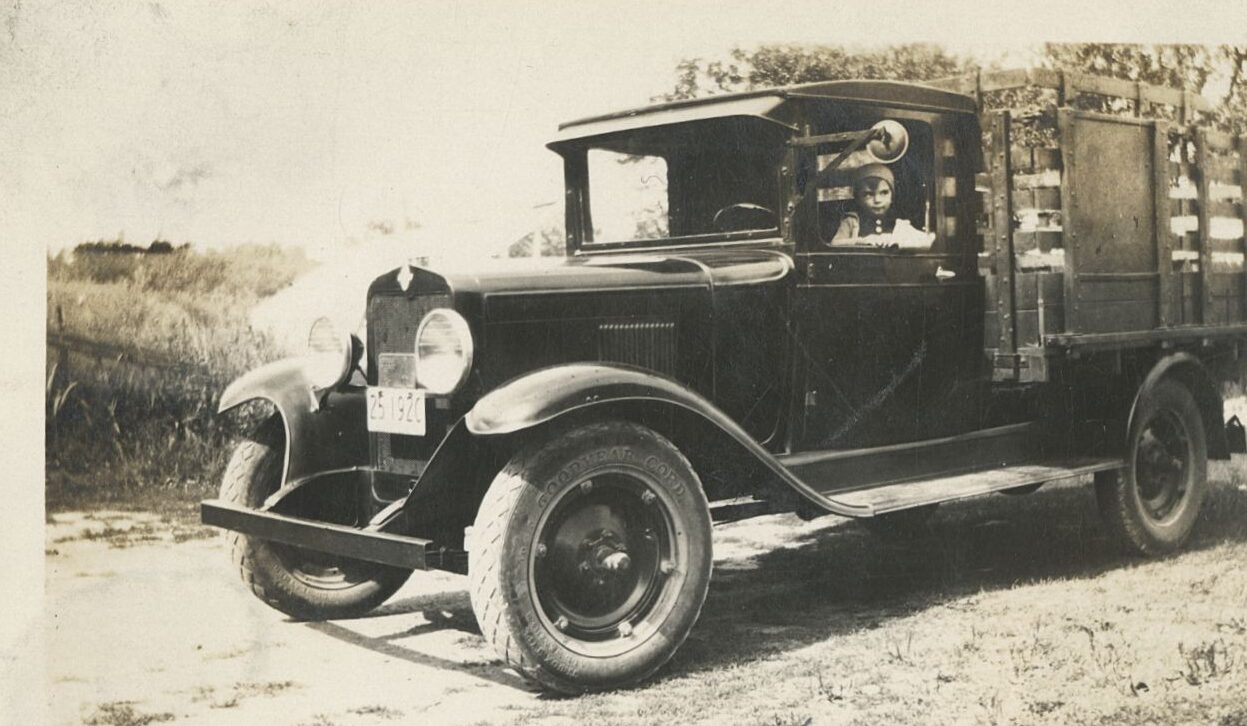
  • a black-and-white photo of a child in an old-fashioned pickup truck

    2021.1.2 | c. 1930

    This photograph shows Gordon Roy Willey as a young child sitting in the driver’s seat of a farm truck. Children often grew up helping with farm work and learning agricultural skills from an early age. Family participation was an essential part of running small farms and market gardens.

  • 2024.12.5

    2024.12.5 | c. 1920-1960

    This mock Ace of Hearts card was used as branding for produce sold from Willey’s Celery Farm. Farmers often created recognizable labels or marks to distinguish their products in markets and build a reputation for quality.

Farming in Lowville

  • The rural community of Lowville, located in northern Burlington, was historically surrounded by farms worked by families such as the Emery, Van Norman, and Bell families. The area’s rolling farmland supported orchards, livestock, and mixed farming.

    Photographs from Lowville capture everyday agricultural life, from farm landscapes to the people who worked the land. These images highlight the rural character that shaped northern Burlington for generations.

  • 1985.217.2

    1985.217.2 | c. 1967

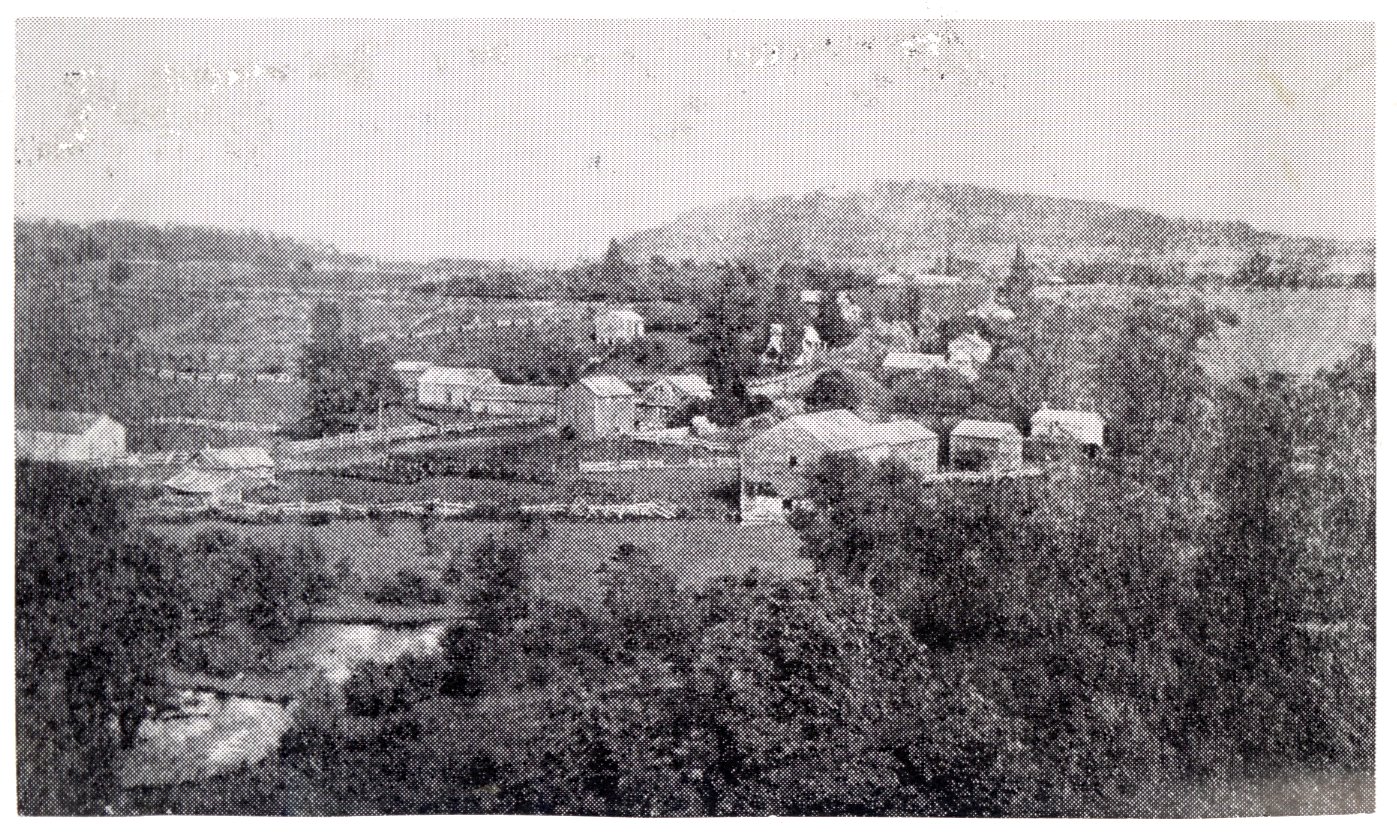
    This aerial view shows the small rural community of Lowville surrounded by farmland. Barns, houses, and fields illustrate the agricultural landscape that defined the area for much of its history.

  • imag202223

    2022.2.3 | c. 1920

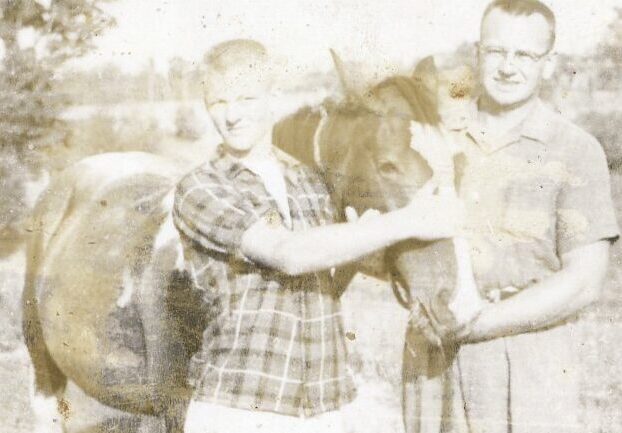
    This faded photograph shows two men standing with a horse on a farm in Lowville. Horses were essential for plowing fields, hauling equipment, and transporting crops before tractors became common.

  • 2022.2.57

    2022.2.57 | c. 1910

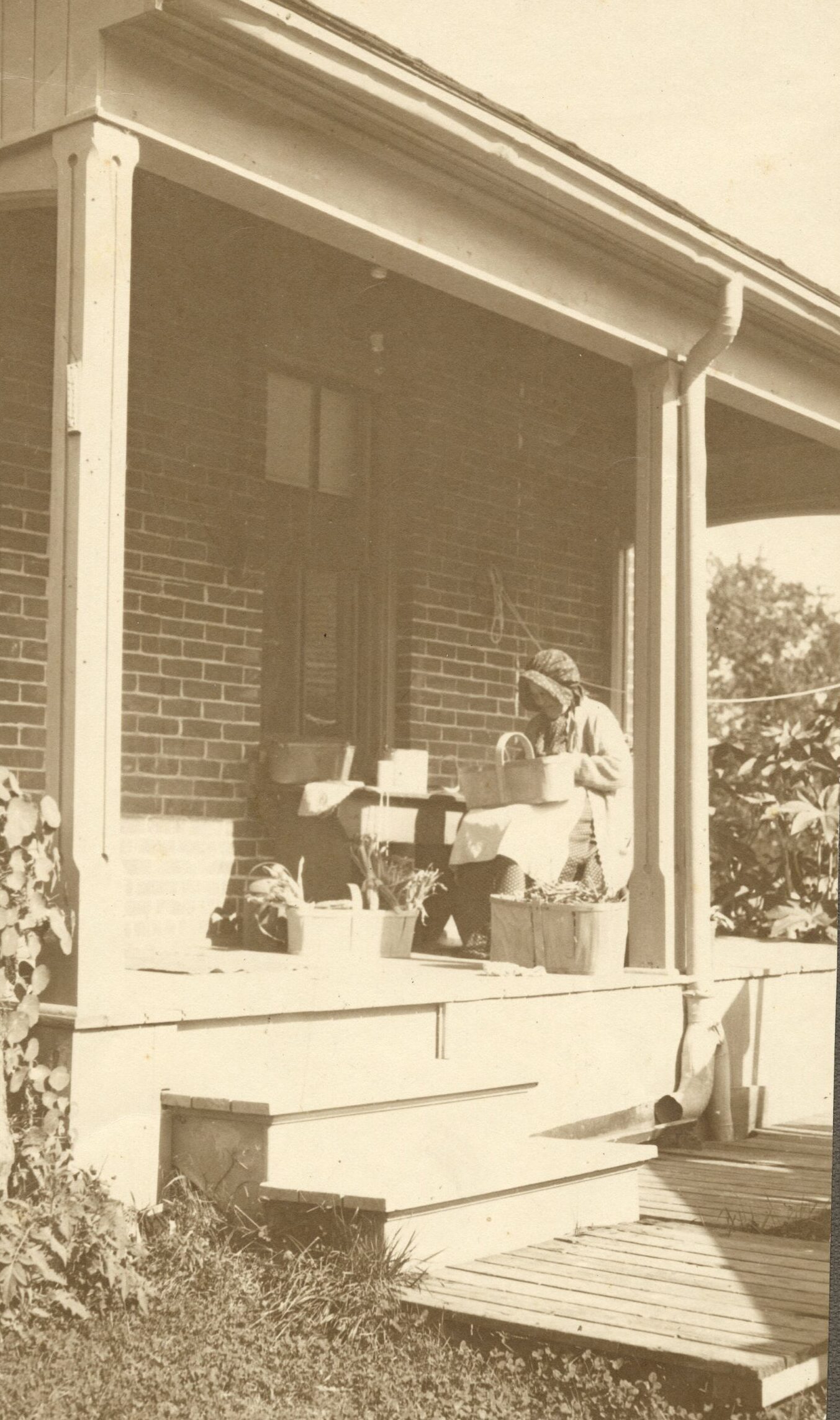
    This photograph shows a woman sitting on a porch shelling peas into baskets. Food preparation was an important part of farm work, and families often processed crops at home after harvest.

  • a black-and-white photo of a farming stall in Burlington

    X1997.185.1 | c. 1911

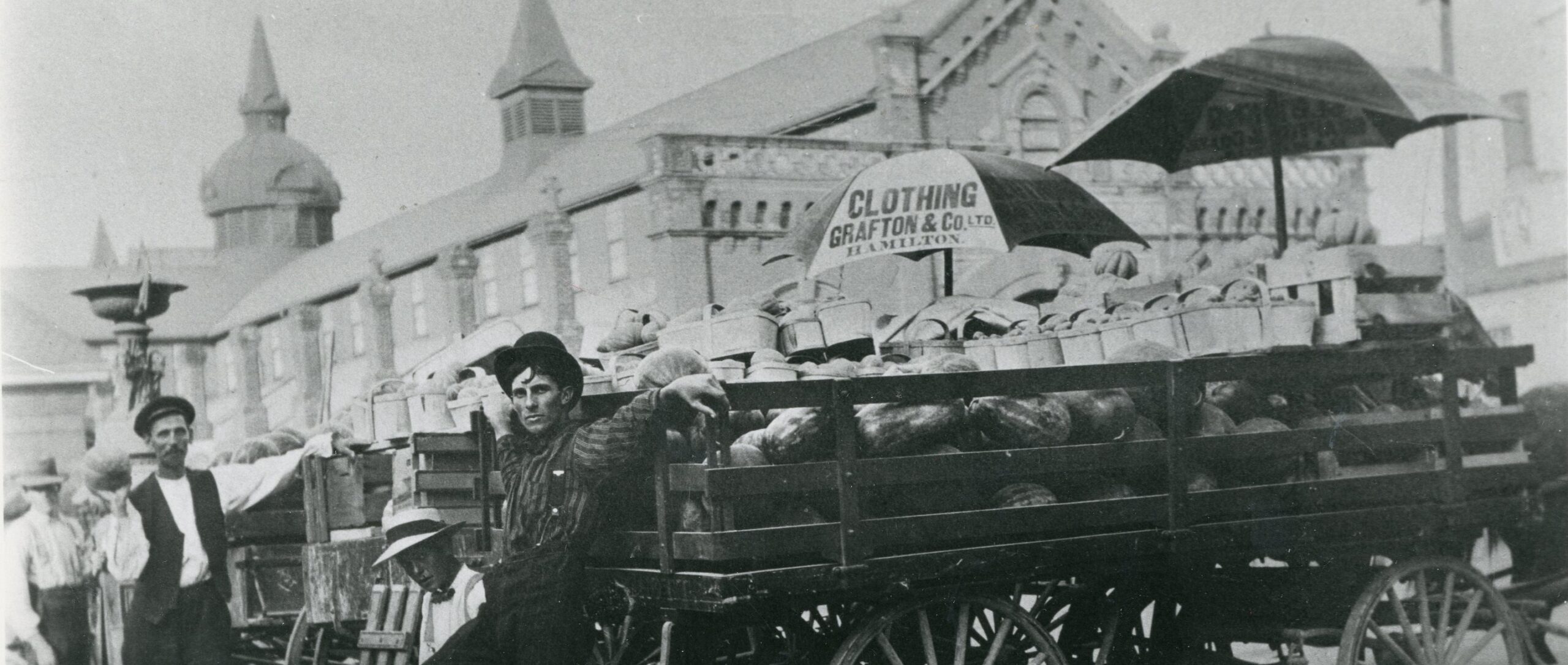
    This photograph shows Russell Emery selling watermelons at the Hamilton market. Farmers from Burlington and surrounding areas regularly transported produce to city markets, where it was sold directly to customers and merchants.

Gallagher Farms - Aldershot

  • Gallagher Farms in Aldershot was known for producing fruit and melons for regional markets. By the early 20th century, the farm had grown into a large commercial operation that used trucks, packing systems, and branded produce labels to distribute crops.

    Photographs from Gallagher Farms illustrate the scale of agricultural production and the teamwork required to plant, harvest, and transport large quantities of produce.

  • 1985.250 A

    1985.250 A | c. 1931

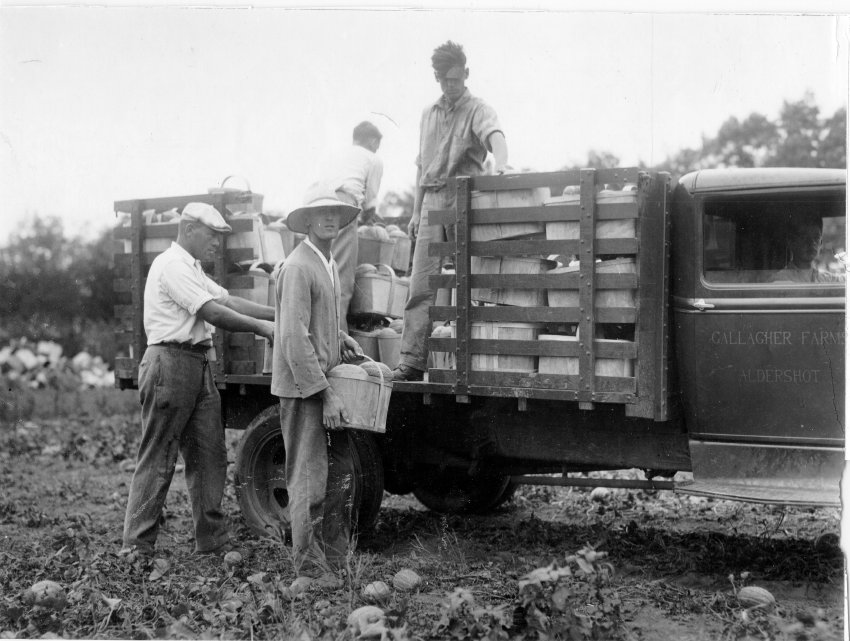
    Workers load baskets of melons onto a farm truck marked “Gallagher Farms, Aldershot.” Trucks gradually replaced horse-drawn wagons and allowed farms to transport produce more efficiently to markets and distributors.

  • 1985.250 B

    1985.250 B | c. 1927

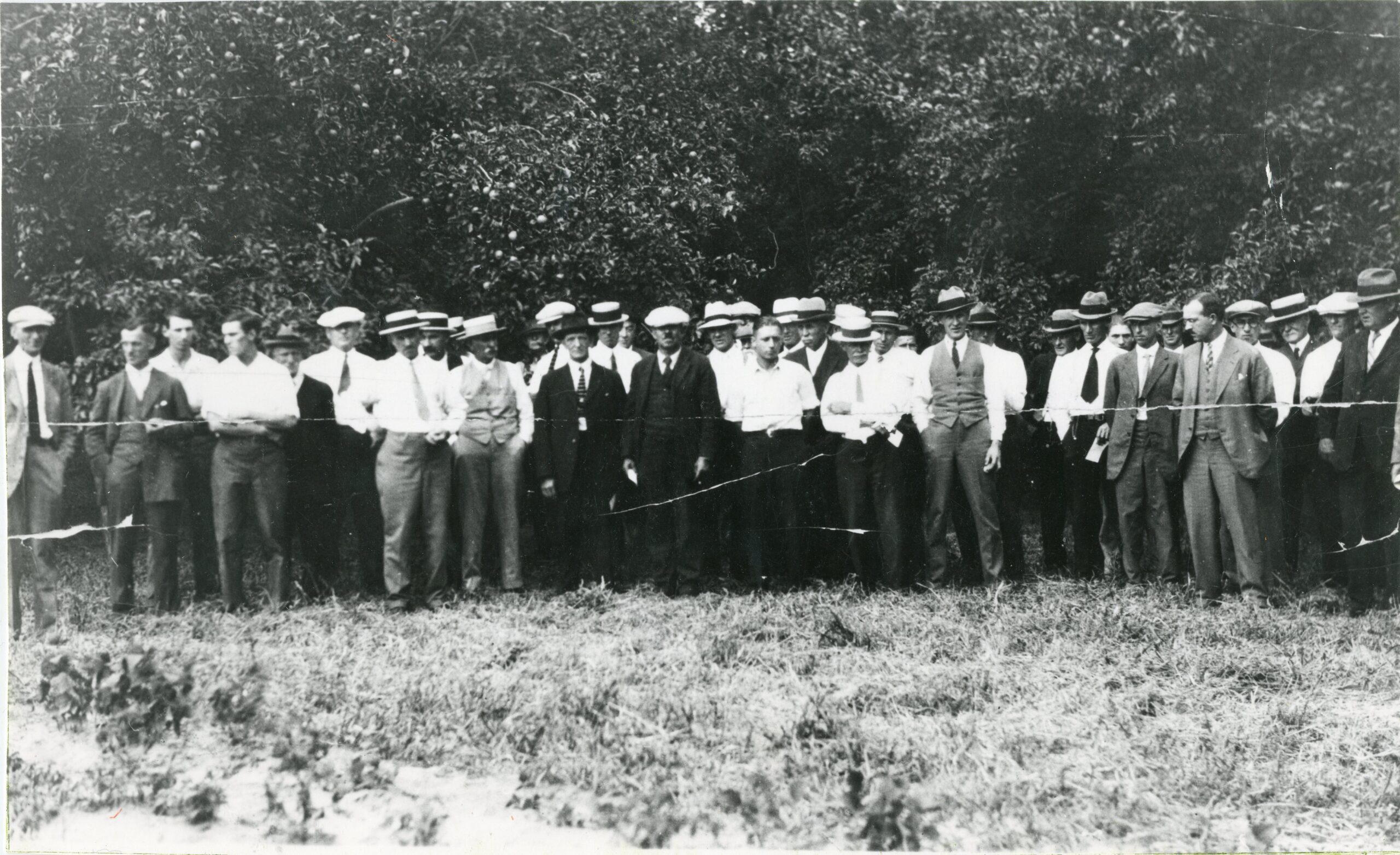
    Farmers gather in a field during a growers’ event held at Gallagher Farms in 1927. Events like these allowed farmers to exchange knowledge about crops, farming techniques, and new agricultural technologies.

  • 1985.250 C

    1985.250 C | date unknown

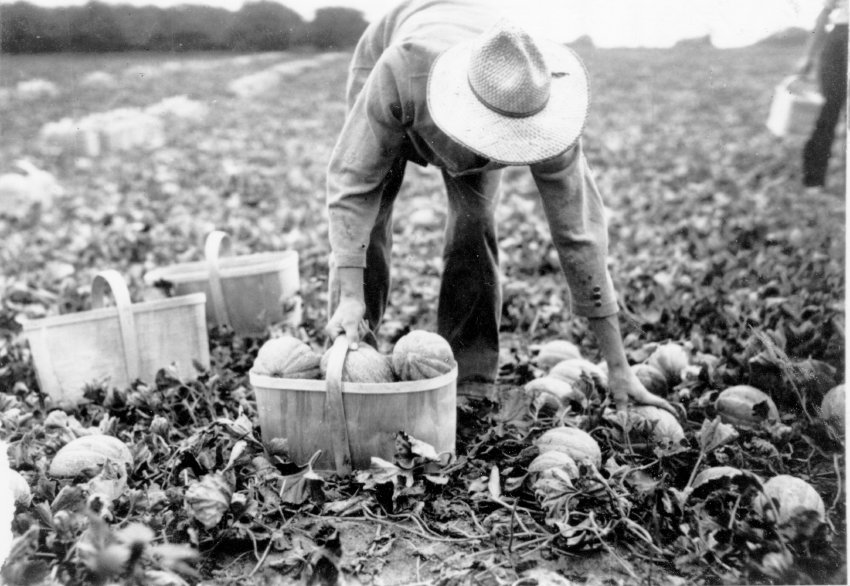
    A worker picks melons by hand in a field at Gallagher Farms. Harvesting fruit required careful handling to avoid damaging the crop before it was packed and shipped.

  • 1985.250 G

    1985.250 G | c. 1925

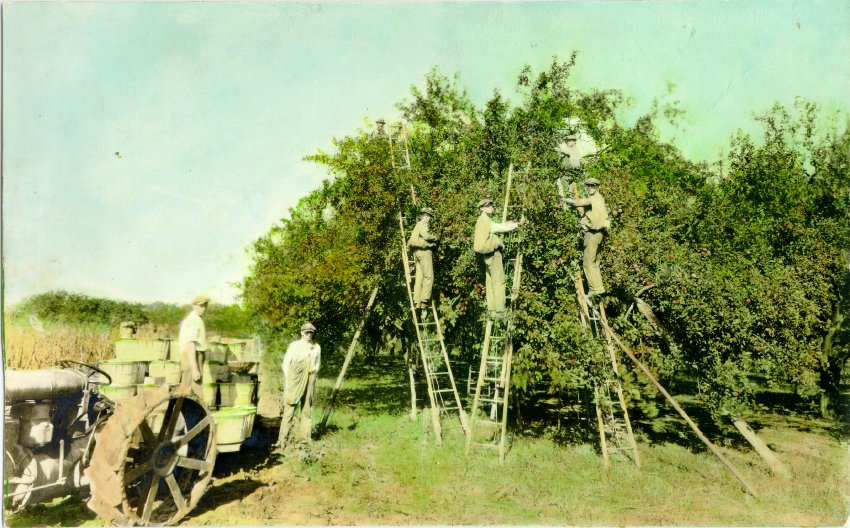
    Workers harvest apples from tall orchard trees using ladders and picking bags. Apples were placed into bushel baskets and loaded onto wagons for transport.

  • 1985.250 H

    1985.250 H | c. 1931

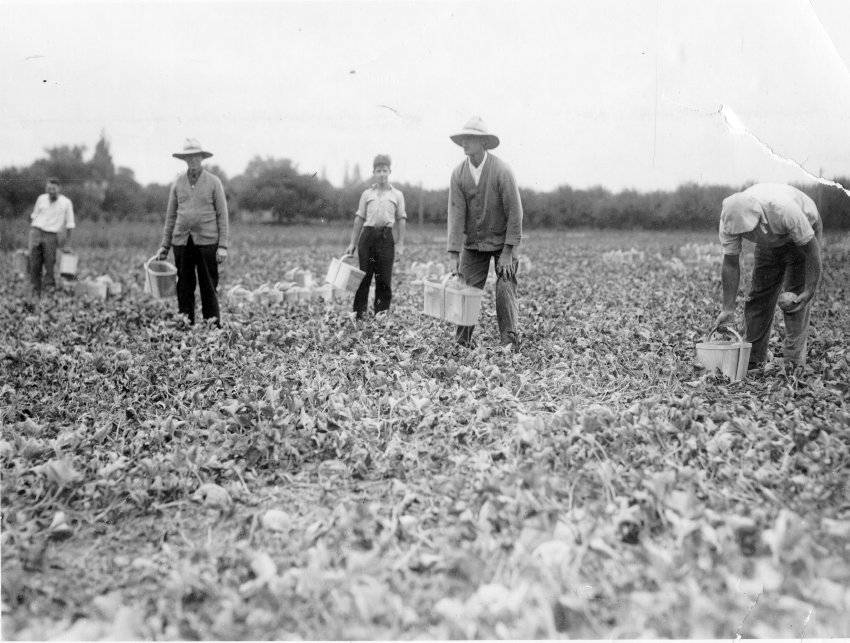
    Five workers harvest melons in a field, with baskets stacked nearby. The photograph highlights the teamwork required during busy harvest seasons.

  • 1985.250 I

    1985.250 I c. 1910-1920

    This brightly coloured label promoted Sunfruit cantaloupes grown and packed by Gallagher Farms in Aldershot. Labels like this helped farms market their produce and build brand recognition in regional markets.

  • 1998.104.275

    1998.104.275 | date unknown

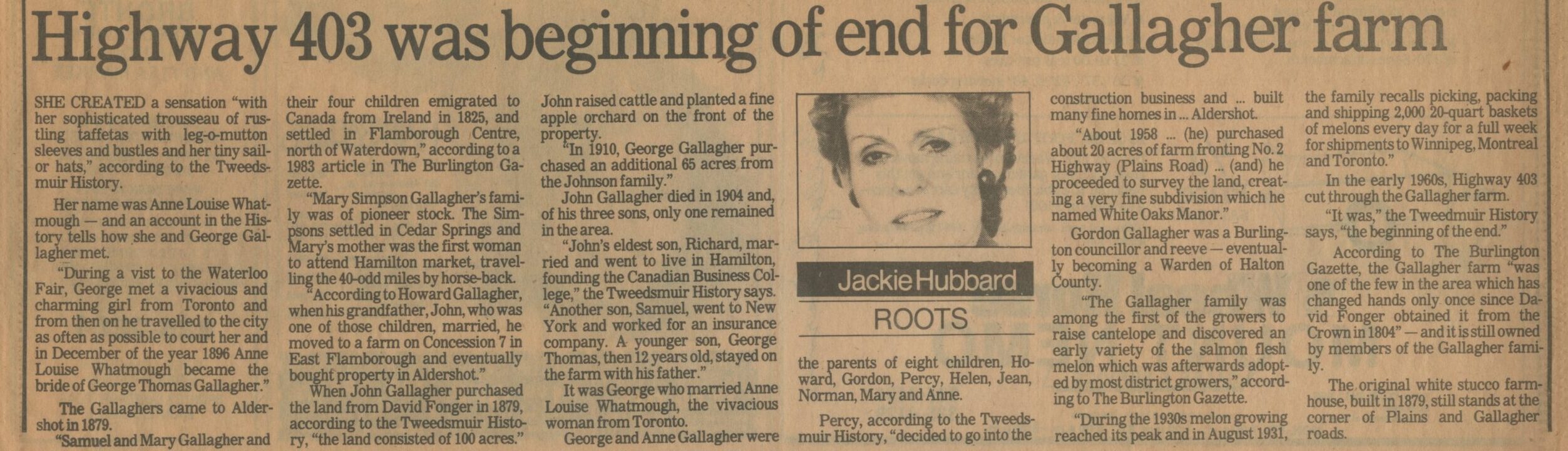
    This newspaper clipping discusses how the construction of Highway 403 contributed to the decline of Gallagher Farms. Urban development gradually replaced farmland across the region during the late 20th century.