
Tertiary processing combines primary and secondary products to make ready-to-eat food that requires minimal prepping on the consumer’s end. The ingredients go through multiple stages of processing to reach their final form. Ultra-processed products are mostly sold in single-serving packaging that are designed for portability and that have high sensory appeal. This type of processing involves large-scale manufacturing, and tackling issues such as understanding consumer need and demand and minimizing food waste.
-
Tertiary Processing
Ultra-processed goodies for quick and easy consumption
Artifacts
-
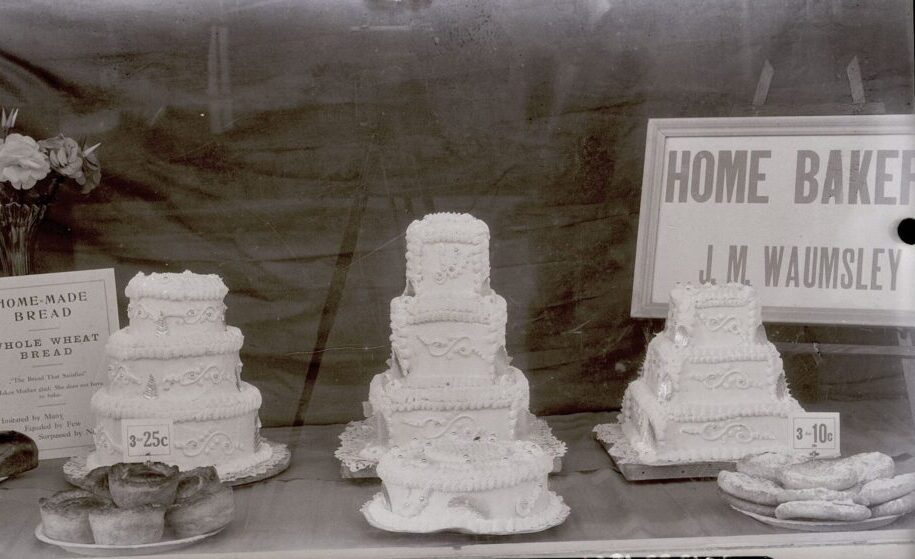
2012.32.1861 | ca. 1920-1940
Waumsley Bakery on Brant Street
The Waumsley family was well-known in the Brant Street business community. When they arrived from Oakville, the Waumsley’s took over the bakery shop at Brant and Pine. Flossie, their daughter, inherited the business with her husband and operated the bakery until 1969. A fun tradition the Wausmley’s had was to give family members an extravagant cake for their wedding.
-
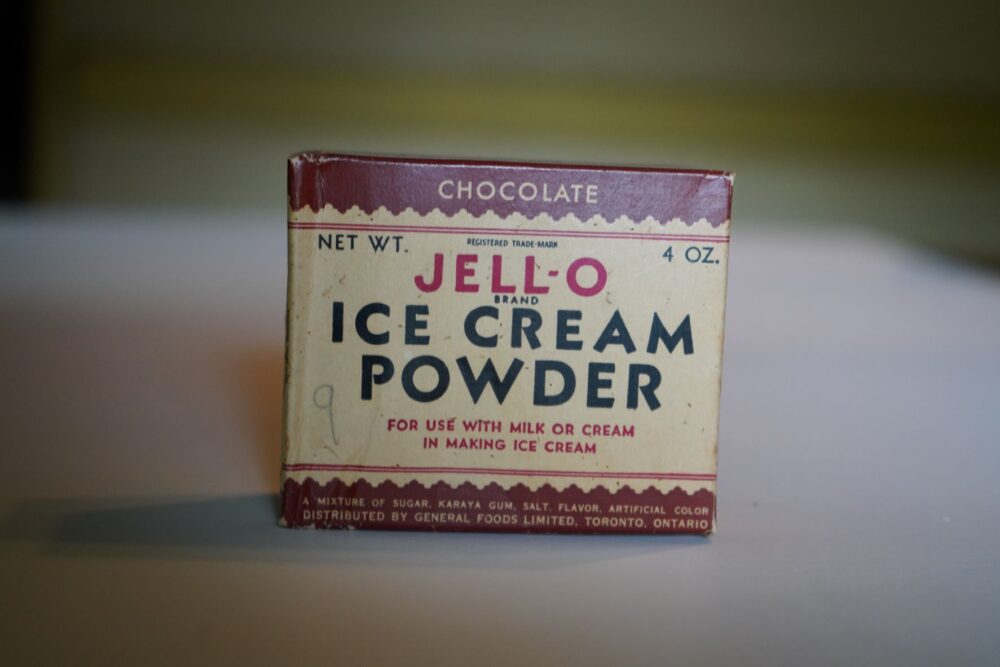
IHM1999.14.3 | ca. 1904
Jell-O Ice Cream Powder
Jell-O was inspired by gelatin, a protein created by collagen that is extracted from boiled animal bones, tissues, and intestines. Due to its time-consuming process, gelatinous desserts were considered rare and were initially served on the tables of nobility. Nowadays, gelatin is easily accessible through prepackaged Jell-O, with instant powder and various flavouring. This Jell-O Ice Cream Powder was a dessert mix that was mixed with milk and then frozen to create homemade ice cream, which was a cheaper alternative than buying in stores.
-
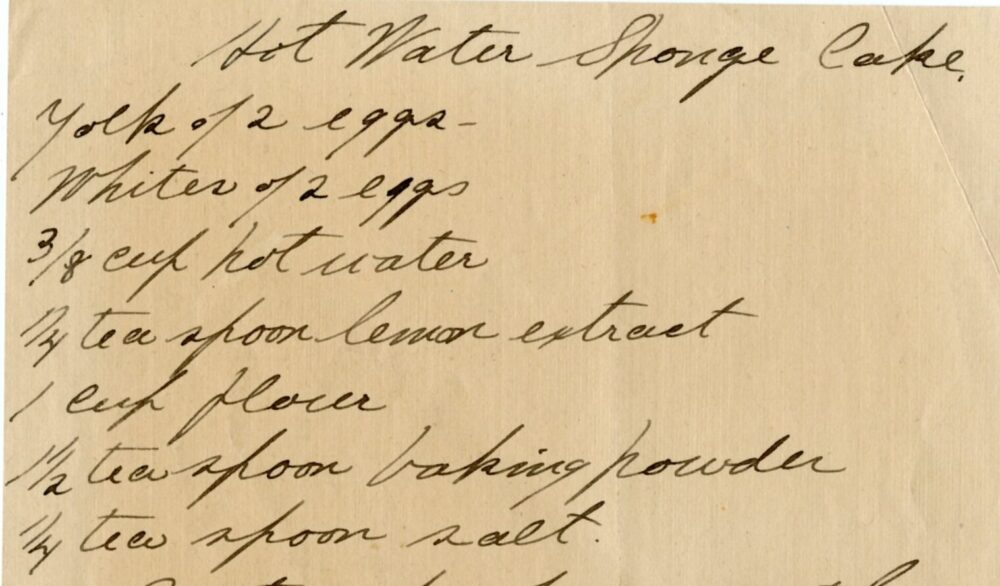
IHM2012.1.4 | ca. 1900
Hot Water Sponge Cake Recipe
Sponge cake is a type of foam cake that relies on the aeration of eggs to rise. The whipped eggs contain air and water vapour, acting as a leavening agent when heated. As a result, these cakes are often high in volume and feature a light, fluffy texture. Sponge cakes were possibly referenced as early as the Renaissance period (14th-17th century)! However, the first record of a sponge cake recipe was in 1615 by an English poet and author, Gervase Markham.
-
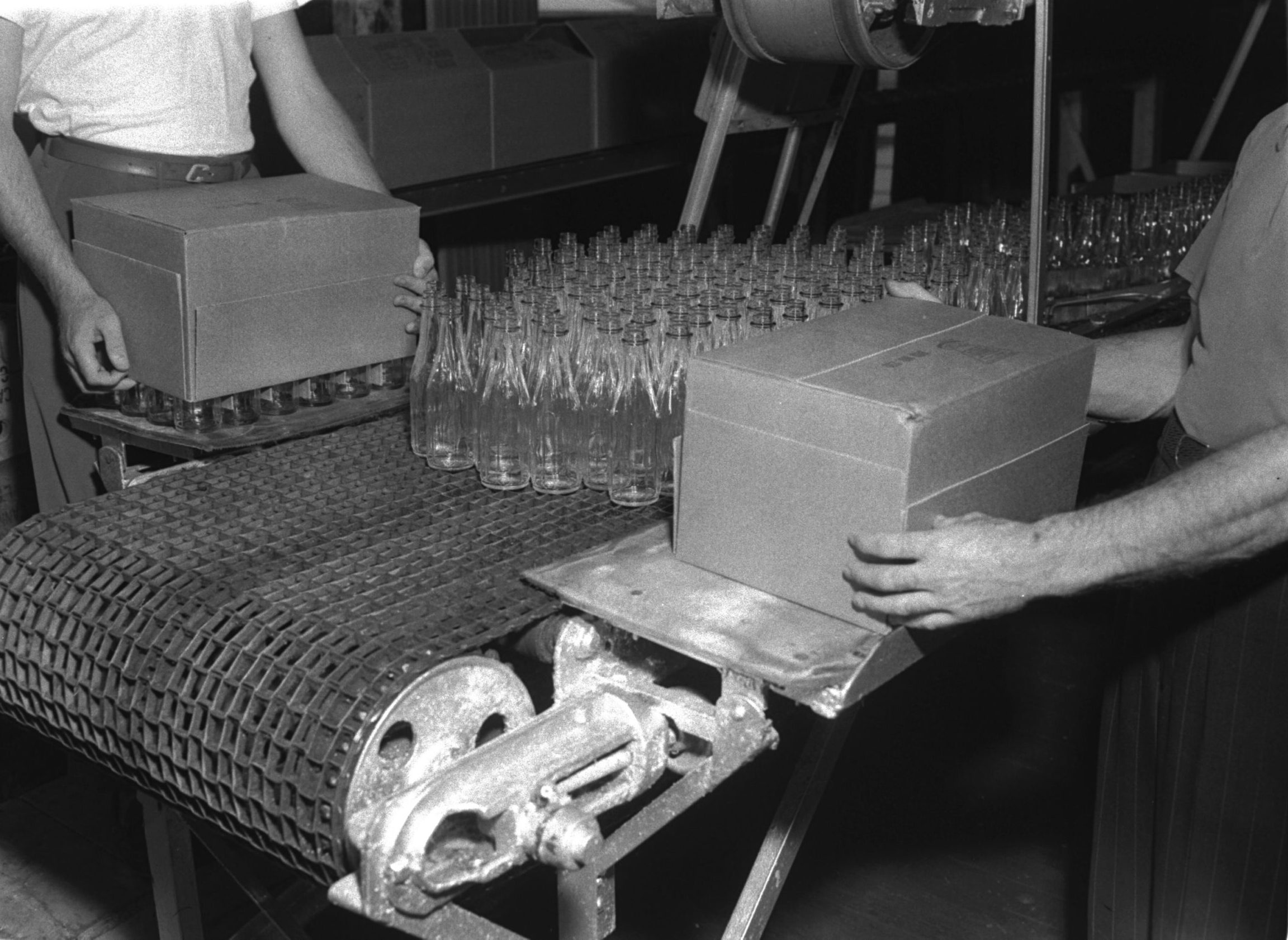
1985.380.977 | ca. 1954
Canadian Canners Assembly Line
The Burlington Canning Company, established in 1903 by local farmers, brought Burlington into an era of industrial development. Canning provided vast employment opportunities and increased wealth for nearby farmers. Many of the tomatoes grown locally were sent to the cannery and processed into ready-to-use sauces.
-
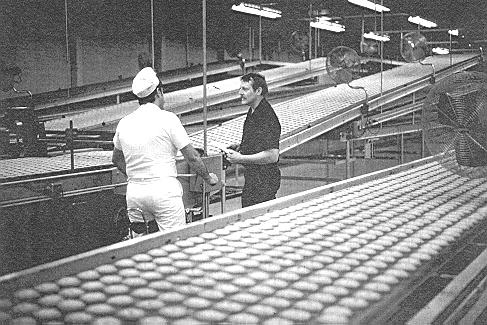
Burlington Historical Society | ca. 1996
Cookie Production Line at Voortman's
Founded in 1951, Voortman’s innovation in their brand/product allowed them to become a huge Canadian household name. In addition to experimenting with different types of baked goods, a lot of their success came from understanding how to market their products. They developed a “Cookie Hut” concept where stands were situated in grocery stores nationwide and held loose fresh cookies for customers to mix and match, which allowed them to buy cookies to match their individual preferences. Voortman sells over 30,000 tons of cookies annually in the North American market!
-
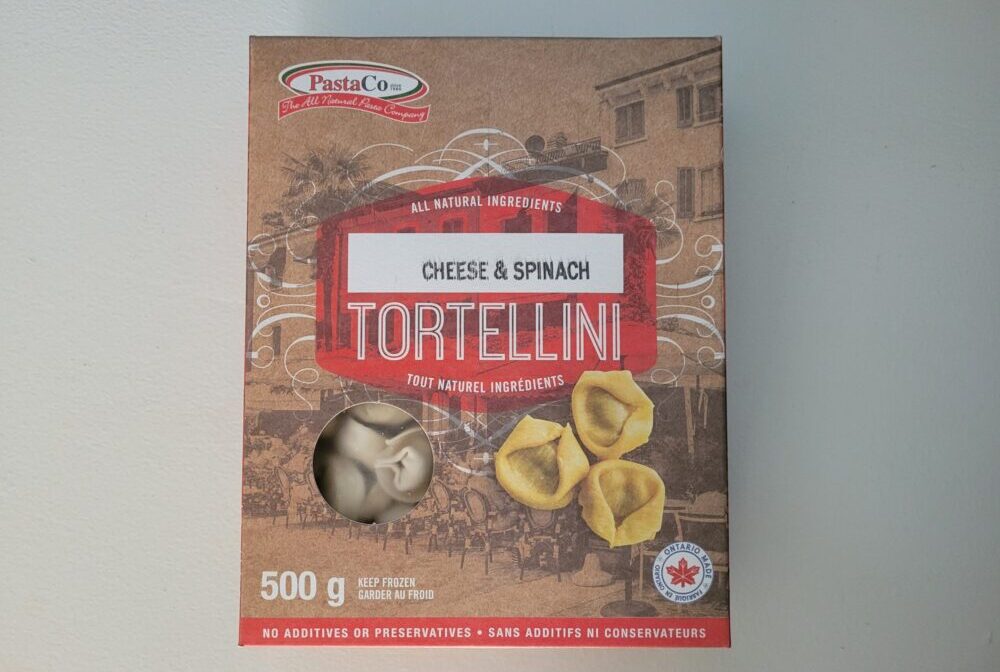
ca. 2022
PastaCo Frozen Tortellini's
Freezing in food preservation has been around for centuries, Chilling can stop and slow the reproduction of microorganisms that cause food to spoil. Ice boxes, where a large block of ice would be stored in insulated boxes, were one of the first domestic ‘fridges’, but were only available mostly to the upper-middle class. Mass production of modern refrigerators began after the Second World War, and paved the way for large-scale production of frozen food. With the introduction of domestic microwaves, diverse frozen meals, such as these ready-to-eat frozen tortellini’s from PastaCo, dominated the supermarkets! PastaCo is headquartered in Burlington, and produces fresh and frozen pastas, sauces, and microwaveable entrees.
Curious to see where our grain ended up? Click on the image to view our last stops.
