
We will call her 'The Burlington'
The H.M.C.S. Burlington is one of our city's invisible connections to the Second World War.
-
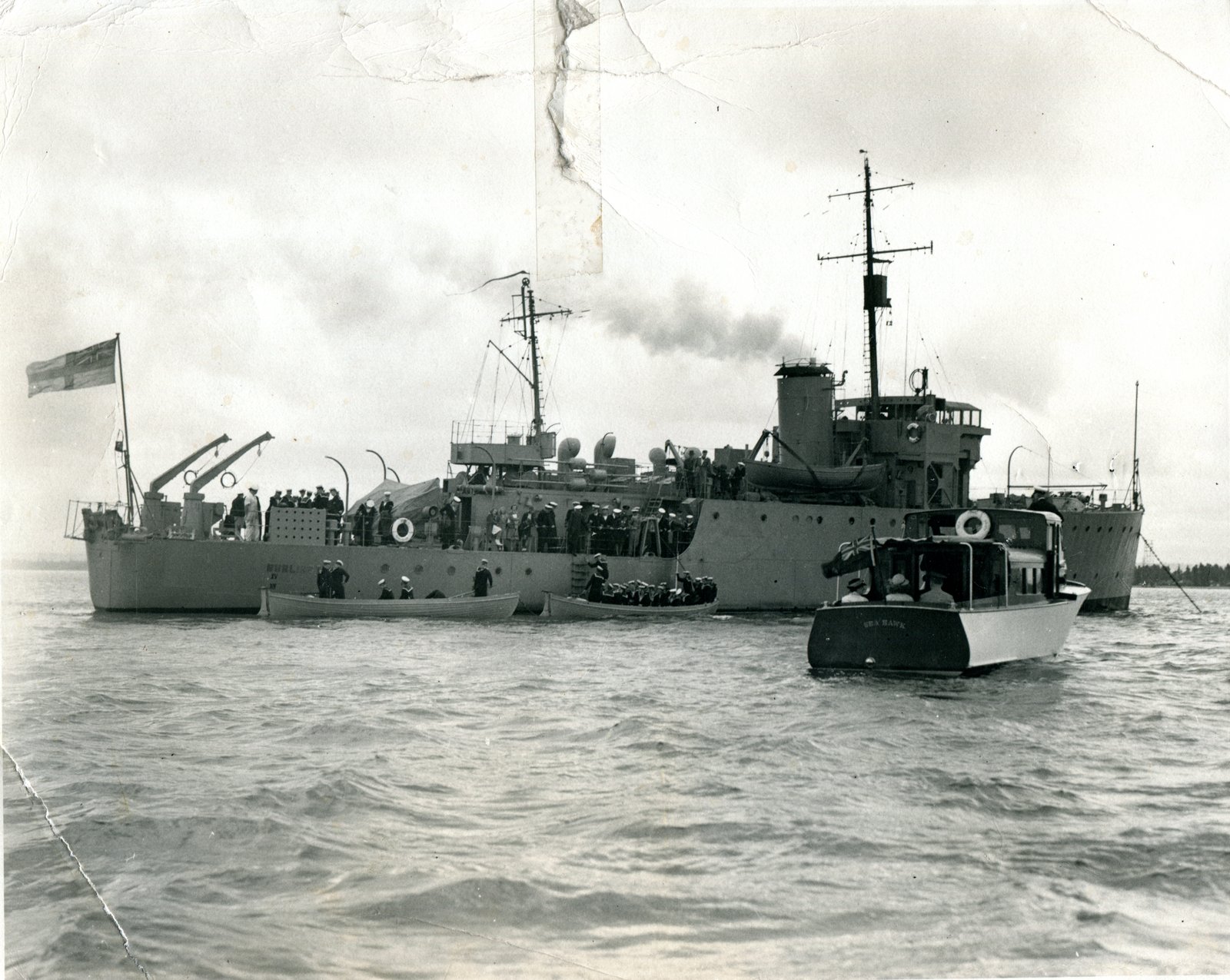
The H.M.C.S. Burlington in Lake Ontario, September 10, 1941
Image Credit: The Burlington Historical Society
-
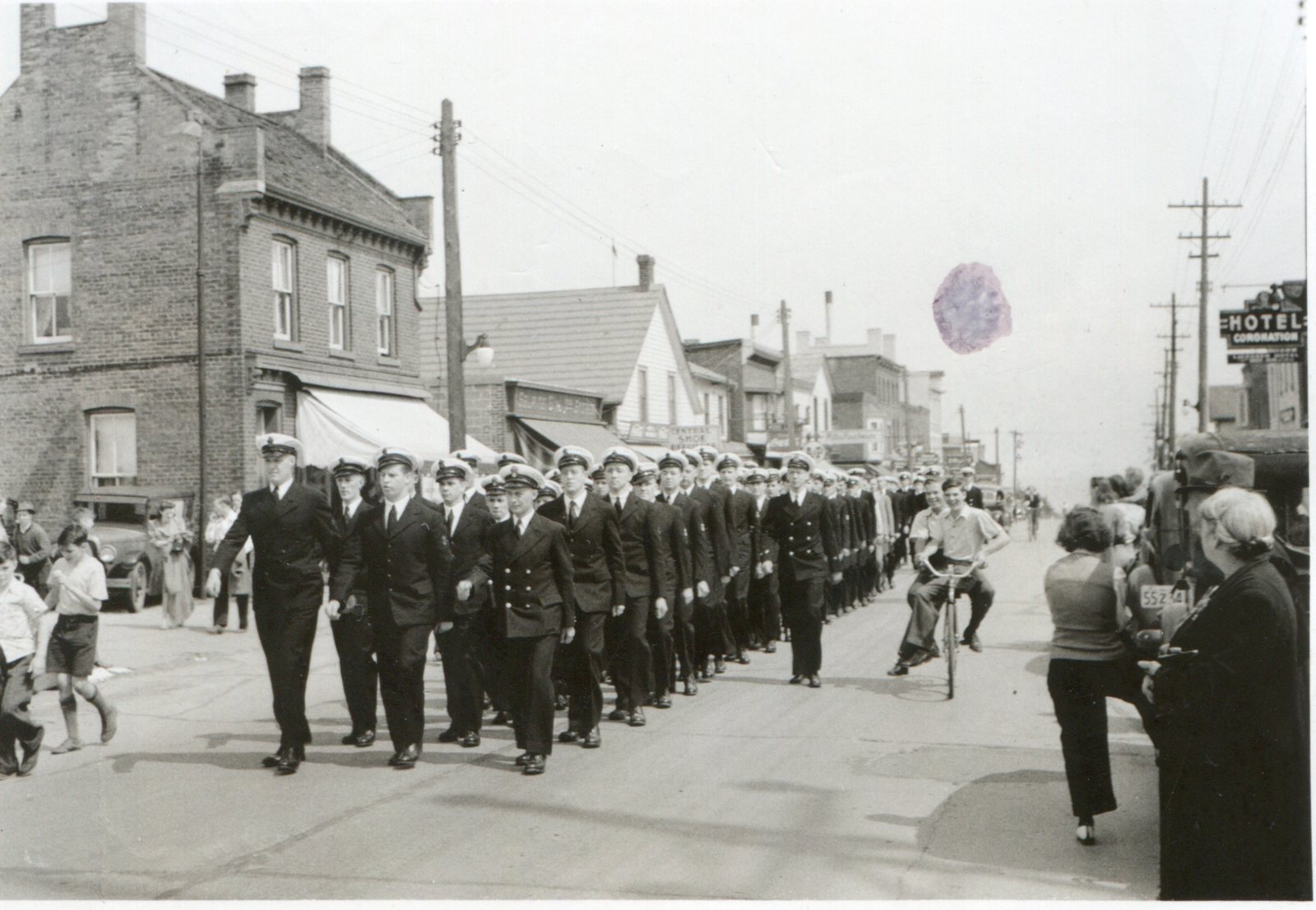
Labour Day Parade down Brant Street, September 7, 1942, one year after the H.M.C.S. Burlington dedication
Image Credit: The Burlington Historical Society
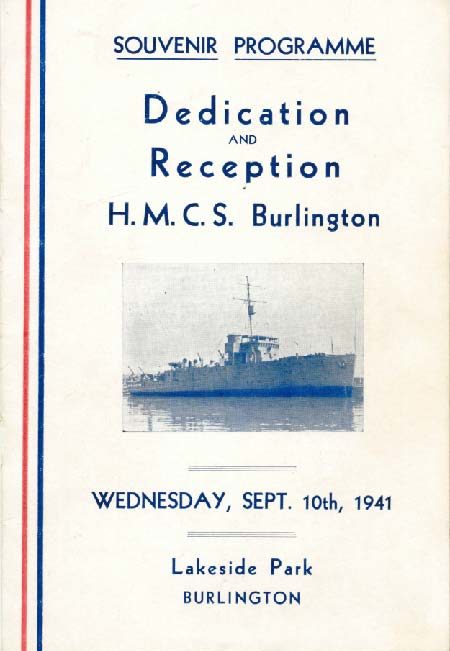
Image Credit: The Burlington Historical Society
We found this souvenir program on The Burlington Historical Society and Our Ontario websites during Ontario’s second lock-down. It describes the 1941 dedication and reception ceremony for the H.M.C.S. Burlington J250.
The following images explore some of the history hidden in the program.
Please be advised, twentieth-century artifacts reflect both the racial stereotypes and social prejudices of the era. There are stereotyped language and terms used throughout the program. Additional content warnings are posted at each instance.
What was the H.M.C.S. Burlington? Why was it named after the Town of Burlington?
-
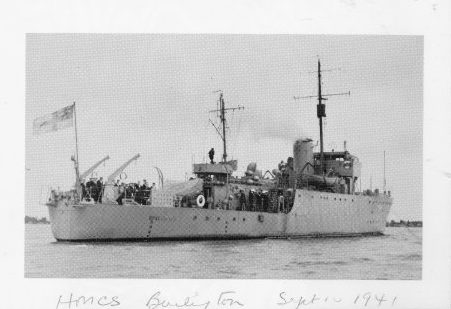
Image Credit: Joseph Brant Museum collection, 1985.217.7
WHAT:
The ship was a 180-feet long Royal Canadian Navy Bangor Class Minesweeper. During the Second World War, minesweepers detected and destroyed floating explosive mines.
The H.M.C.S. Burlington mainly escorted coastal shipping vessels and engaged in the Battle of the Atlantic 1942-1944 and the Battle of the Gulf of St. Lawrence 1942.
-
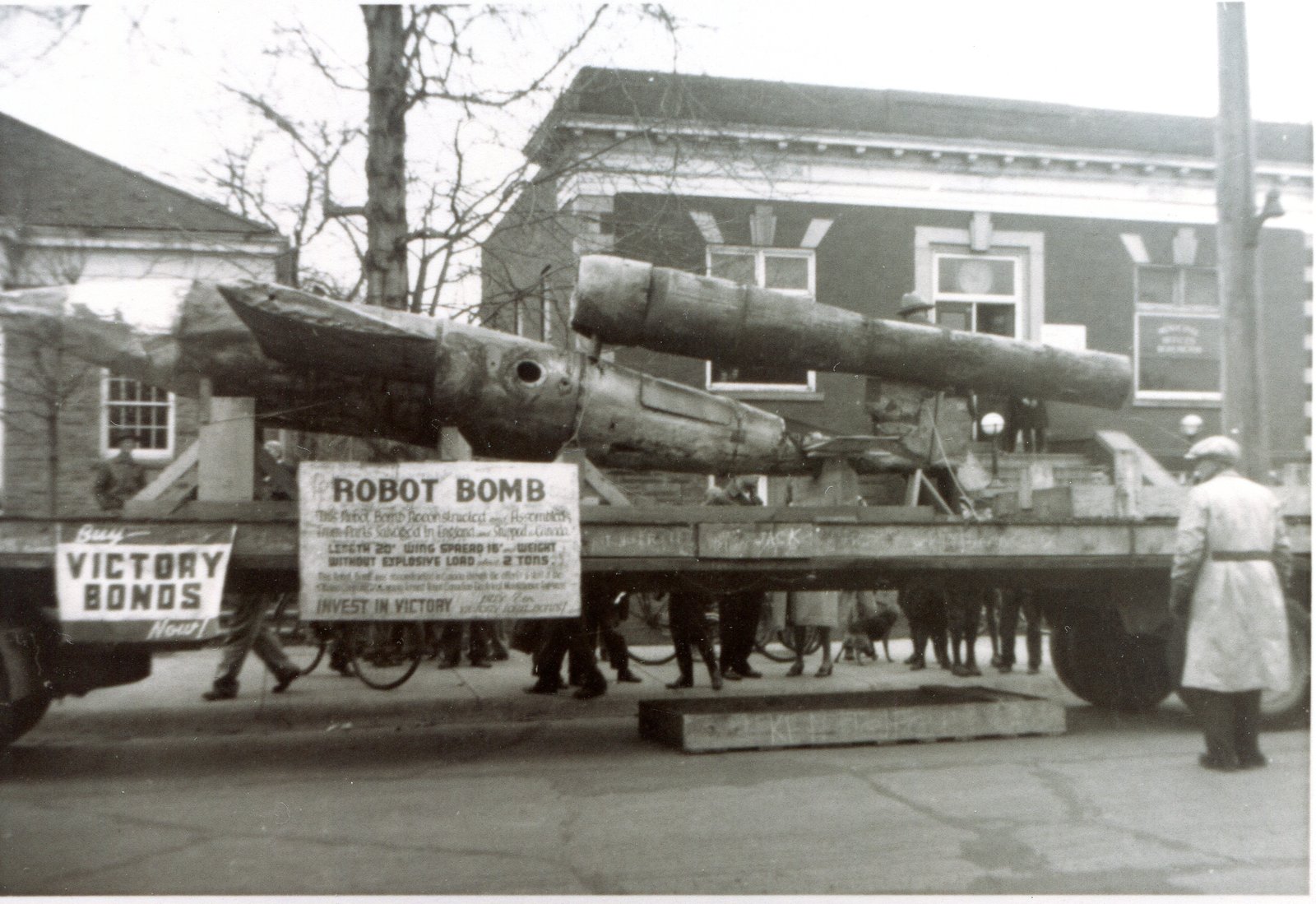
Image Credit: The Burlington Historical Society
WHY:
Wars cost a lot of money.
Burlingtonians bought a lot of Victory Loans and War Saving Certificates to help fund the war. In honour of this fundraising, we had a minesweeper named after our town.
Victory Loan rallies and parades were one way the Government of Canada encouraged citizens to buy Victory Loans, War Saving Certificates, and War Saving Stamps.
Burlington also had Victory Bond campaign drives, as seen in this 1945 photograph with the old Burlington Public Library, at its original location on the corner of Brant and James Street, in the background.
What is a Victory Loan?
-
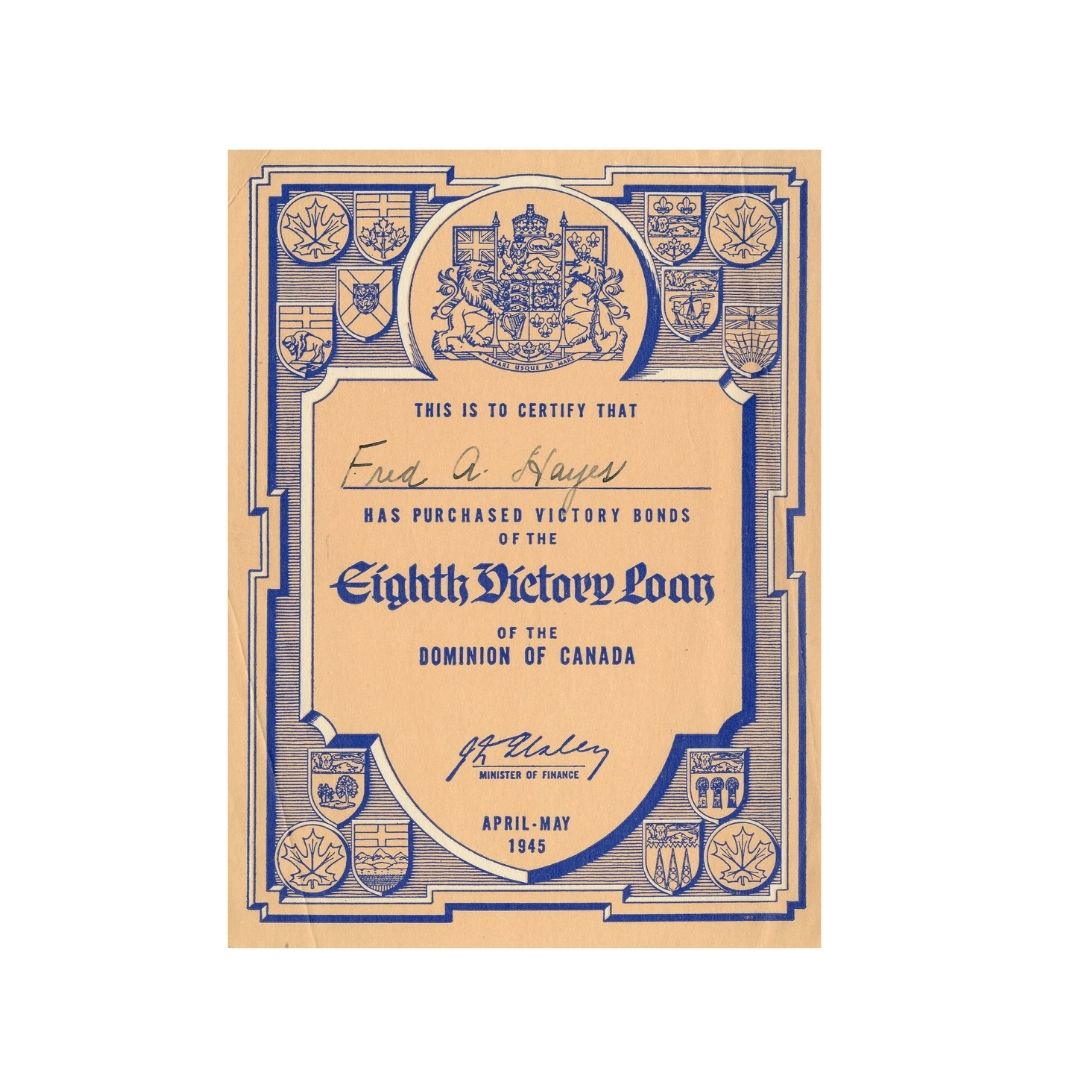
Image Credit: Joseph Brant Museum collection, 2017.3.11
Victory Loans and War Saving Certificates were loans to the Government of Canada that could be redeemed post-war for a higher value.
-
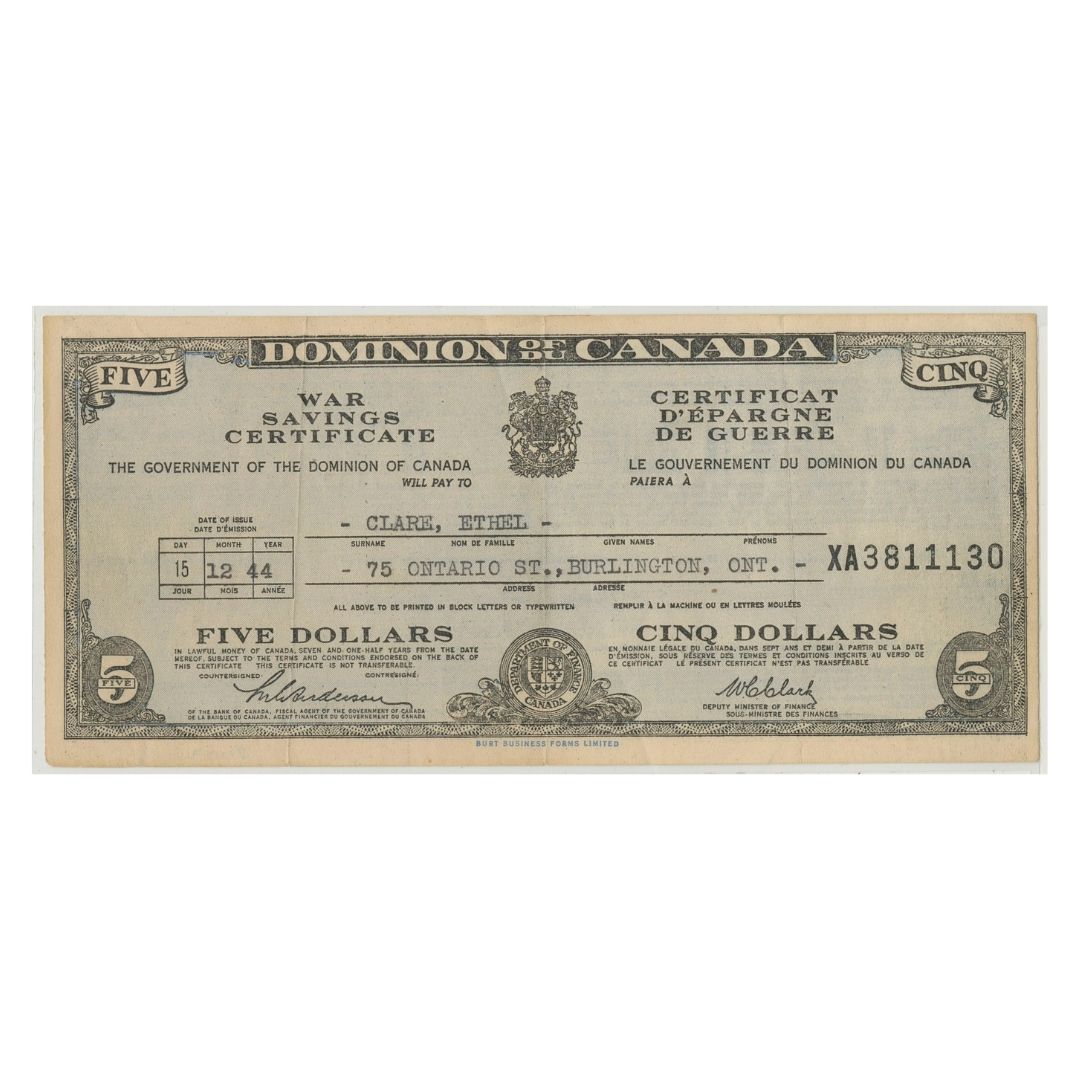
Image Credit: Joseph Brant Museum collection, 2003.6.16
They were promoted as a safe investment and a way to serve from the homefront.
-
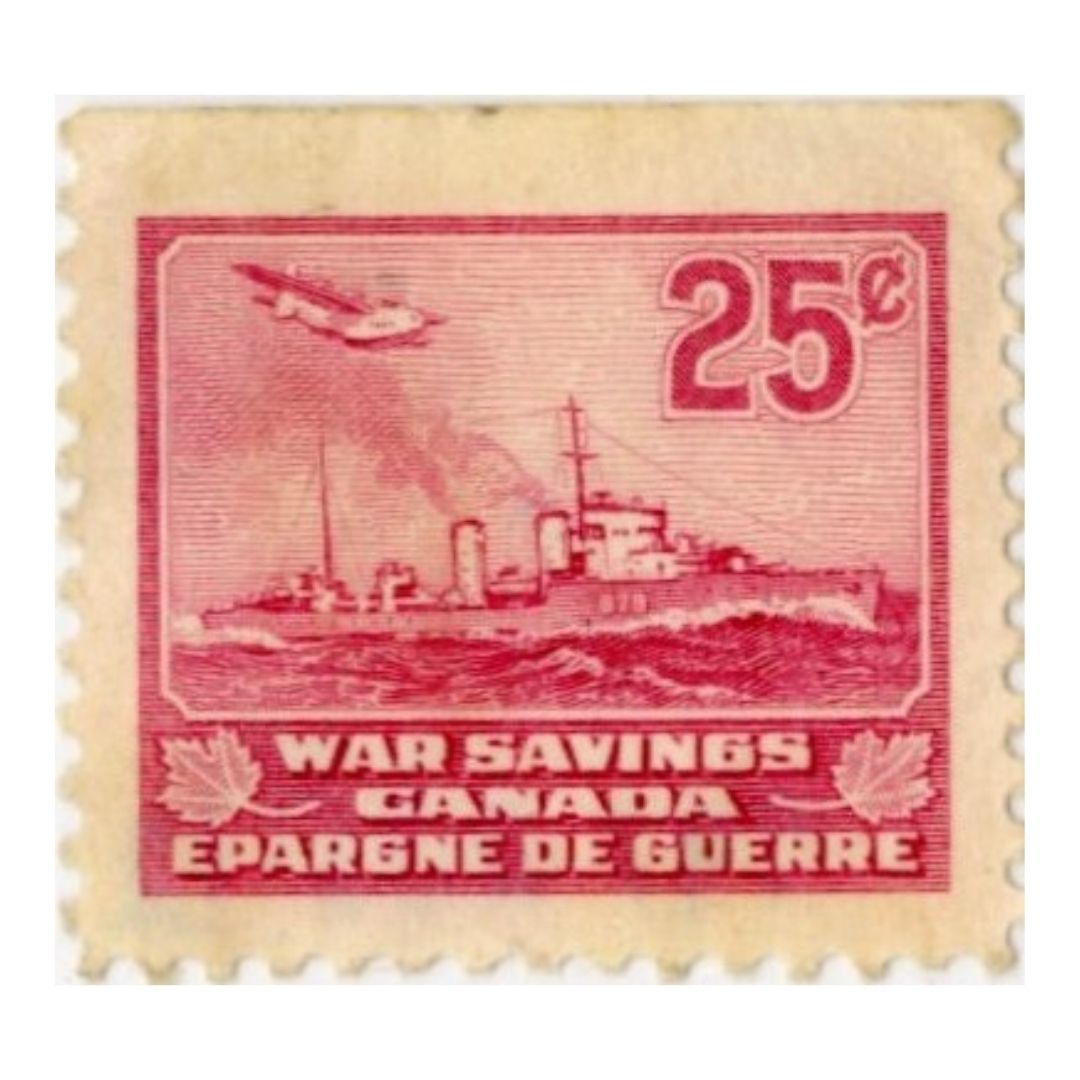
Image Credit: Joseph Brant Museum collection, 1997.235.12
Even kids could support the war effort and buy .25 cent War Savings Stamps. Once they’d collected $4 worth of stamps, they were eligible for a $5 War Savings Certificate.
Where and when was the H.M.C.S Burlington built?
-
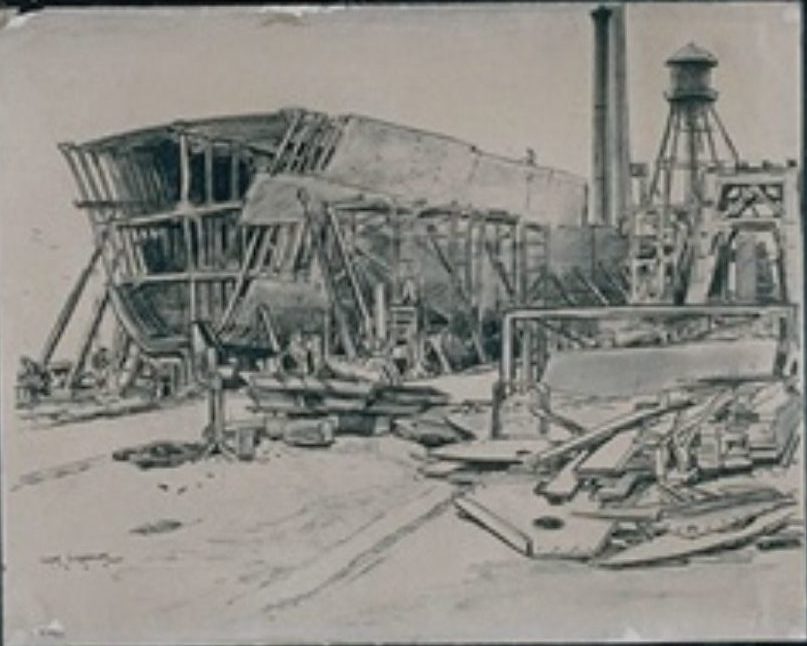
Image Credit: Canadian War Museum, 19850217-006, Exterior View Machine Shop, Toronto Shipbuilding Yard, Artist: Flight Lieutenant Charles Goldhamer, Date: October 25, 1942
WHERE:
The H.M.C.S. Burlington was laid down (formal start of the ship’s construction) in Toronto on July 4, 1940, by the Dufferin Ship Building Company.
Check out this image online on the Canadian War Museum website!
-
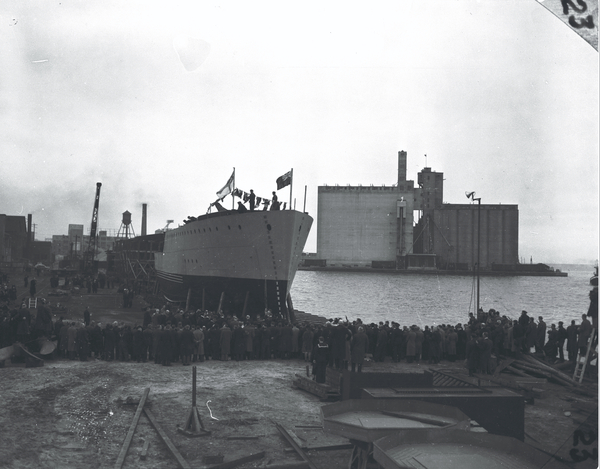
Image Credit: York University Libraries, Clara Thomas Archives & Special Collections, Toronto Telegram fonds, ASC02823
WHEN:
The ship was launched (putting the ship into the water) in Toronto four months later, on November 23, 1940. But it wasn’t commissioned (placing the ship into active service) until September 6, 1941.
Four days later, on September 10, 1941, H.M.C.S. Burlington left the shipbuilding yard and made its first port of call in Burlington.
Check out this image online on the York University Clara Thomas Archives & Special Collections website!
Where did the ceremony start?
-
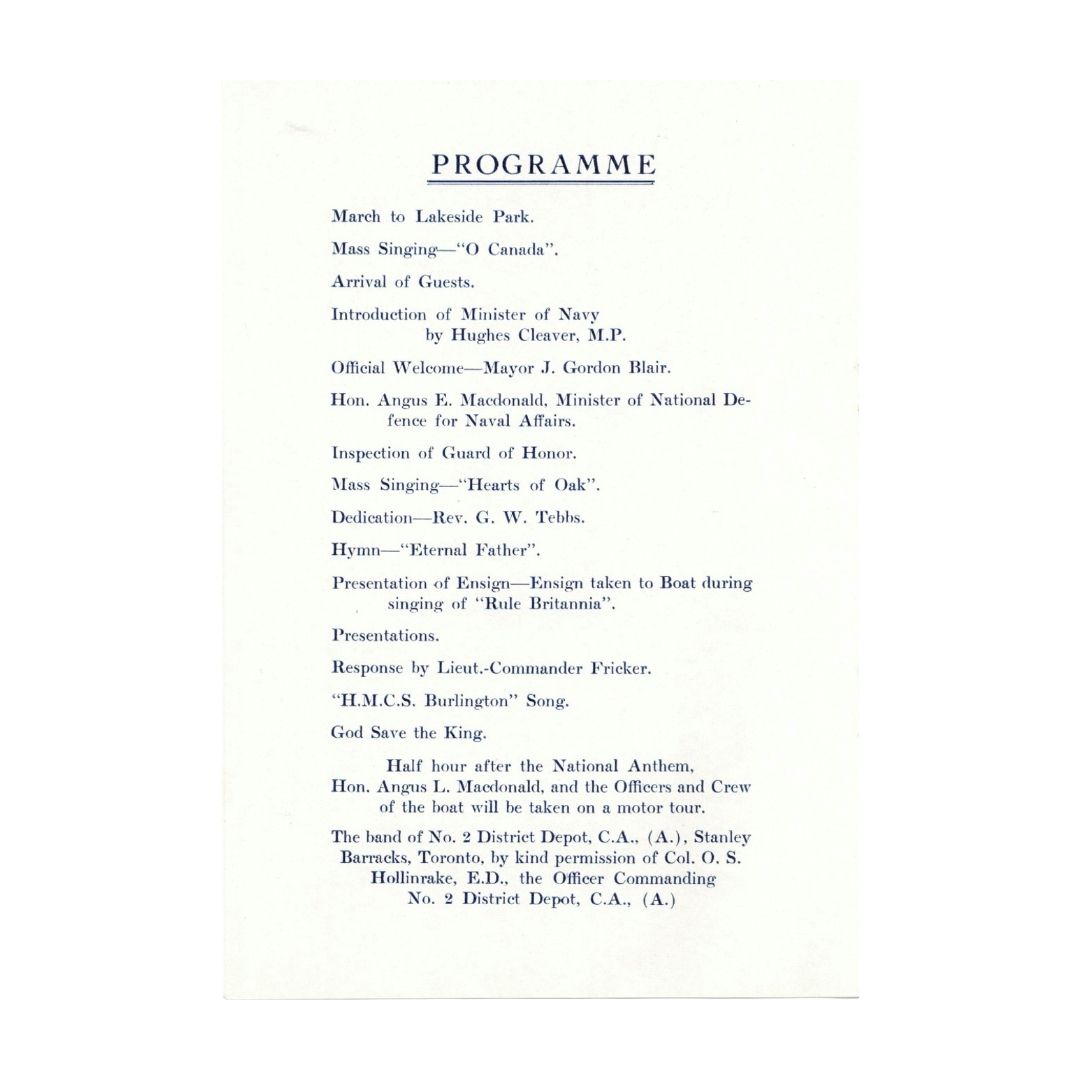
Image Credit: The Burlington Historical Society
THE AGENDA:
Thanks to the program, we know that the ceremony started with a parade and included singing, prayers, gift presentations, and speeches.
-
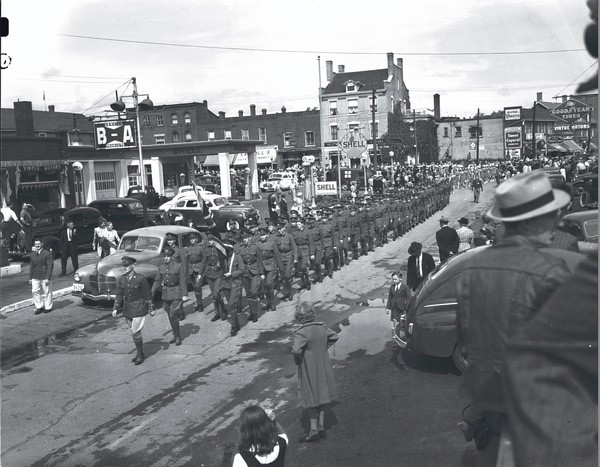
Image Credit: York University Libraries, Clara Thomas Archives & Special Collections, Toronto Telegram fonds, ASC02828
WATER STREET:
The parade had uniformed men (and Burlington High School students!) marching down Brant and Water Street with the final destination of Lakeside Park.
Check out this image online on the York University Clara Thomas Archives & Special Collections website!
-
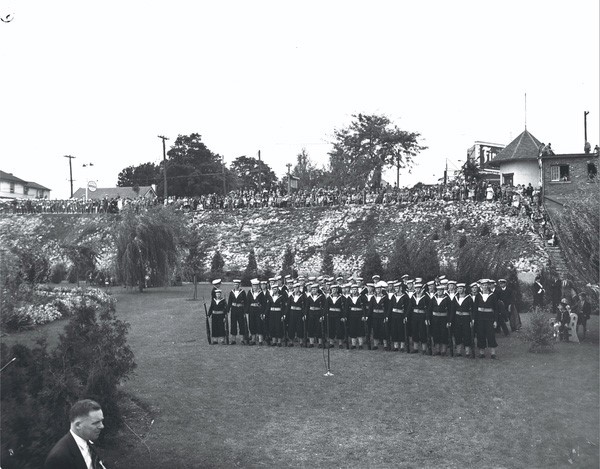
Image Credit: York University Libraries, Clara Thomas Archives & Special Collections, Toronto Telegram fonds, ASC02831
LAKESIDE PARK:
Burlington citizens and guests gathered at Lakeside Park to watch and participate in the rest of the ship’s dedication ceremony.
Check out this image online on the York University Clara Thomas Archives & Special Collections website!
Who attended the ceremony?
-
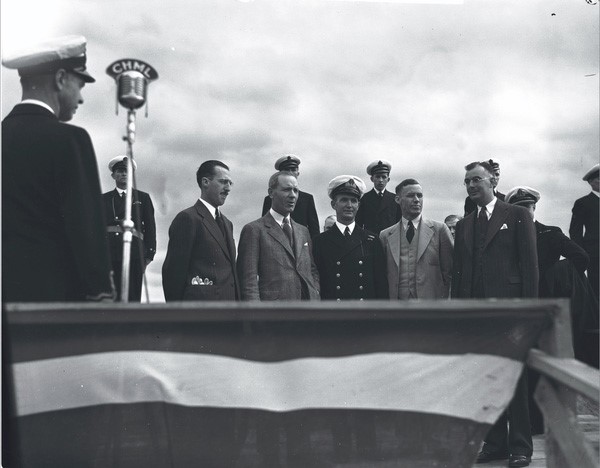
Image Credit: York University Libraries, Clara Thomas Archives & Special Collections, Toronto Telegram fonds, ASC02830
WHO:
Several regional and national celebrities attended the dedication ceremony.
From left to right in this image, J. Gordon Blair, Mayor of Burlington, the Honourable Angus L. Macdonald, Minister of National Defense for Naval Services, Lieutenant Commander W. J. Fricker, in command of the H.M.C.S. Burlington, Hughes Cleaver, MP for Halton from 1935 to 1953, and John Wilkinson, Councillor and chairman of the dedication ceremony committee.
Check out this image online on the York University Clara Thomas Archives & Special Collections website!
-
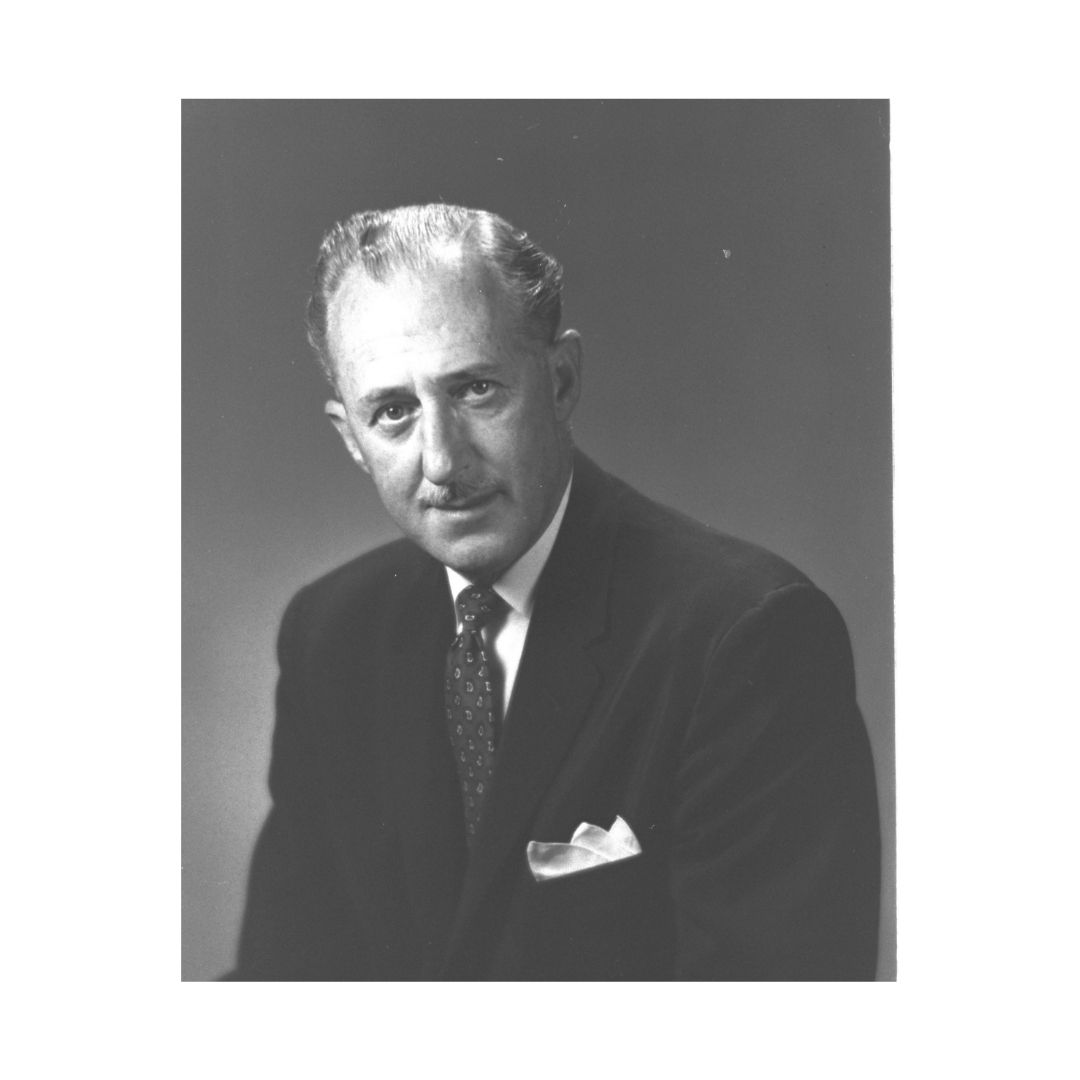
Image Credit: Joseph Brant Museum collection, 1985.380.117
OUR MAYOR:
John Gordon Blair was the Mayor of Burlington from 1940 to 1945.
-
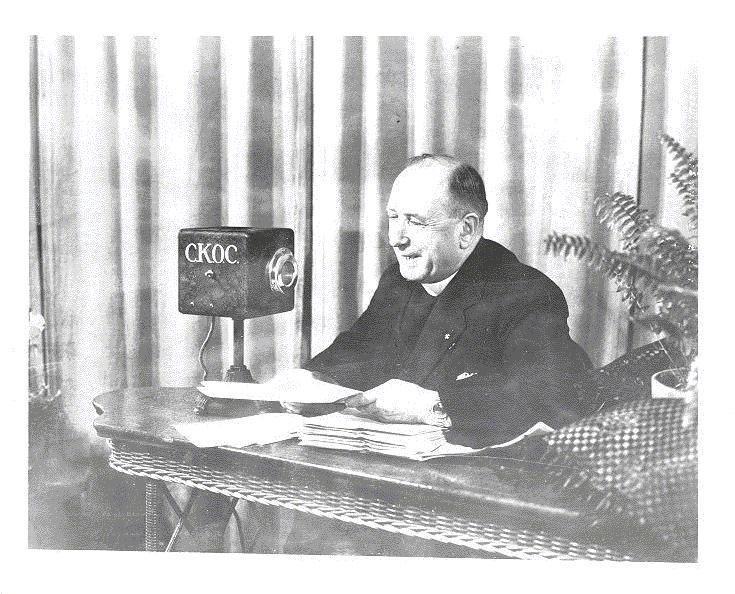
Image Credit: The Burlington Historical Society
OUR REVEREND:
Another local Burlingtonian who played a role in the ceremony was Reverend George W. Tebbs.
-
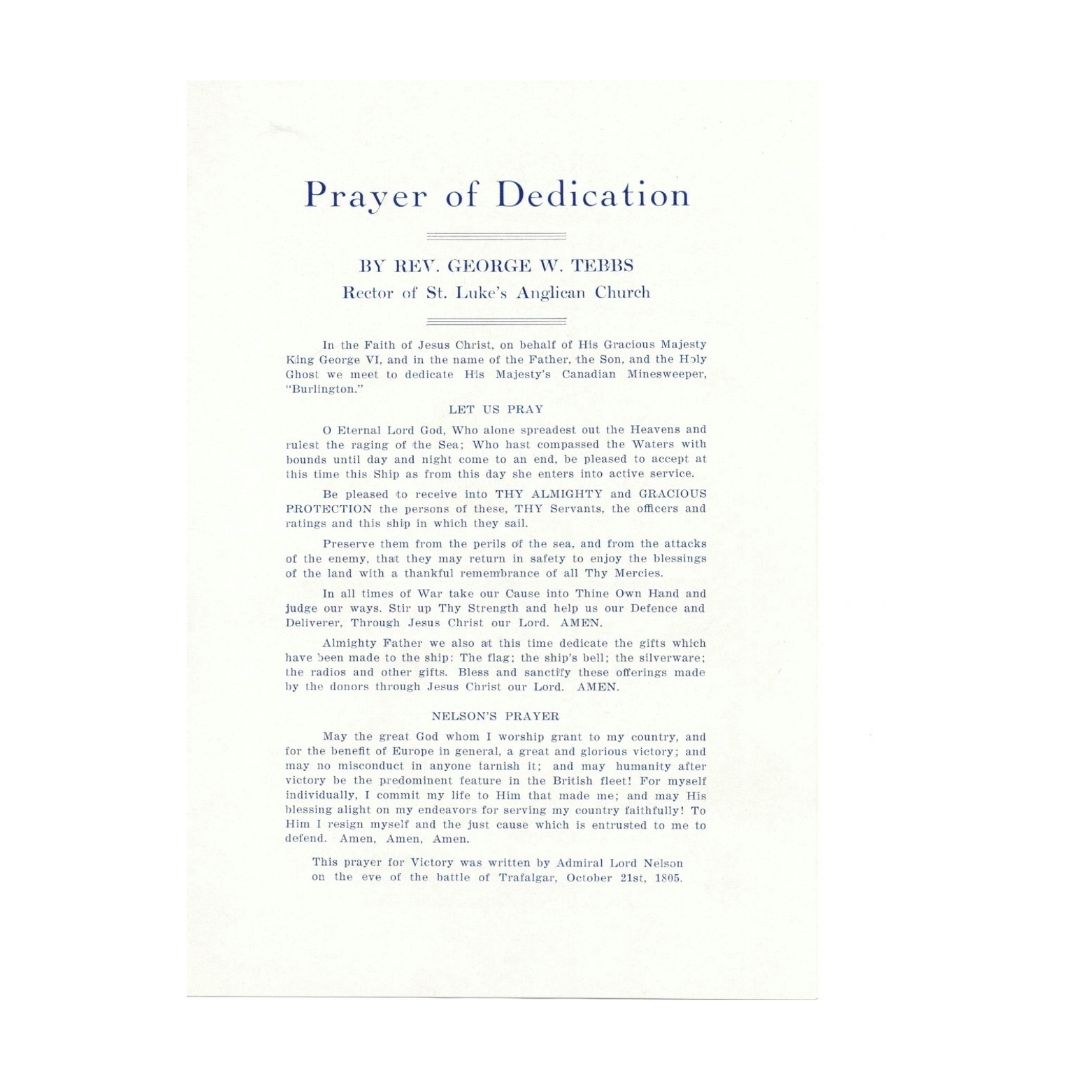
Image Credit: The Burlington Historical Society
THE PRAYER:
Reverand Tebbs was the rector of St. Luke’s Anglican Church from 1918 to 1942. He read this prayer as part of the dedication ceremony.
-
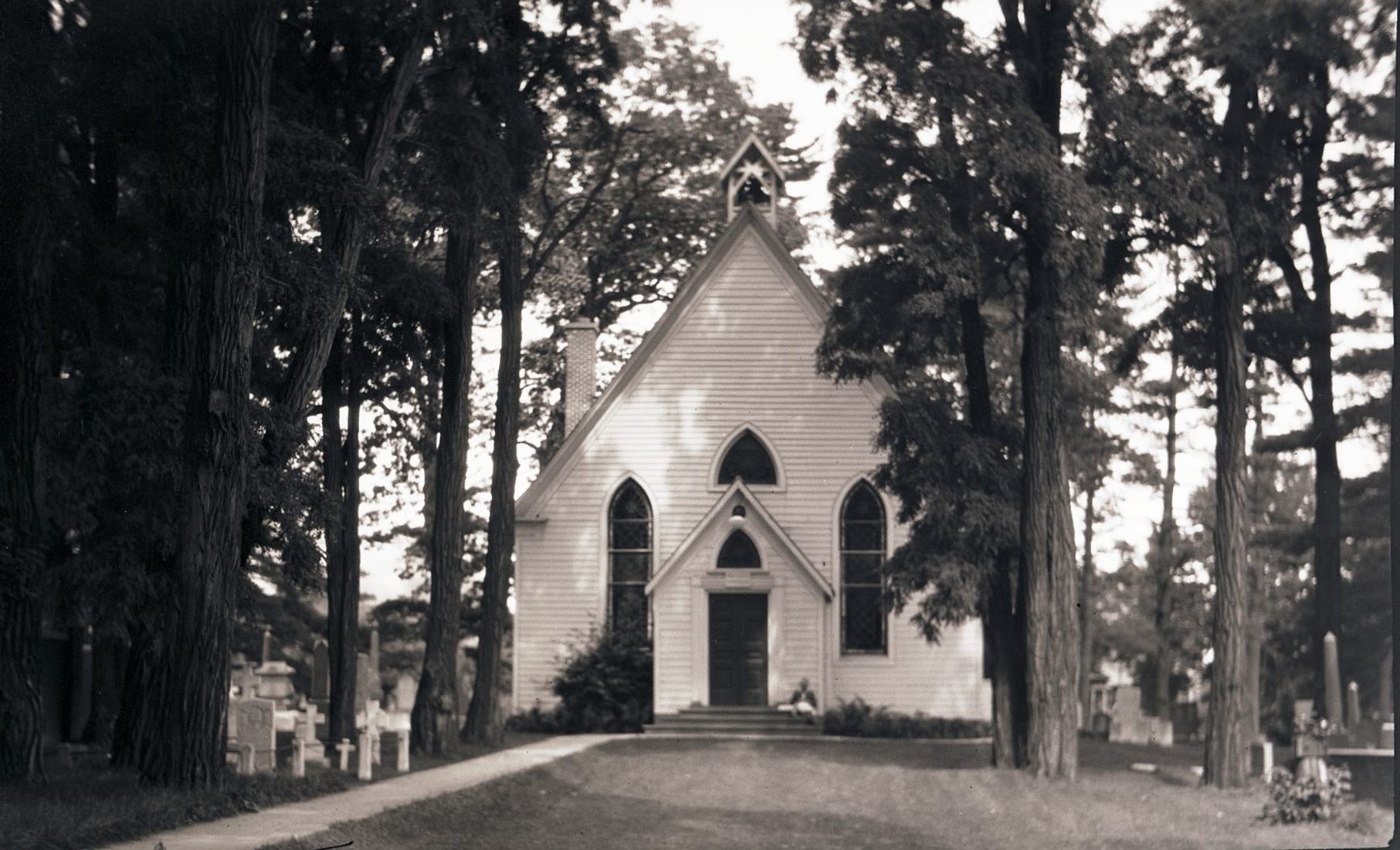
Image Credit: Joseph Brant Museum collection, 2012.32.852
THE CHURCH:
St. Luke’s Anglican Church was built in 1834 to serve the parish of Wellington Square.
What songs were performed?
-
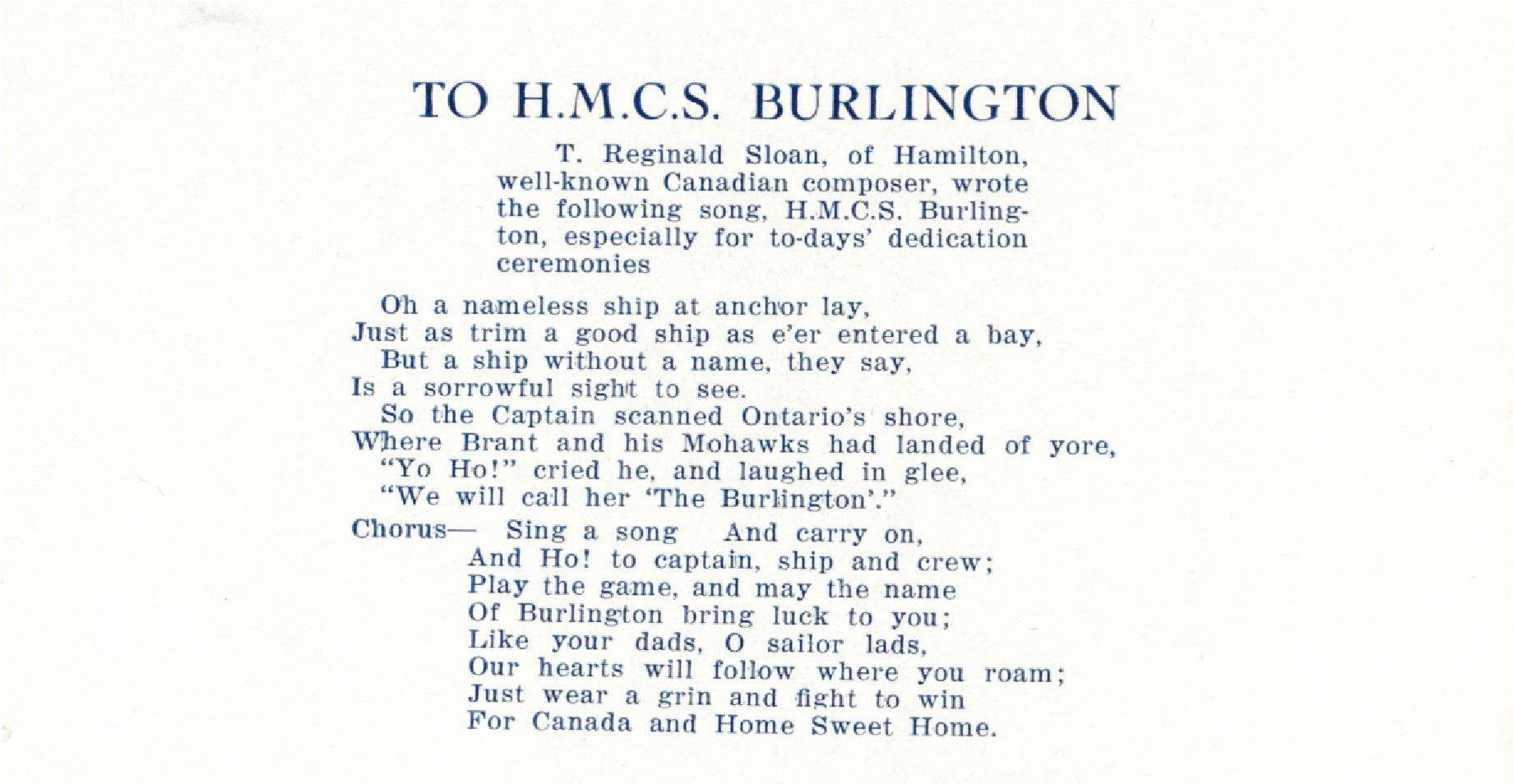
Image Credit: The Burlington Historical Society
CELEBRATORY SONGS:
After the prayers and presentations, the song To H.M.C.S. Burlington was performed. It was written for the dedication of the minesweeper by Thomas Reginald Sloan, a Hamilton composer.
-
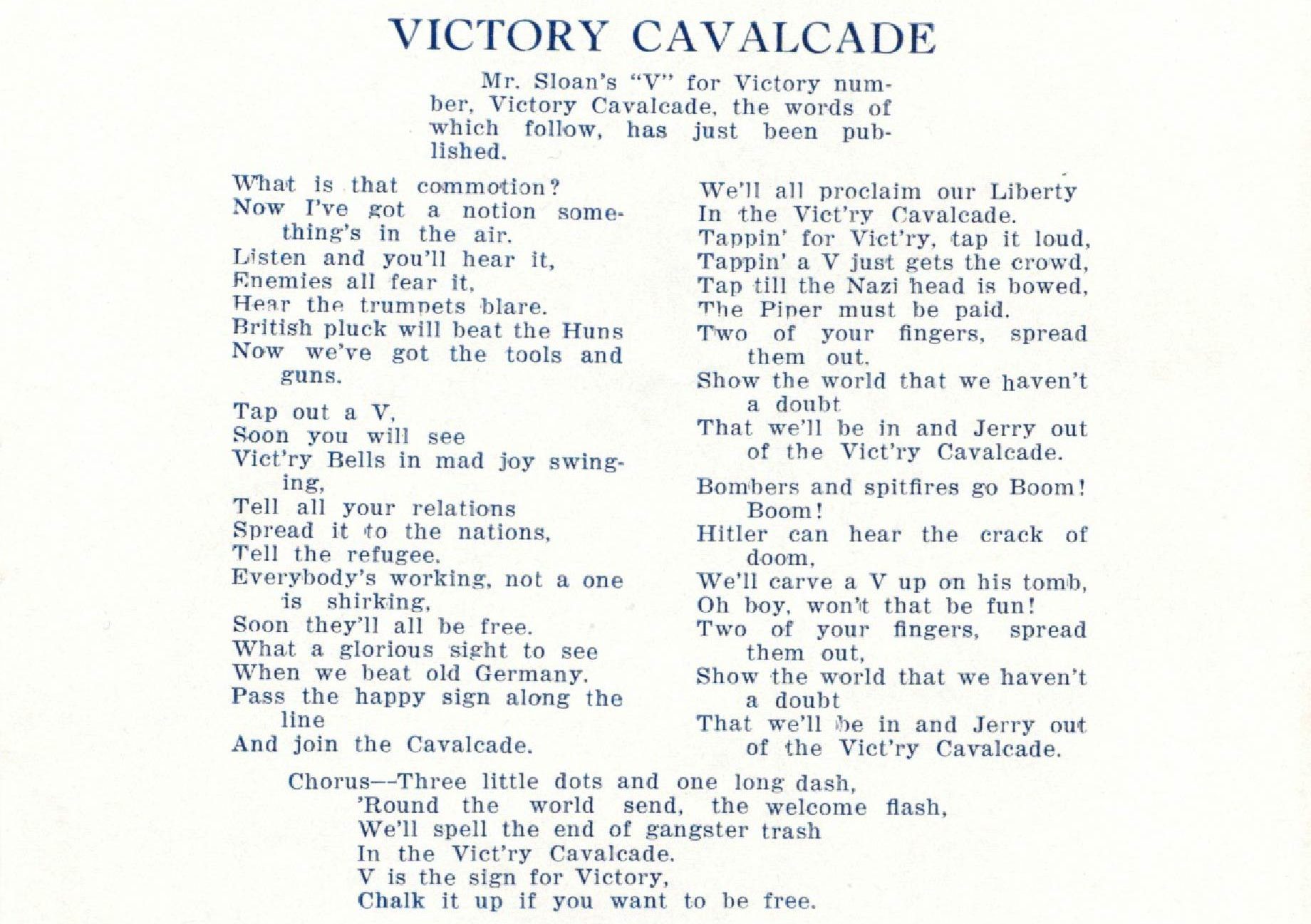
Image Credit: The Burlington Historical Society
Content Warning: Use of derogatory terms to describe German soldiers
VICTORY SONGS:
The next song played at the ceremony was Victory Cavalcade. It was also composed by Thomas Reginald Sloan.
-
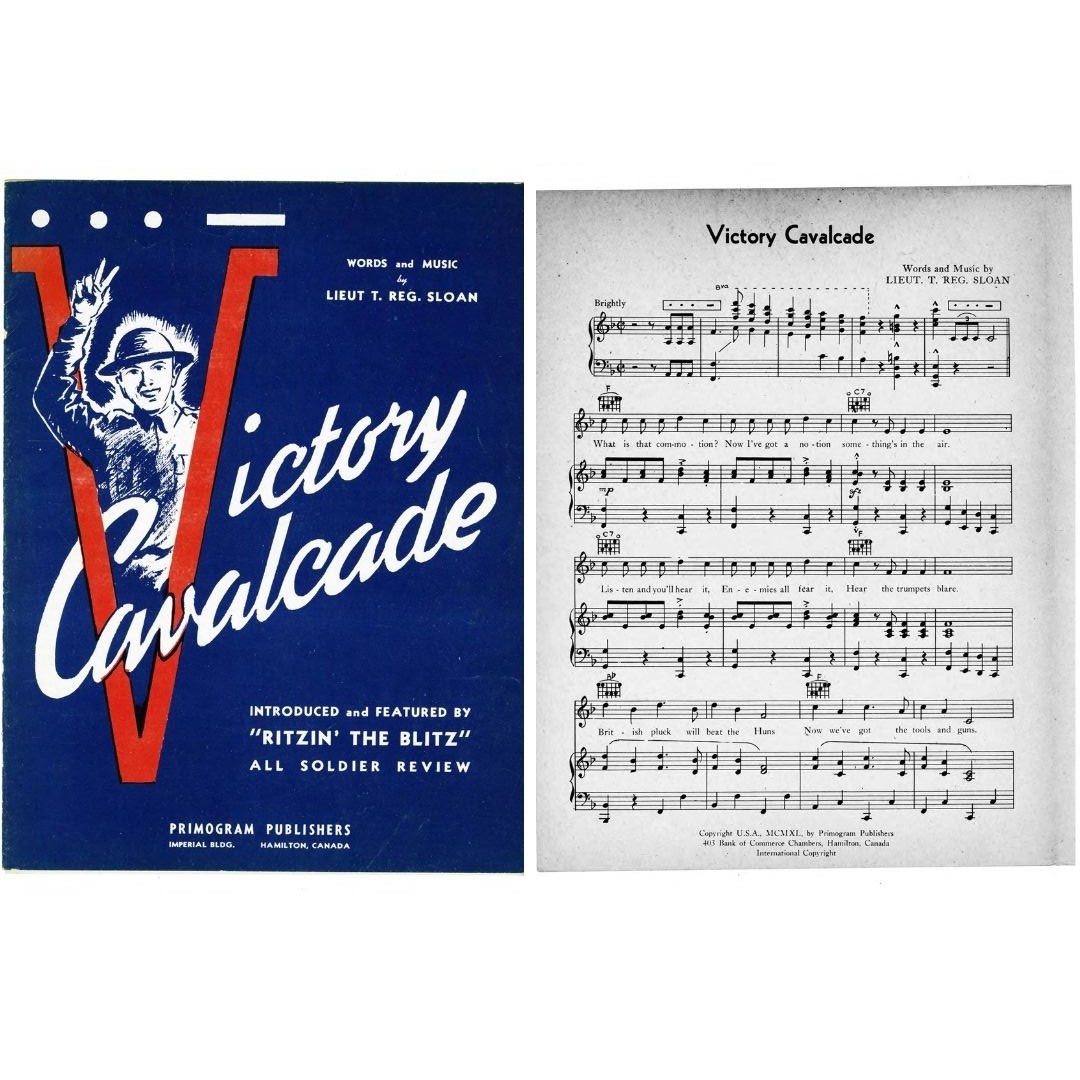
Image Credit: York University Libraries, Clara Thomas Archives & Special Collections, John Arpin fonds, JAC009790
TAKE A LISTEN:
The sheet music for Victory Cavalcade is free to view as part of the York University Libraries’ Sheet Music Collection here! >> http://hdl.handle.net/10315/34099
And you can listen to a short recording of Victory Cavalcade from 1942 without the lyrics here! >> https://www.yout-ube.com/watch?v=GuLLtyNWLJ0
-
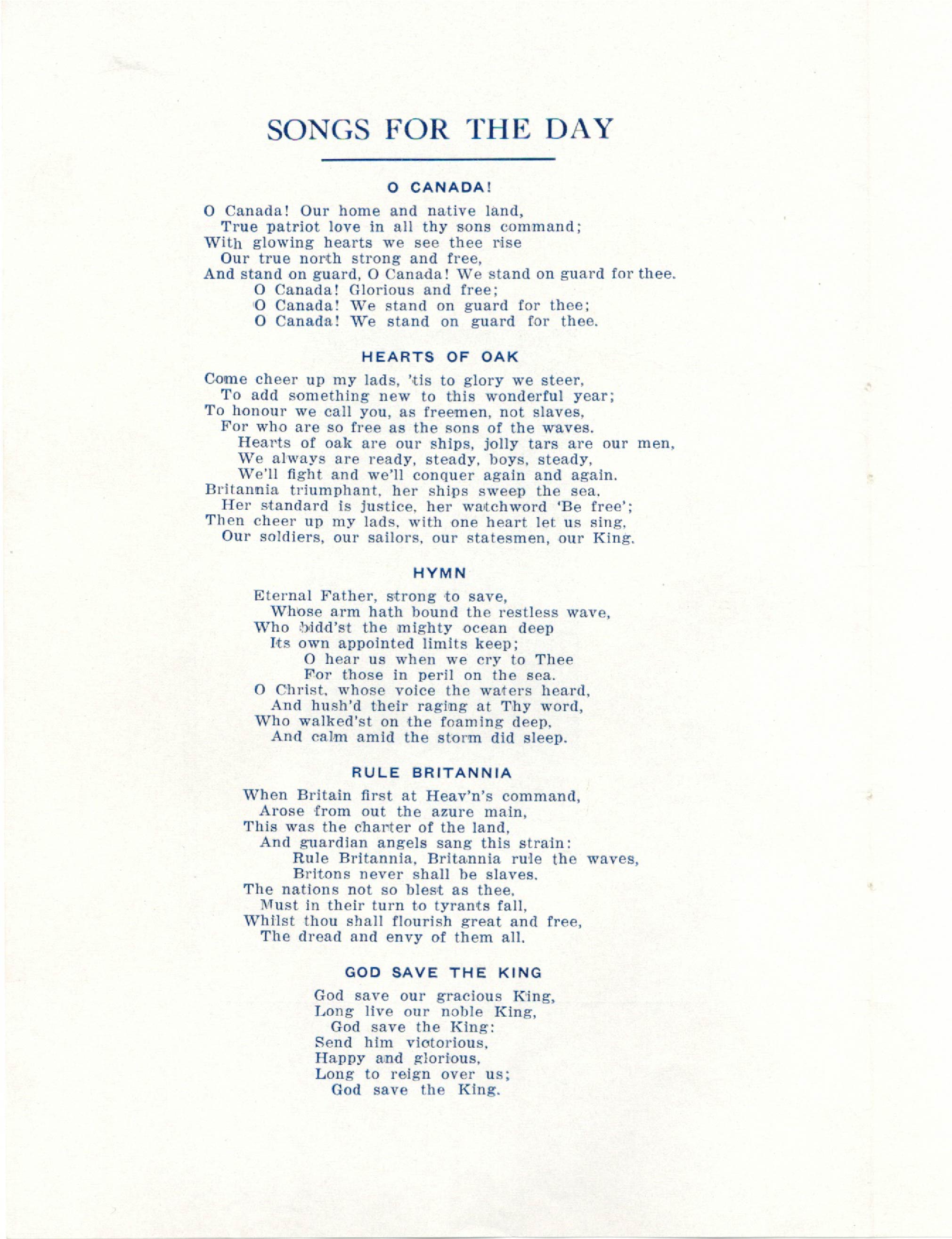
Image Credit: The Burlington Historical Society
Content Warning: Reference to enslaved people
IN THE NAVY:
Another well-known song sung en masse at the ceremony was Hearts of Oak.
Hearts of Oak is the official march of the Royal Canadian Navy and the Royal Navy of the United Kingdom.
Check out a recording of the song from 1915 here >> https://www.yout-ube.com/watch?v=JIob7l8vzE4
What happened after the dedication?
-
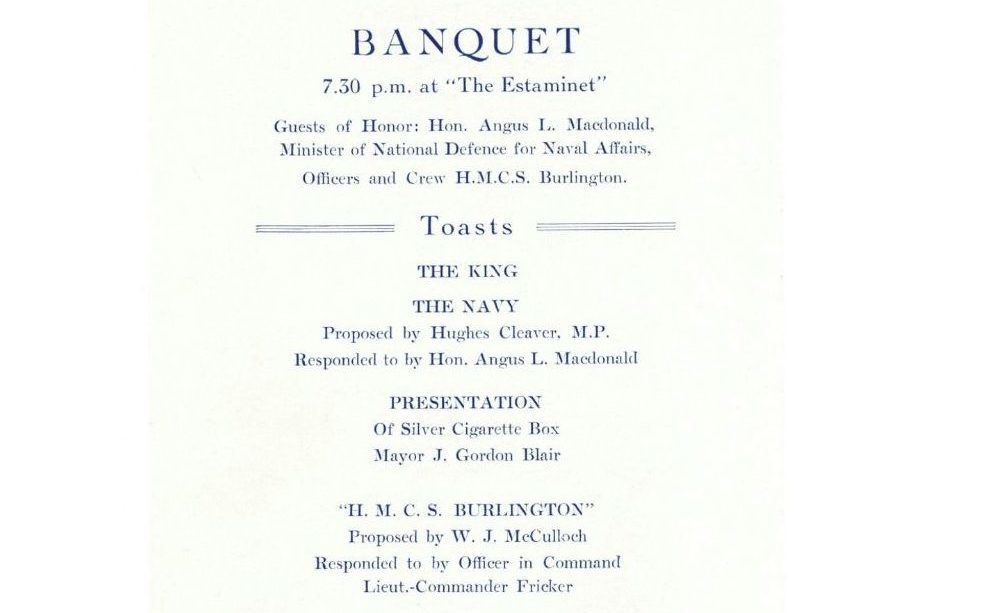
Image Credit: The Burlington Historical Society
A BANQUET:
The minesweeper’s public dedication at Lakeside Park ended with the song “God Save the King.” Burlingtonians then held parties all over town, while H.M.C.S. Burlington Officers and crew went to The Estaminet for a reception and banquet.
-
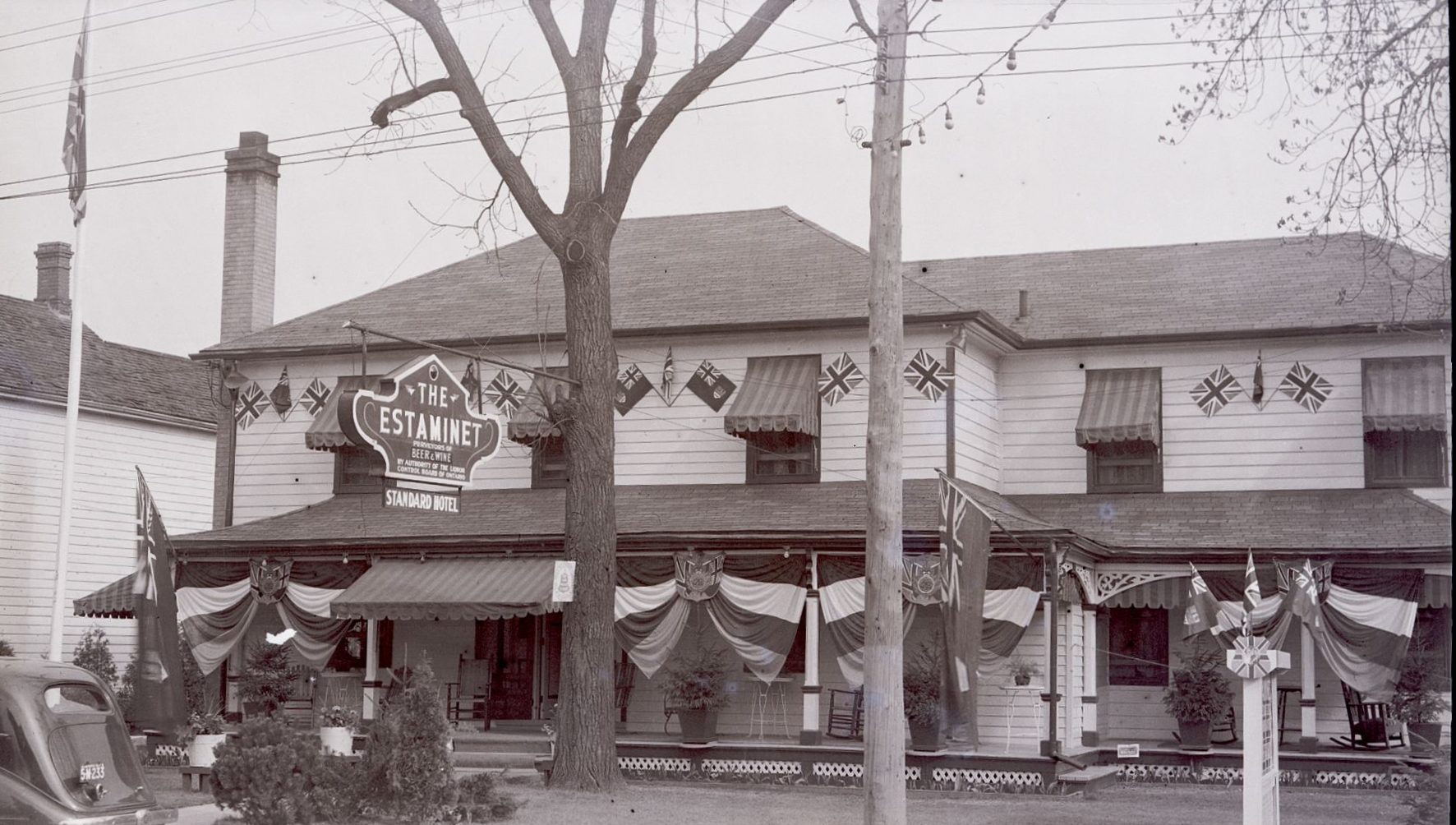
Image Credit: Joseph Brant Museum collection, 2012.32.911
THE LOCATION:
George and Emma Byrens owned and operated the Estaminet for 33 years (1919-1952)!
In 2020 the modern restaurant, Emma’s Back Porch, closed due to the COVID-19 pandemic.
What happened to the H.M.C.S. Burlington after the war?
-
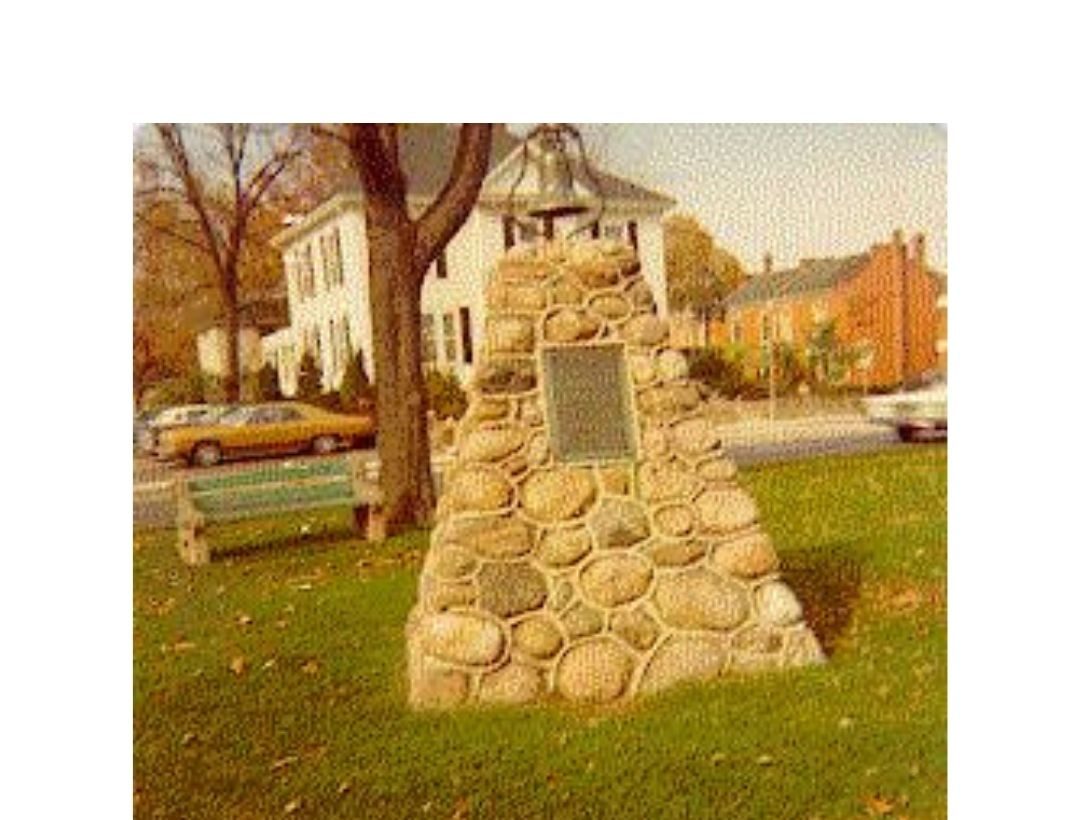
Image Credit: The Burlington Historical Society
1946-1995:
The ship was paid off (no longer commissioned as a minesweeper) on October 30, 1945, and sold for scrap in 1946.
The ship’s inscribed bell was placed into the Burlington Iron Duke Royal Canadian Sea Cadet Corps’ care and displayed on a commemorative cairn in Gore Park, Burlington, from 1946-1995.
The bell had been presented to the H.M.C.S. Burlington crew during the 1941 dedication ceremony by a local schoolboy, Donald Palmer.
-
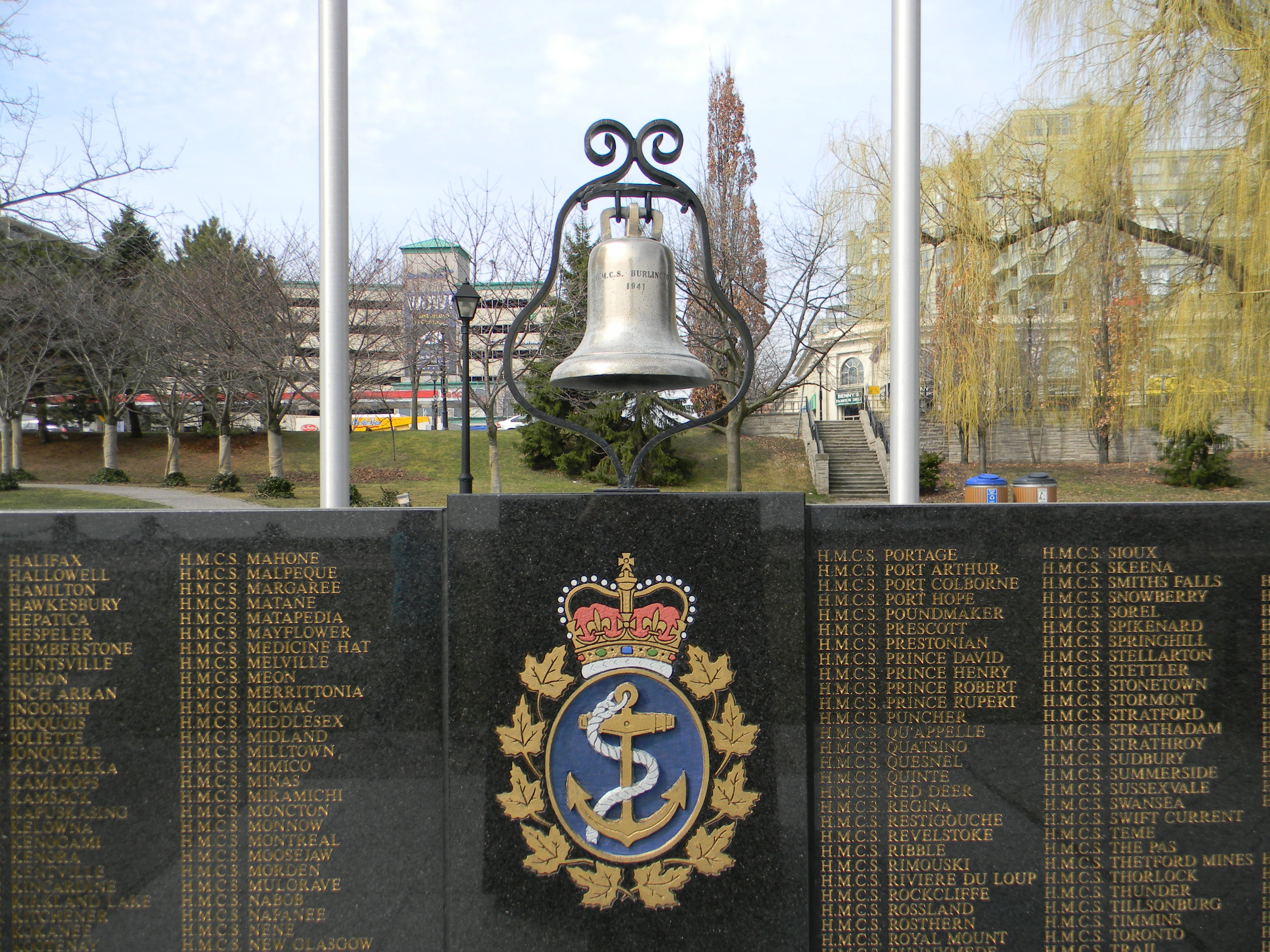
Image Credit: Laslovarga, Wikipedia
1995-TODAY:
On May 14, 1995, the bell was moved to Burlington’s new Royal Canadian Naval Ships Memorial Monument at Spencer Smith Park.
You can learn more about the monument on the Veterans Affairs Canada website.
Do you have any stories or questions about H.M.C.S. Burlington?
-
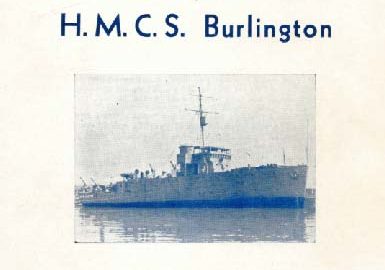
Image Credit: The Burlington Historical Society
STORIES:
We’d love to hear them! You can reach our Curator at chris.selman@burlington.ca.
QUESTIONS:
If you like to learn more about H.M.C.S Burlington, or any other Burlington story, you can fill out a Research Access Request form on our website!