
The Parlour was restored to when the first generation, Joseph and Ruth Ireland and their eight children, lived in the Ireland House in the early and mid-Victorian era 1832-1875.
-
First Floor
Parlour, Dining Room, 1920s Kitchen
Parlour
-
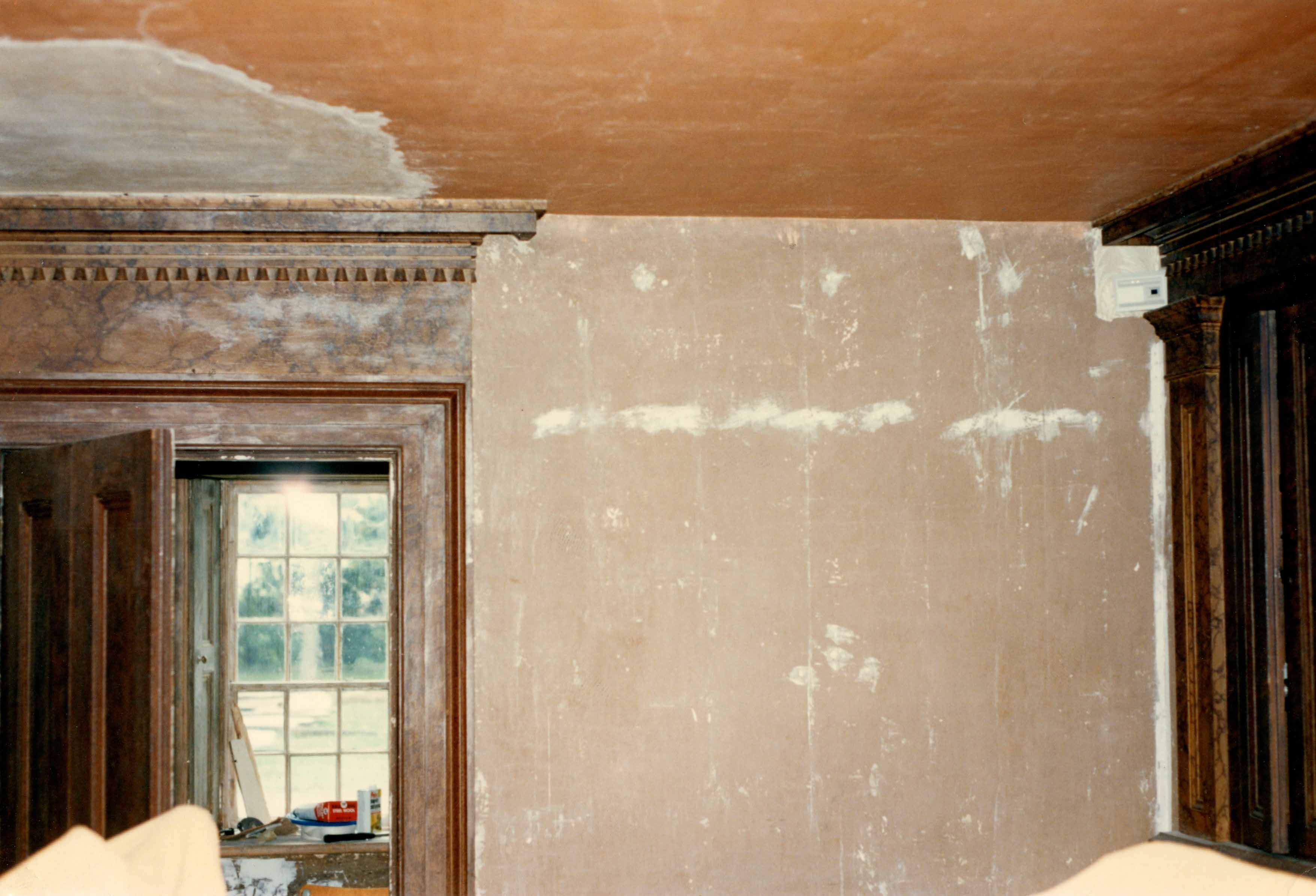
Parlour - North Wall and Bi-fold Door to Sick Room
The parlour’s modern wallpaper was removed and replaced by reproduction wallpaper. The pattern was based on original samples discovered in the wallpaper layers.
-
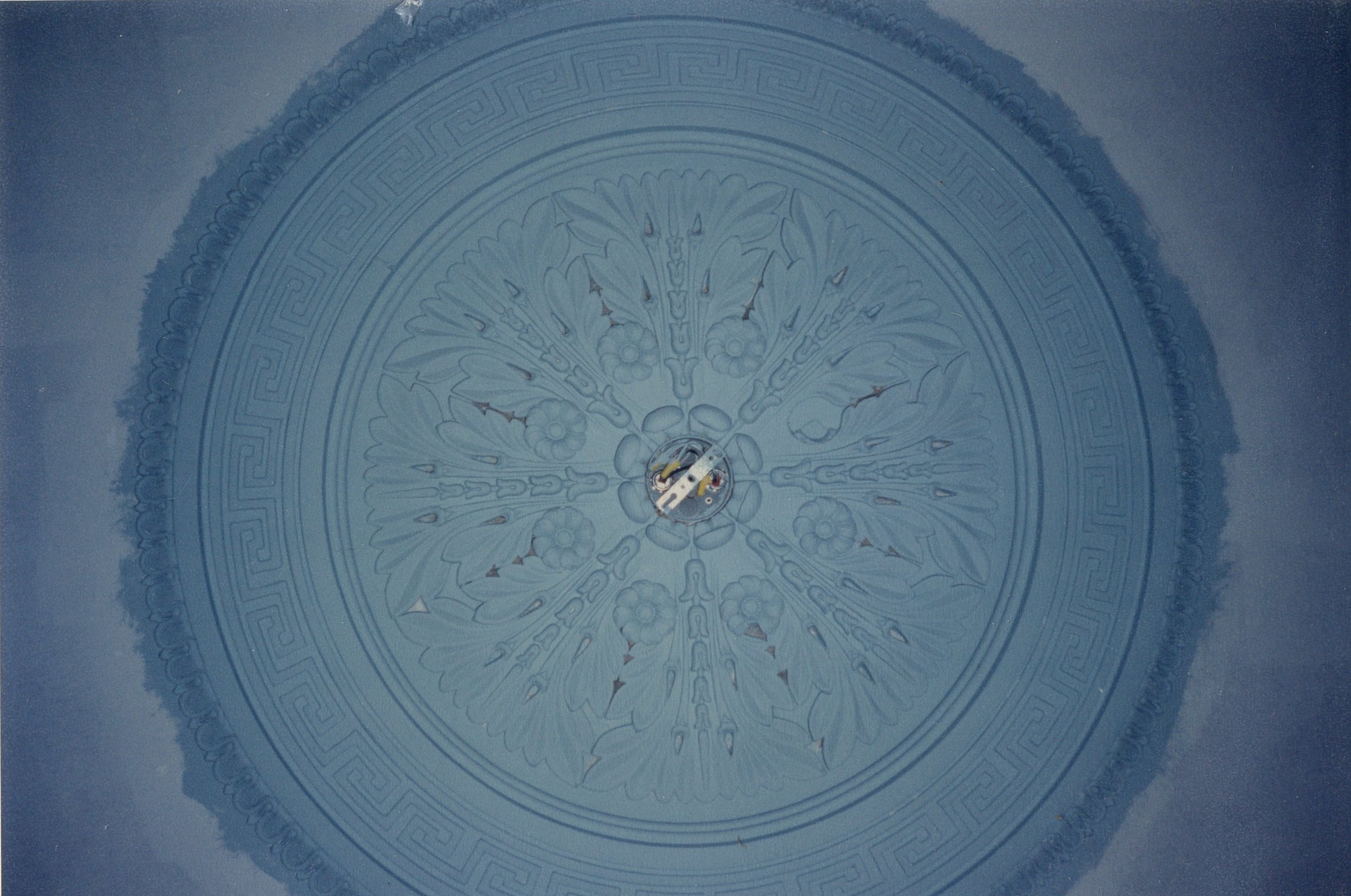
Parlour - Ceiling Medallion
The original ceiling medallion did not need any restoration. But the ceiling was repainted to an appropriate early Victorian era colour.
-
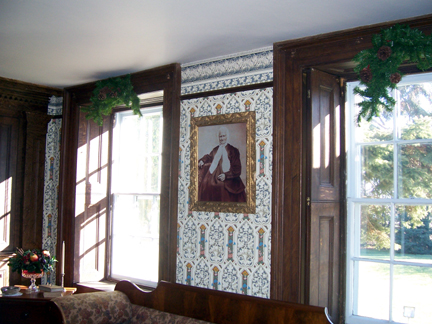
Parlour - South Wall Window Cells and Covers
The faux finish on the window wells, built-in bookcases, and fireplace mantle did not need to be restored. The Ireland family left the finish intact for four generations.
Dining Room
The Dining Room we restored to the second generation, John and Eliza Ireland and their 12 children, in the late Victorian era 1875-1902.
-
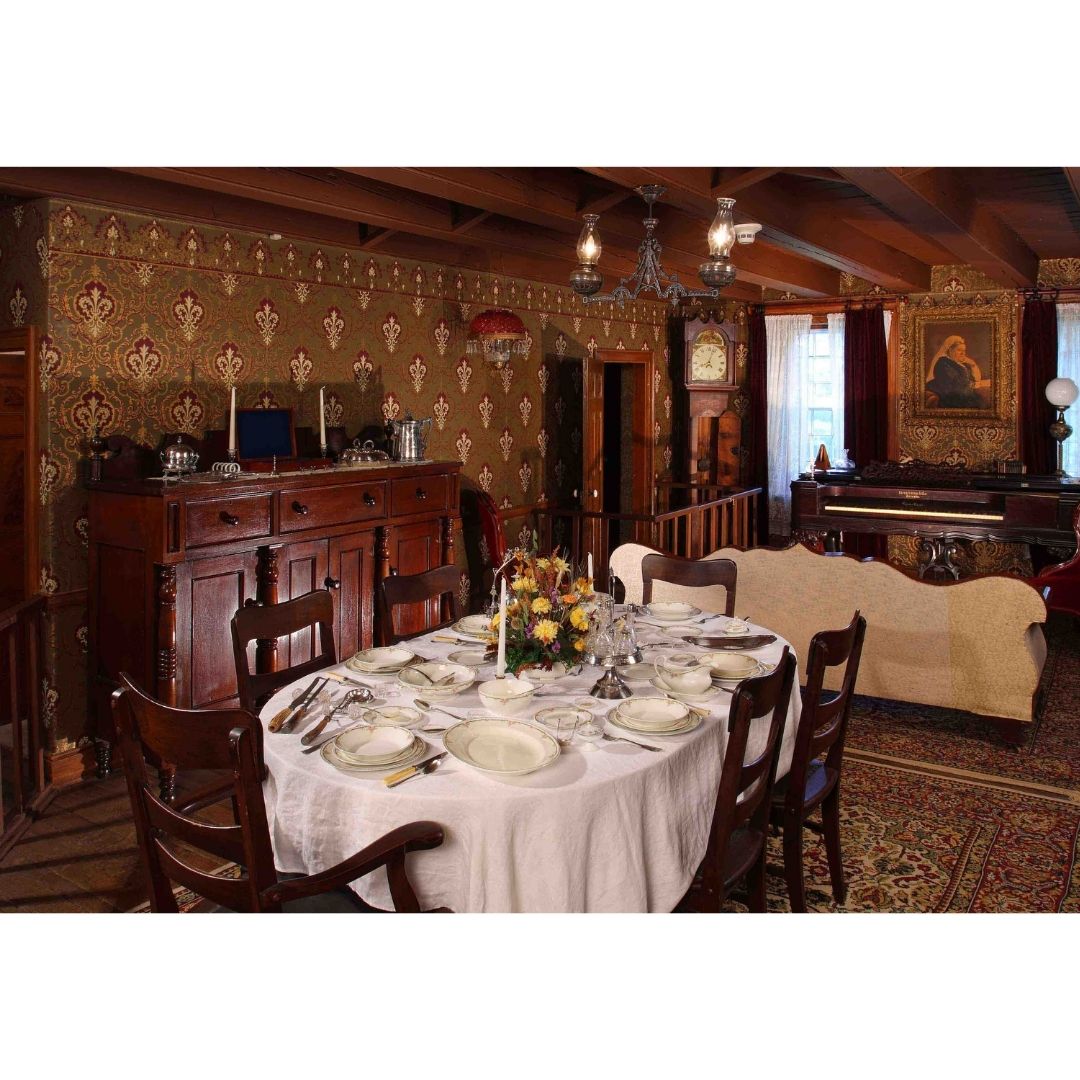
Dining Room - Dining Parlour
The dining room was originally two rooms. The south room (where Lucy Ireland’s piano is now located) was the original dining parlour.
During the late Victorian era, the dining parlour and dining room were merged into one large room.
-
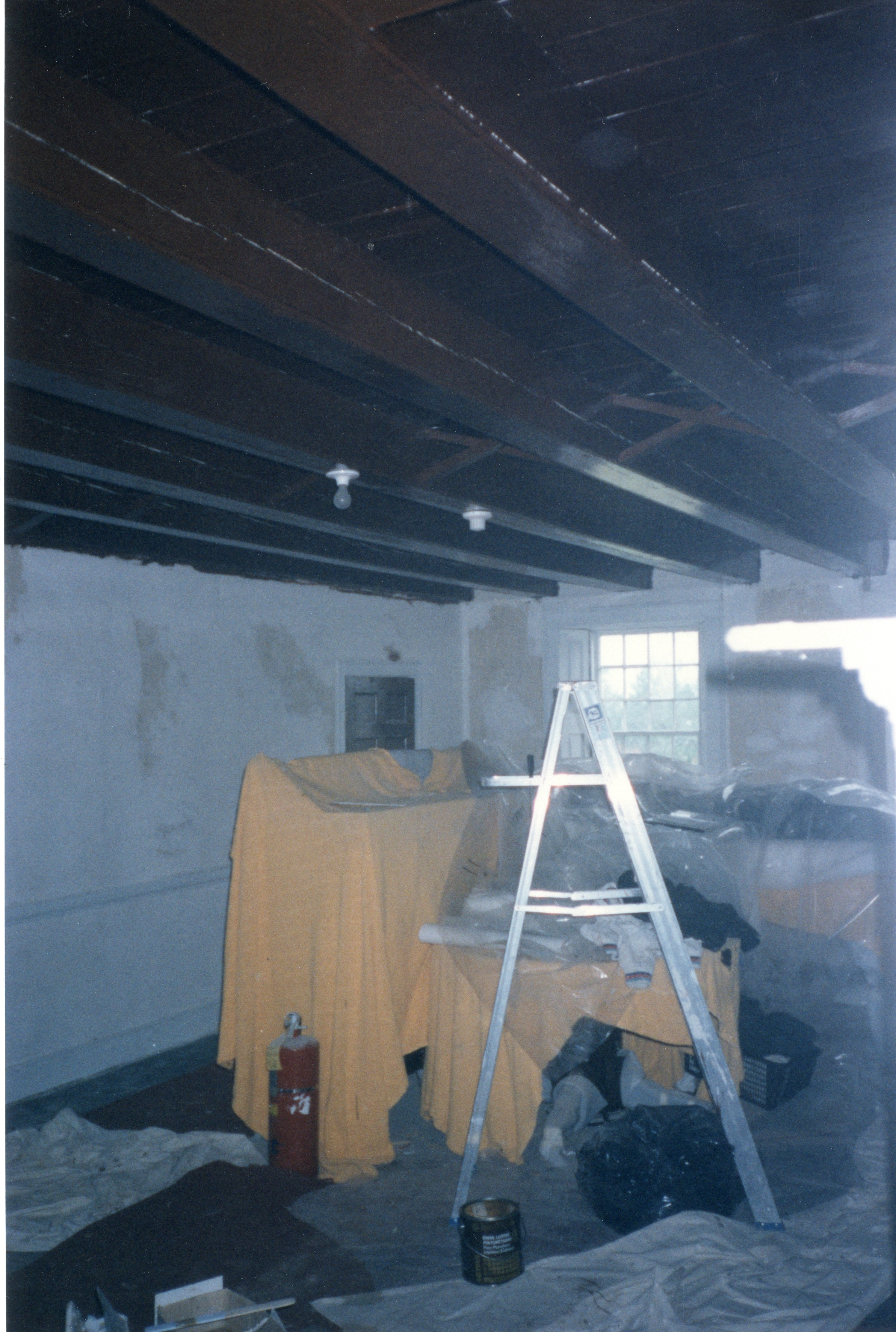
Dining Room - Northwest Corner
When Joseph and Ruth first built the house, they had a staircase in the northwest corner of the Dining Room that connected to the second floor.
The staircase was removed when they built an addition on the west side of the house in the late 1840s.
-
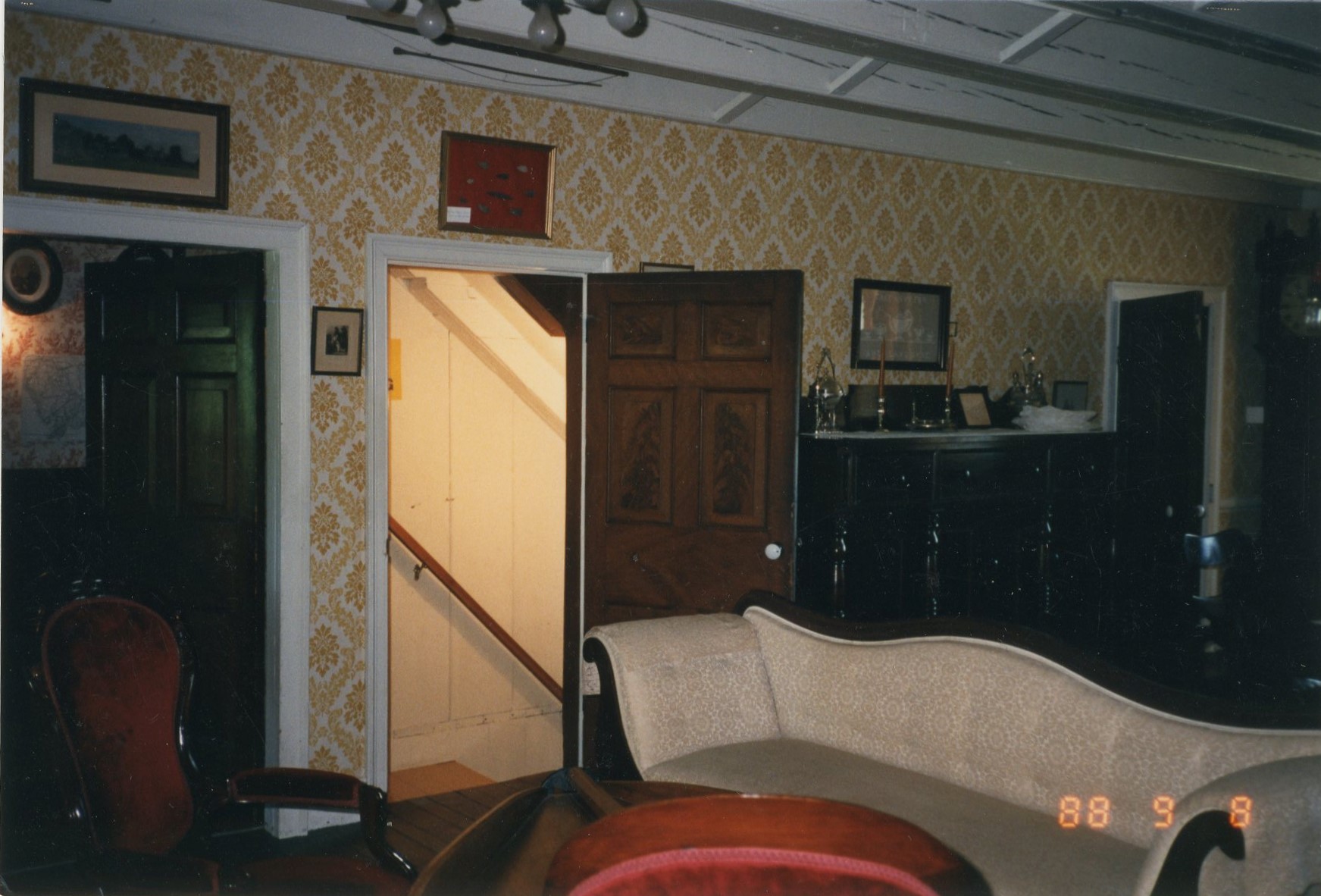
Dining Room - East Wall prior to restoration
In 1990, the east wall of the Dining Room had three doorways, one into the central hallway by the back door, one into the central hallway by the front door, and one to the basement stairs.
-
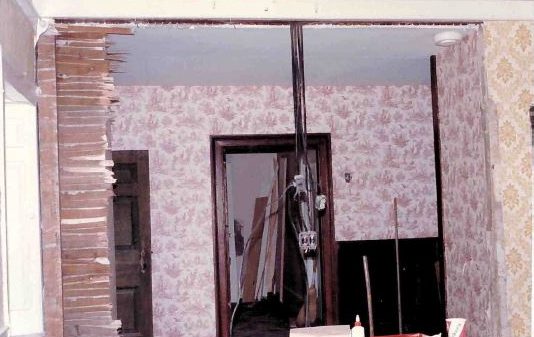
Dining Room - East Wall mid-restoration
During the restoration project, the doorway to the backdoor was moved to the side, and the basement stairs and doorway were moved to give future guests access to the basement.
-
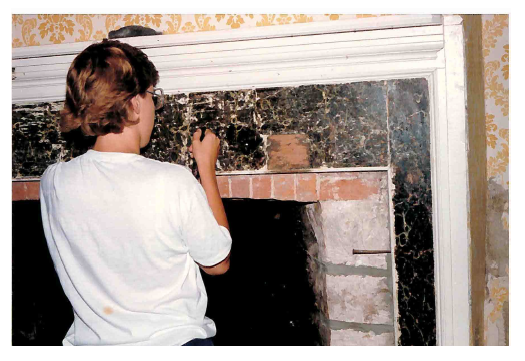
Dining Room - Fireplace Mantle
When taking paint samples during the restoration, a faux finish was discovered on the large fireplace. This finish was restored, as was the graining on the window frames, chair rail and baseboards.
-
Dining Room - Smaller Fireplace
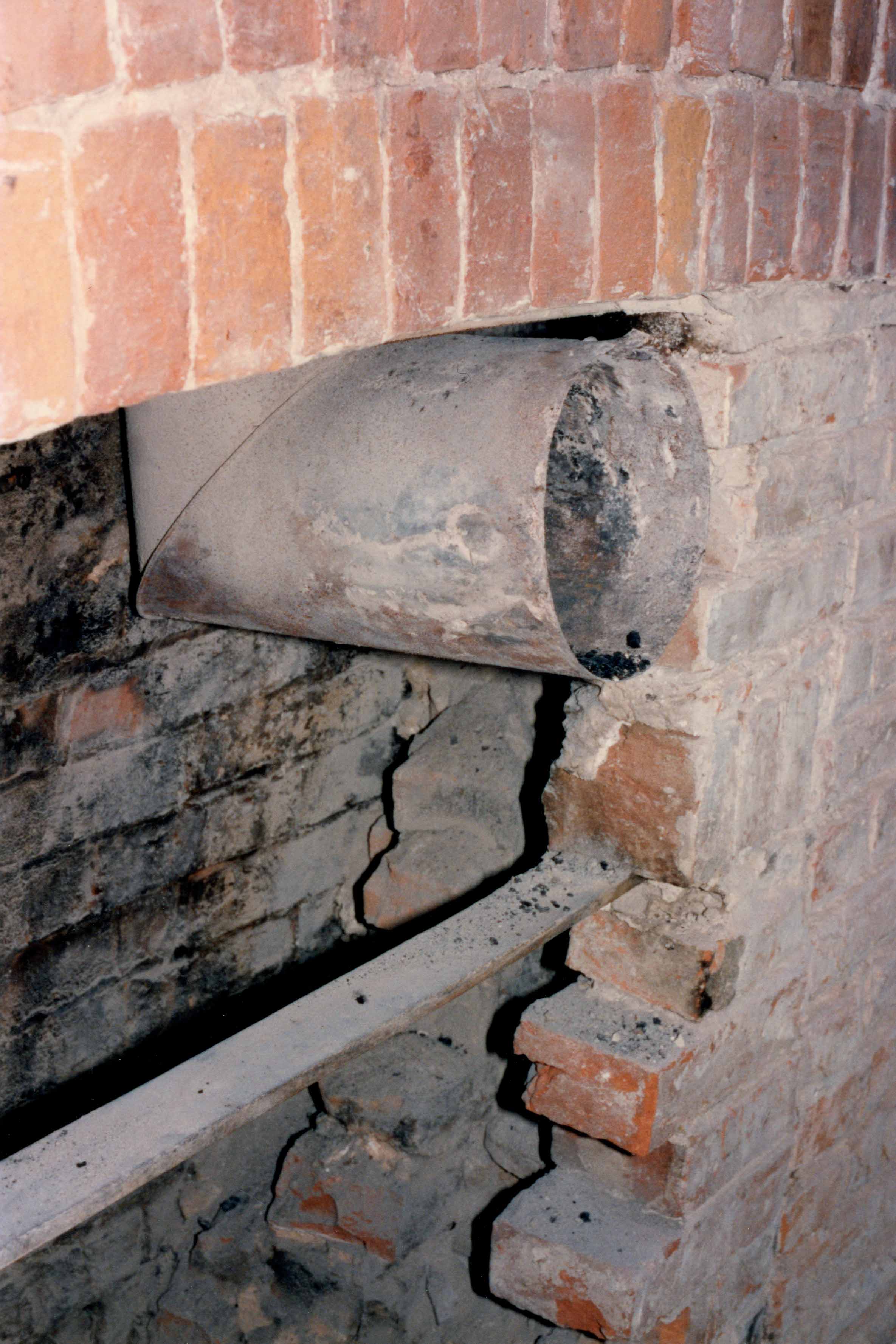
A fireplace hidden in the walls was found during the restoration. This smaller fireplace was used to heat the original dining parlour in the early Victorian era.
When the two rooms were merged, the small fireplace was altered to include a wood-burning stove to heat the larger space. Later, the family completely removed the stove, and the fireplace was bricked up.
The fireplace was not restored. Instead, the remains of the fireplace are available to see during a tour of the Ireland House Museum.
1920s Kitchen
The 1920s Kitchen was restored to the early 20th century when the house was occupied by George and Lucy Ireland, and their daughter, Lucie Marie Ireland.
-
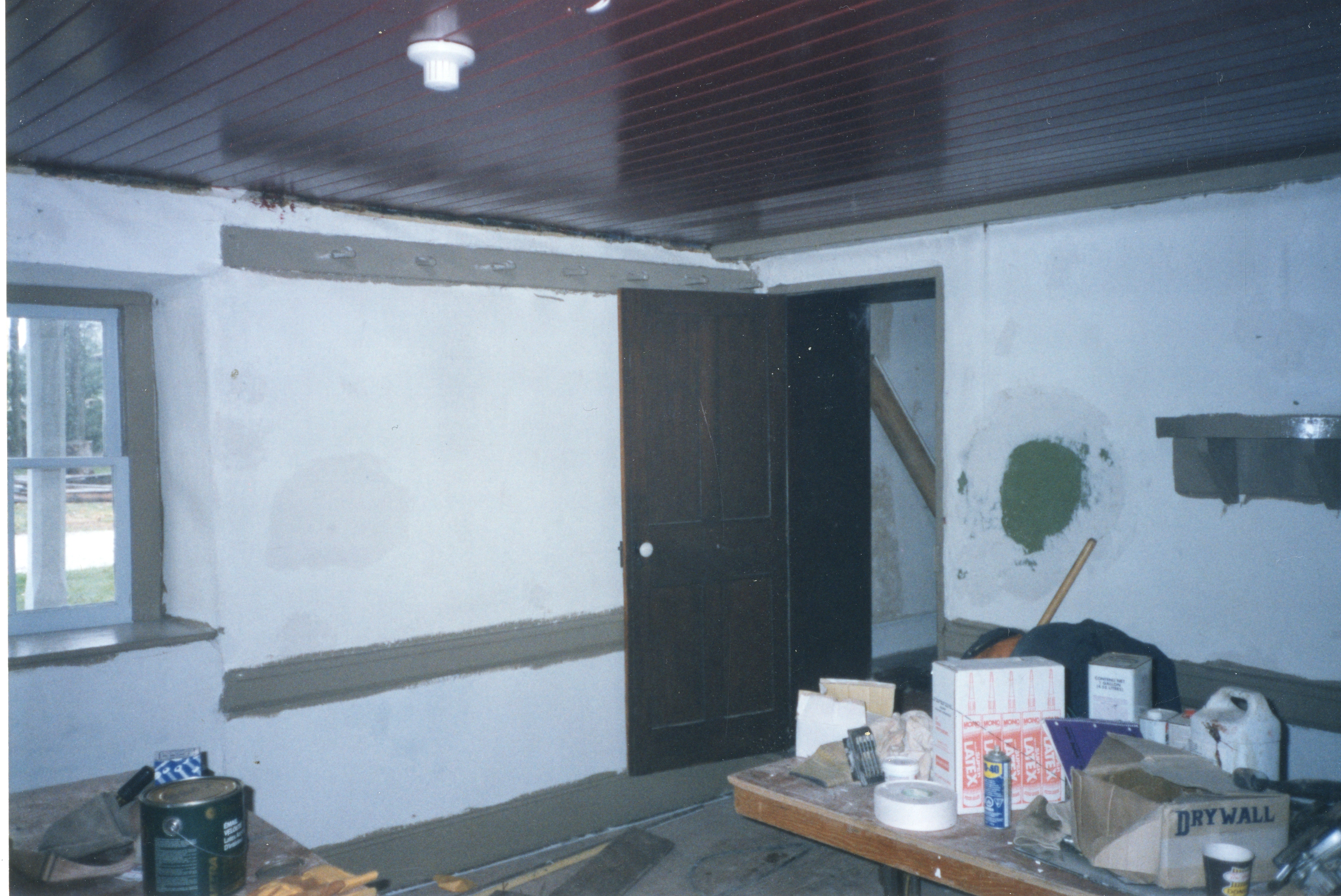
1920s Kitchen - Northeast Corner
The walls of the 1920s Kitchen were repainted, and the laminate floor was left in place to reflect the popularity of the flooring post the First World War.
-
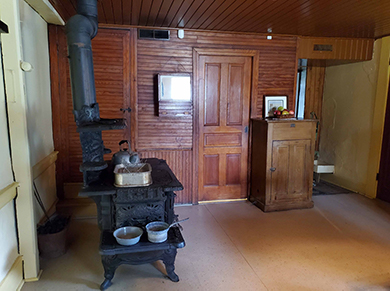
1920s Kitchen - South Wall
Behind the door in the south wall of the 1920s Kitchen, the modern sink and cabinetry used by Marie Ireland were left untouched. These features are used by current staff for programming and events.
-
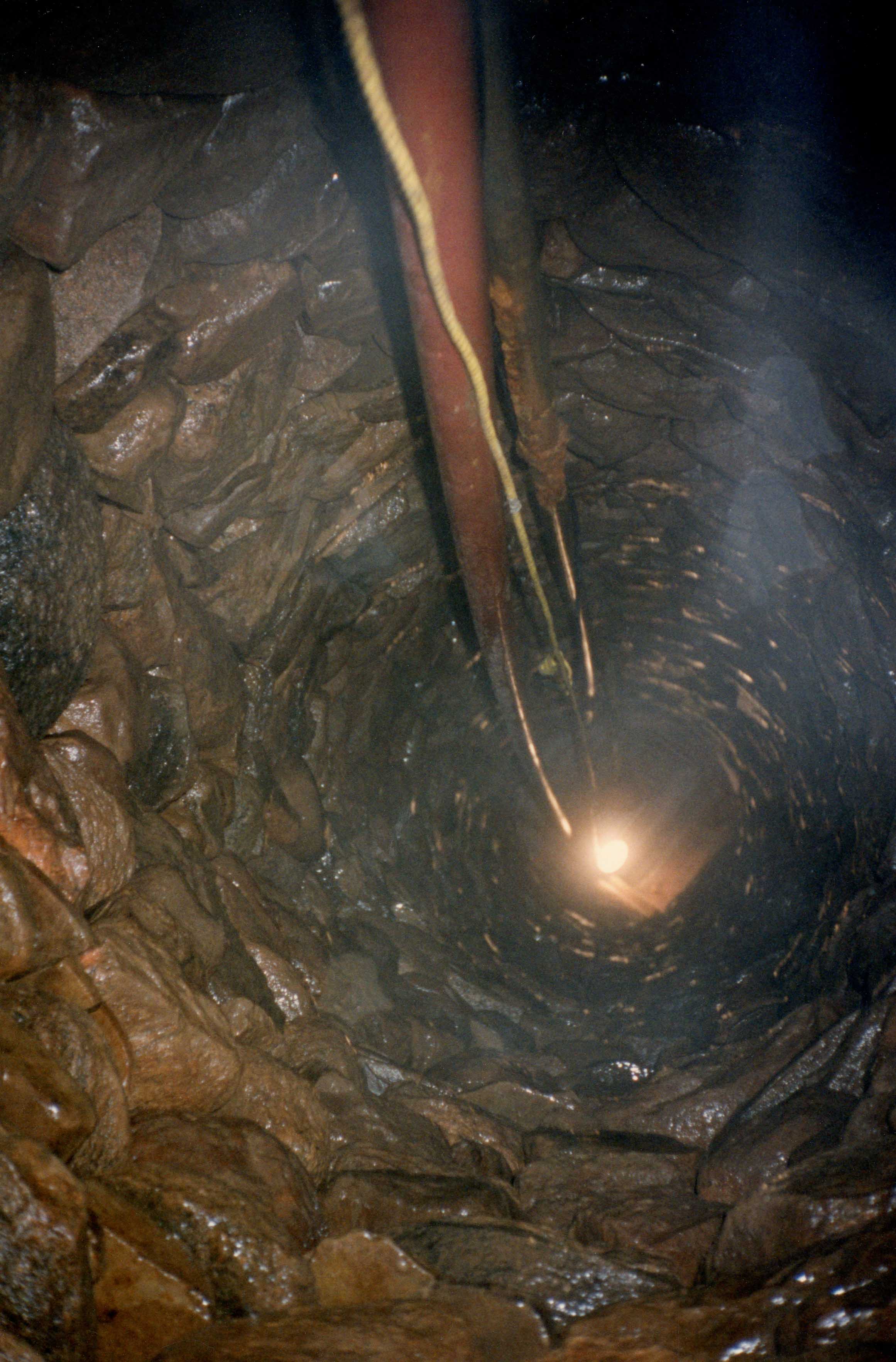
1920s Kitchen - Well
The well in the 1920s Kitchen is the original well for the home. It was first located outside of the house, but Joseph and Ruth decided to build the 1840s addition right over the well, giving themselves indoor plumbing.
-
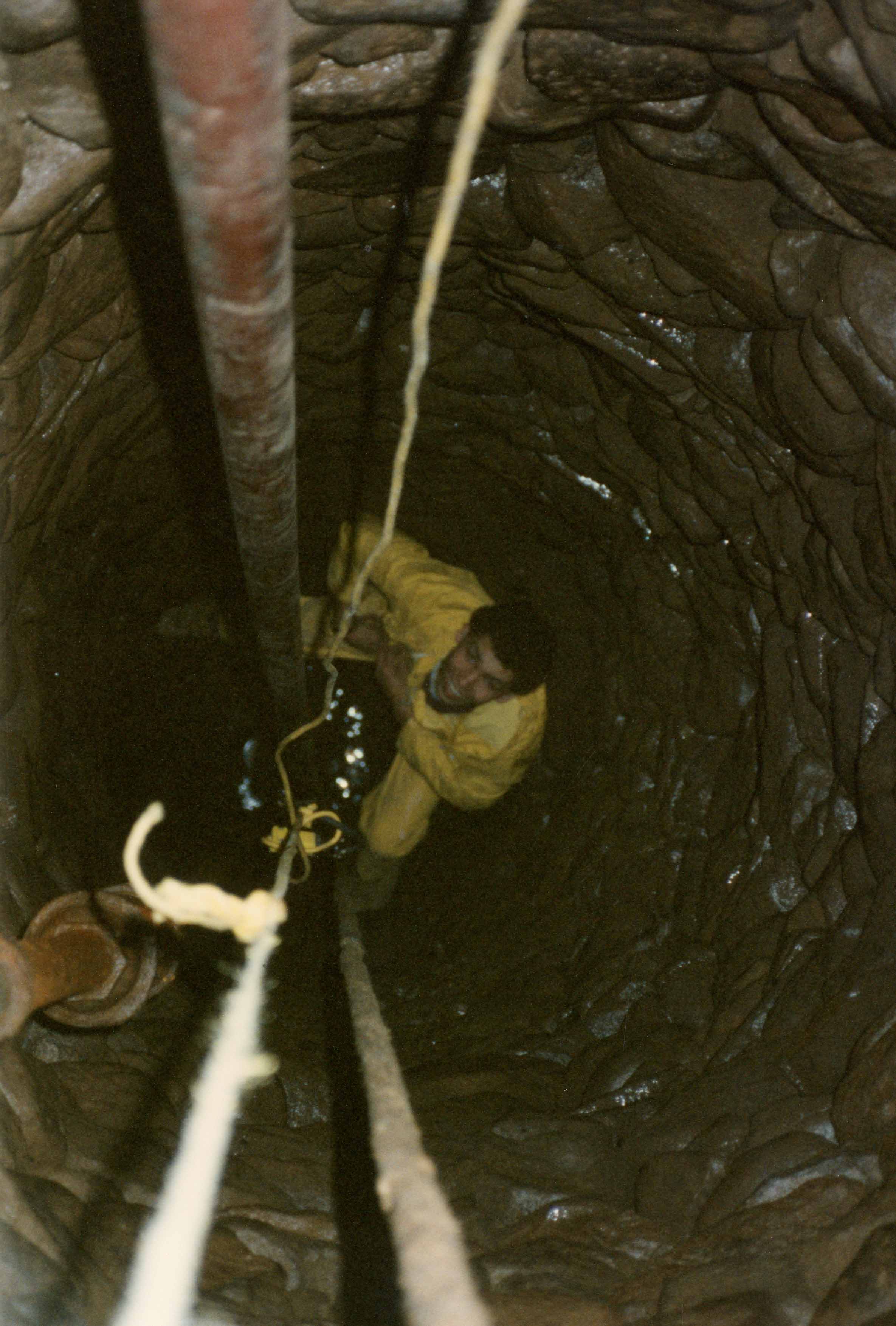
1920s Kitchen - Well
The well is about 35 feet deep, and during the restoration careful work was done on the interior well walls.
-
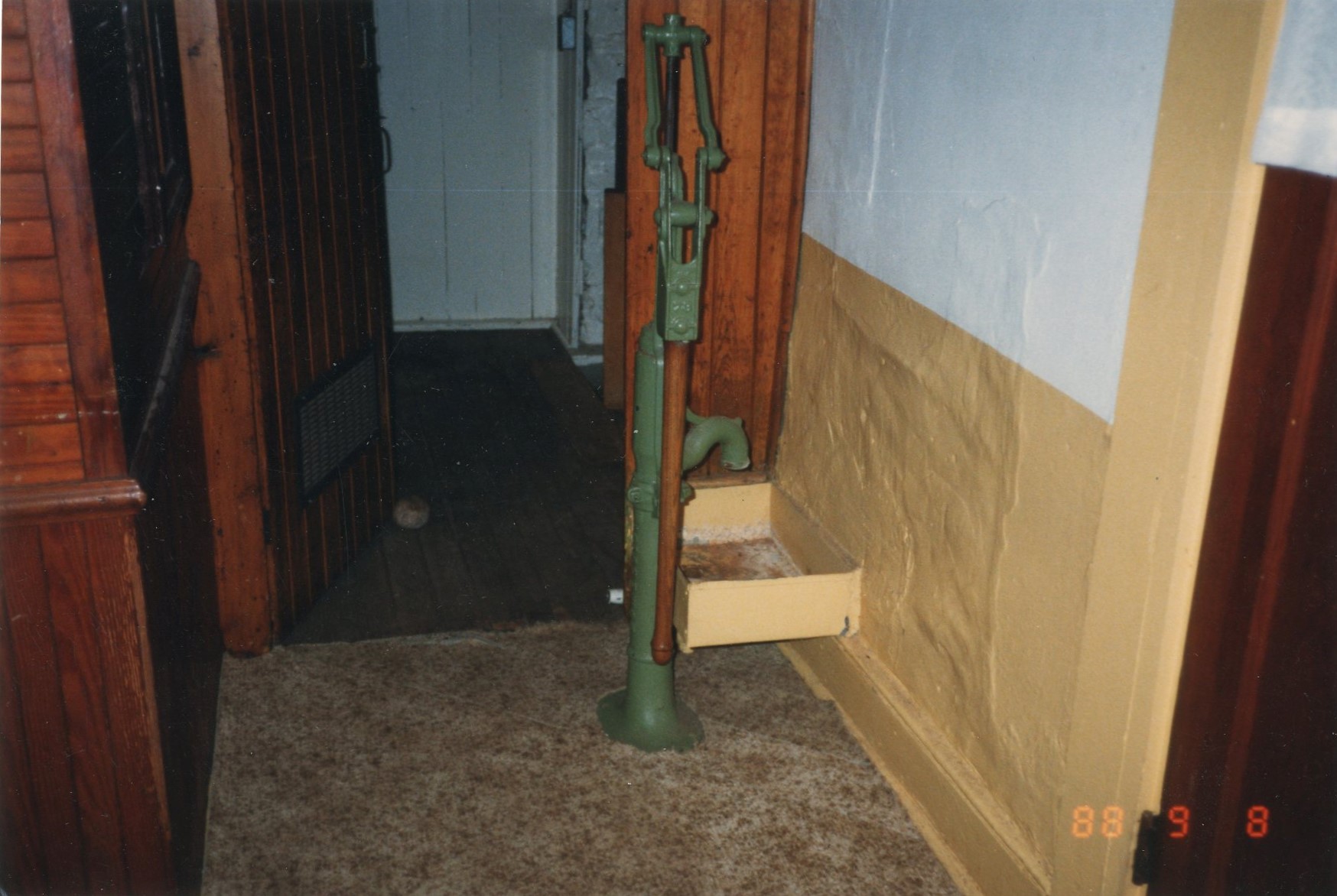
1920s Kitchen - Water Pump and Covered Well
When the Ireland family lived in the house, the well was covered with wooden flooring that matched the floor around it.
The well now has a metal grate and glass covering that allows visitors to walk over and look into the well.